In February 2026, the global entertainment industry witnessed a landmark acquisition deal worth hundreds of billions of dollars. Streaming giant Netflix announced that it would abandon its acquisition of Warner Bros. Discovery (WBD), while Paramount, backed by technology capital, raised its bid to USD 111 billion and pushed forward with what is shaping up to be a once-in-a-generation merger. This fierce contest over WBD and its core assets, including HBO and Warner Bros., inevitably raises deeper questions. Where does the immense financial power of platforms capable of mobilizing hundreds of billions of dollars actually come from? And how did Warner Bros. Discovery, once an unassailable entertainment empire, come to be a takeover target for larger players? The answers reveal profound transformations reshaping the global streaming industry.
The Warner Bros. Discovery logo in Culver City, California, US
Why Streaming Platforms are financially robust: Three Logics Behind Their Billion-Dollar Confidence
The ability of streaming platforms to execute acquisitions on such a massive scale is underpinned by three intertwined forces: subscription-based revenue models, capital backing from the technology sector, and the financial leverage of intellectual property assets. Together, these forces form the foundation of their capital power and fundamentally overturn the traditional financial accumulation model of the film and television industry.
Subscription Models Reshape Revenue and Build Stable Cash Flow
Unlike traditional film and television businesses that rely on volatile income streams such as box office receipts and advertising, streaming platforms generate predictable and sustainable cash flow through fixed monthly subscription fees. This is the core source of their financial strength. According to Netflix's official Q4 and full-year financial reports for fiscal year 2025, the platform surpassed 325 million global subscribers by the end of 2025, adding 25 million new users during the year. This massive subscriber base provides a continuous inflow of cash. Such a model, often described as "recession-proof," allows leading platforms to break free from dependence on the success of individual projects and to support capital operations worth tens or even hundreds of billions of dollars. Market analysts note that for Netflix, acquiring WBD's core assets would essentially mean locking in a content ecosystem capable of attracting paying users for decades to come. This would create a virtuous cycle in which cash flow supports acquisitions, and acquisitions in turn reinforce cash flow.

Netflix headquarters in Los Angeles, California, US
Technology Capital Provides Vast Financial Backing
Beyond their own cash-generating capabilities, competition in the streaming industry has increasingly become a contest of capital strength. Paramount offers a telling example. Behind it stands the family of Oracle founder Larry Ellison, whose personal wealth exceeds USD 200 billion and whose influence spans the highest levels of Silicon Valley. Unlike traditional media companies, which often rely on slow revenue recovery through box office splits, technology capital prioritizes market share over short-term profitability. It is willing to inject sustained funding into streaming expansion. In this acquisition, Paramount committed to paying a breakup fee of up to USD 7 billion if regulatory approval is not obtained. This level of risk tolerance is emblematic of technology-capital thinking and underscores the fact that streaming giants are not fighting alone, but are backed by powerful financial patrons.

A screenshot from China Central Television's Finance reporting on the potential sale of Warner Bros. Discovery
The Financial Leverage of IP Assets Amplifies Investment Confidence
Perhaps the most critical reason streaming platforms dare to spend so aggressively lies in the nature of what they are acquiring. They are not buying single businesses, but IP empires that can be endlessly mined and repeatedly monetized. HBO's library includes iconic franchises such as Game of Thrones, while Warner Bros. owns Harry Potter, The Matrix, and the DC Universe. These assets are more than content libraries. They are the foundation for merchandise, theme parks, and cross-media development, with enormous long-term monetization potential. Analysts suggest that financial institutions' willingness to provide Paramount with USD 57.5 billion in debt financing reflects the high collateral value of these IPs. Through multiple development cycles, they can generate sustained revenue streams, ensuring debt repayment and providing clearer return expectations, thereby reducing investment risk.

A poster for the film series Harry Potter
Industry Signals Behind the WBD Acquisition: The Era of Mega-Mergers
That WBD, home to century-old brands such as HBO and Warner Bros., has become an acquisition target is no accident. It marks the industry's entry into a new phase and reveals three major signals of structural change in the global streaming landscape.
Scale as the Defining Condition for Survival
As growth in global over-the-top (OTT) video subscriptions slows and user spending stagnates, the industry has shifted from incremental expansion to zero-sum competition. Scale is no longer just a moat; it is the price of entry. Paramount's pursuit of WBD is driven by the goal of integrating HBO Max's premium content with its own Paramount+ to build a platform capable of competing with Netflix and Disney. Through scale, platforms can lower operating costs and increase user retention. Disney's plan to fully integrate Hulu into Disney+, and Comcast's continued expansion of Peacock, point to the same trend: standalone platforms can no longer survive on their own. Consolidation through "big fish eating big fish" has become the dominant form of industry integration, signaling a shift from land-grab expansion to intensive competition.
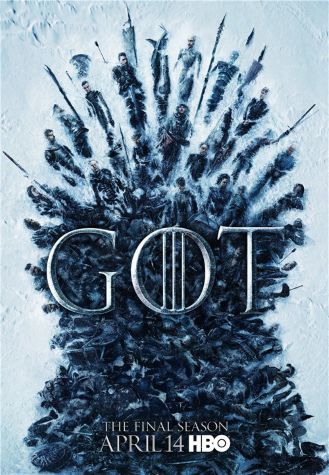
A poster for season eight of the HBO series Game of Thrones
The Decentralization of Traditional Content Empires
WBD's predecessors carried nearly a century of Hollywood glory, and HBO and Warner Bros. long stood as symbols of quality. Yet in the face of hundred-billion-dollar capital plays, they have become tradable asset packages. WBD CEO David Zaslav has stated that he sees greater potential in a merger with Paramount. Behind this remark lies a stark reality: in the streaming era, content creativity alone is no longer the sole source of power. The integration of distribution channels, data, and capital is rewriting the rules of the game. Former content giants are being reduced to modules within larger ecosystems, as capital increasingly dictates resource allocation and strategic direction.
Competition Shifts from "Content Wars" to "Ecosystem Wars"
While Netflix and Paramount battle over WBD, the real competition has already shifted lanes. YouTube, with its "free plus advertising" model and massive creator ecosystem, is projected to generate over USD 60 billion in revenue in 2025, surpassing subscription-based streaming platforms in both viewing time and revenue scale. Meanwhile, short-form drama apps from China, such as DramaBox and ReelShort, have surpassed Netflix and Disney+ in global downloads in 2025, with overseas market size expected to reach USD 5 billion in 2026. Sensor Tower data for Q4 2025 shows that in the US market, average daily viewing time for short-form drama apps on mobile phones has exceeded that of Netflix, Disney+, and Amazon Prime Video combined. Even giants such as Paramount and Disney are now entering the short-form drama space. This underscores a new reality: whoever captures new user attention and dominates emerging tracks will shape the future. Traditional content mergers are merely one facet of a much broader ecosystem battle.

Average daily viewing time of short-form drama apps among US users exceeds that of Netflix, Disney+, and Amazon Prime Video (Source: Sensor Tower)
Netflix's withdrawal reflects financial discipline and a rational reading of industry trends. Paramount's aggressive bid represents a bet on scale and a high-stakes gamble on the future. Beneath this capital contest lies a deeper truth: in the streaming era, there are no eternal champions, only continuous evolution. The real moat may not be how many legacy IPs one acquires, but whether one can consistently create new content that attracts new users and keeps pace with shifting attention.
Streaming and the Film & Television Industry: From Buyer-Seller to a Shared Destiny
As the core engine of transformation in the entertainment industry, streaming platforms are fundamentally reshaping value chains and competitive dynamics. One factor is that, technology has broken temporal and spatial barriers, integrating film, television, music, and games into unified digital platforms and reconstructing production, distribution, and monetization. The other is that, IP resources and creative capabilities from the traditional entertainment sector provide streaming platforms with their core competitive edge. The WBD acquisition exemplifies this symbiosis. Streaming platforms integrate entertainment IP through capital, while entertainment assets maximize their value through streaming distribution, driving the industry toward greater concentration and globalization.
Netflix, WBD, and Paramount apps on a smartphone
The relationship between streaming platforms and the film and television industry has evolved beyond a simple buyer-seller dynamic into a deeply intertwined, mutually transformative partnership, manifested in three dimensions:
First, From One-Way Dependence to Mutual Empowerment
Streaming has reshaped film and television through technology and subscription-based business models, allowing content to reach global audiences at any time. At the same time, premium IPs such as Harry Potter and Game of Thrones, along with mature creative systems, remain the core drivers of user subscriptions. Without high-quality content, streaming platforms would be hollow shells.
Second, Capital-Level Vertical Integration
The WBD deal demonstrates a qualitative shift. Streaming platforms are no longer content buyers; backed by subscription cash flow and technology capital, they are acquiring traditional studios outright. Paramount's pursuit of WBD aims to secure the production end of premium content and form a closed-loop ecosystem of "content, channel, and user."
Third, A Shift in Power Structures
Traditionally, studios controlled content and held bargaining power. In the streaming era, this power has shifted toward platforms that control user data and subscription channels, enabling them to define content production decisions. Capital now dominates resource allocation, gradually eroding the independence of traditional content empires. Even century-old Hollywood studios have become tradable asset packages.
Conclusion
Streaming platforms act as both amplifiers and reconstructors of the film and television industry. They expand the reach and commercial value of content while dismantling old power structures and business models. Under the catalytic force of capital, the relationship between streaming platforms and the entertainment industry is rapidly evolving from a transactional partnership into a shared destiny, as both confront challenges from new ecosystems such as short video and short-form drama. (Author / Wen Yanqing, Editor / Cheng Yingzi)


