Currently, adapting micro drama IPs into long-form series has become a mainstream industry trend. However, most adaptations fall into the dilemma of "simply stretching the runtime while losing narrative balance." According to the China Online Audio-Visual Development Research Report (2025), China's micro drama user base has reached 662 million. Yet, many adaptation projects either blindly emulate short-form pacing like Speed And Love, resulting in a lack of emotional buildup, or chase traffic at the expense of the original IP's core, as seen in some IP-adapted series. How Dare You!? , however, has been adapted into a micro drama (89 episodes), an animation series, and a long-form series (32 episodes). Its development logic of "short-form as the foundation, long-form for deep cultivation", provides the industry with a rare and instructive example of how to scale short-form IP without losing its essence.
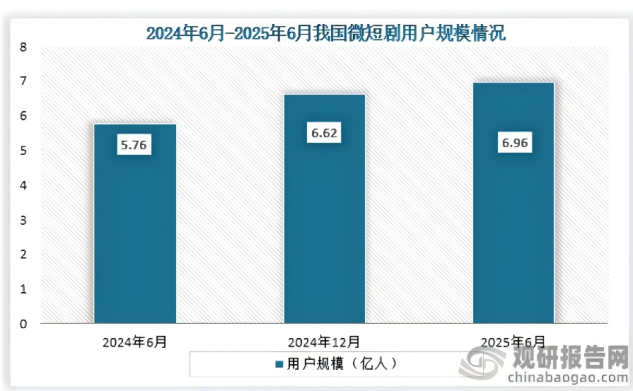
The 2025 China Online Audio-Visual Development Research Report reveals that China's micro drama user base has grown to 662 million.
In the series, Yu Wanyin and Xiahou Dan use "How are you? Fine, thank you, and you?" as a secret recognition code as fellow time travelers. The jarring collision between this modern linguistic relic and the ancient court setting immediately establishes the drama's absurdist tone. But once the micro short-form version had already mapped out the core storyline, a question inevitably arose: what narrative space was left for a 32-episode long-form adaptation to explore?
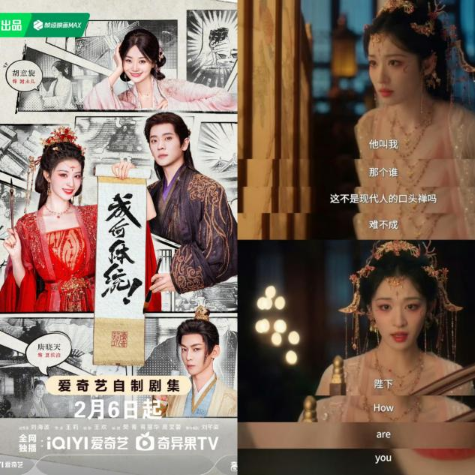
Poster of How Dare You!? and The iconic "How Are You" scene in the drama
Narrative Reconstruction: Deepening Perspective Over Expanding Length
The 89-episode micro-short-form version efficiently laid out the core narrative framework, giving audiences a clear grasp of the story's setup. Any attempt to merely stretch the plot would have risked falling into the familiar trap of narrative padding—the very pitfall that has plagued most short-form IPs when adapted into long-form dramas.
How Dare You!? 's solution lies in switching narrative perspectives while preserving the main plot. The short-form version unfolds almost entirely through Yu Wanyin's single perspective, whereas the long-form adaptation turn its lens through Xiahou Dan's inner world—his sixteen years of mental struggles and vulnerable emotions beneath the "tyrant" mask are rendered through with far greater nuance and emotional weight. Prince Duan, Xiahou Bo, likewise breaks free from his earlier function as a one-dimensional antagonist. The long-form grants him a coherent character arc, fleshing out both the logic behind his actions and the tensions driving his choices. If the short drama told audiences "what happened"; the long-form ask a more probing question: "what were they thinking and why did they choose as they did?" By deepening perspective rather than prolonging events, the series fills the emotional and psychological gaps left by the brisk pacing of the short format.
Additionally, the original novel's "time loop" structure—in which Xiahou Dan travels back to the modern era after his death, indirectly setting in motion Yu Wanyin's own transmigration—is fully preserved. When echoed against the drama's real-world broadcast year, this narrative loop generates a subtle meta-layer, transforming a seemingly predetermined ending into renewed suspense and inviting viewers to re-examine what they thought they already knew.
By contrast, the short-form adaptation of Returning Pearl, faced a similar challenge of cross-format IP development, but chose a far riskier path. By centering the narrative on a “book-traveling” female lead, it relegated iconic characters like Xiao Yanzi and Ziwei to mere narrative devices used to elevate a newly constructed protagonist. The result was a dismal 2.8 opening score on Douban. Its failure lay not in perspective-shifting per se, but in hollowing out the IP’s emotional core while retaining only its recognizable surface. Changing perspective does not justify arbitrary subversion; the foundational spirit that made the IP resonate must remain intact.
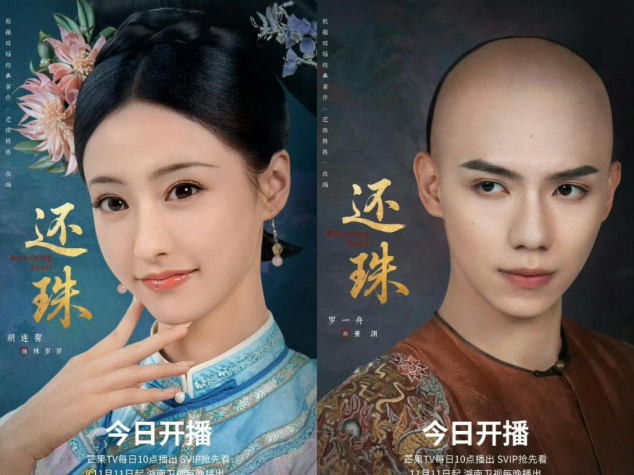
Poster of Returning Pearl
This "perspective expansion" strategy, however, sets a high bar for creative teams: screenwriters must possess multi-line narrative skills to excavate supporting characters' arcs and emotional stakes without derailing the main plot. The production scale underscores this distinction. the micro-short-form's principal photography took just 10 days, but the long-form boasts a 117-day shooting schedule with significantly expanded budgetary support. Without adequate time and financial investment, Xiahou Dan's sixteen years of loneliness could never have been conveyed. Adapting short-form IPs into long-form series isn't simply "spending more to make it longer." it requires reallocating talent, time, and creative resources to deepen narrative perspective rather than dilute it.
Audio-Visual Expression: Using Rhythmic Restraint to Build Emotional Depth
The core logic of short-form dramas is information density—every minute must deliver a twist, a punchline, or a plot escalation. Long-form adaptations, by contrast, often fall into a creative anxiety: if the pacing slows, will the audiences disengage? This anxiety explains why many short-form IP struggle to transition successfully into longer formats.
How Dare You!? takes a more calibrated approach. While maintaining an overall brisk narrative tempo, it allows itself moments of deliberate restraint at key emotional beats. Instead of sustaining high-intensity stimulation, it creates space for feeling to settle.
High-frame-rate technology, notably, is not deployed indiscriminately. Rather than being a constant stylistic flourish, it is activated selectively at pivotal emotional moments. In the seemingly cheerful dumpling-making scene, the elevated frame rate subtly magnifies the fleeting trace of confusion in Xie Yong'er's eyes. In the chase sequence—particularly the "embrace on the steps"—it captures the involuntary tremor in Yu Wanyin's body as she curls inward.
These wordless fragments achieve what dialogue cannot: they pull the viewer directly into the characters' emotional interiority. By combining rhythmic momentum with carefully measured pauses, the series constructs emotional depth without sacrificing narrative drive.

The trembling of Yu Wanyin as she curled up in How Dare You!?
Even more telling is the now-viral "tearful kiss" scene. During rehearsals, Wang Churan spontaneously leaned in, while Cheng Lei instinctively pulled back, resulting in an accidental brush of their noses. The director keenly captured this genuine fluster and kept it in the final cut. The near-miss—the almost-collision of their noses—creates a suspended tension rather than a consummated gesture. Beneath the moonlight, their silhouetted figures replace any explicit confession, and the subtle push-and-pull between them becomes a visual metaphor for the emotional restraint shared by two time travelers bound by unspoken understanding.
Audiences have praised the moment as the "ceiling of romantic tension," but its power lies in something more technical: a deliberate strategy of withholding. By revealing only part and concealing the rest, the scene leaves emotional space for viewers to project their own interpretations.
True restraint in audio-visual storytelling is not absence—it is an invitation. It returns imaginative authorship to the audience.
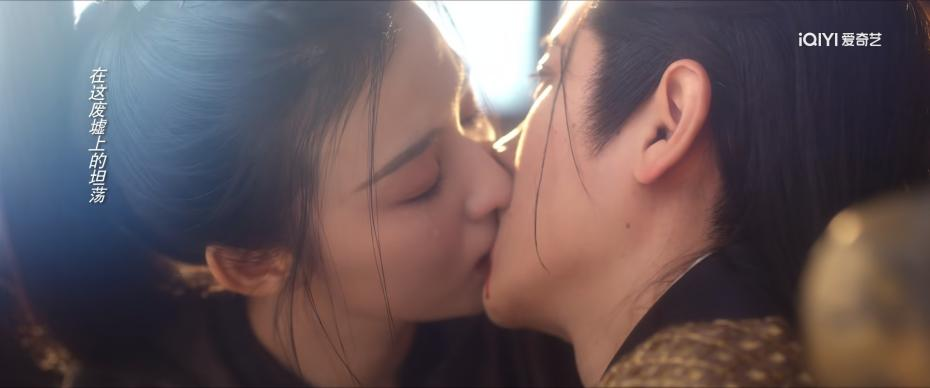
The tearful kiss scene in How Dare You!?
Behind this audio-visual strategy lies an upgrade in production philosophy. The long-form adaptation of Speed And Love, attempted to appropriate the rapid pacing of short-form dramas, but the result was an excess of unmotivated lingering glances and saccharine romantic beats—what critics derided as "absorbing the worst of short-form while discarding the strengths of long-form storytelling." Its misstep was not experimentation, but misreading the medium: it replicated the surface-level thrill of short-form "instant gratification" while abandoning the narrative patience and emotional scaffolding that long-form drama requires.
The contrast in production logic is telling. The short-form version completed development within a month and filmed in just ten days, relying on compressed plotting and high information density to sustain momentum. The long-form adaptation, by contrast, leverages an extended production cycle and more meticulous audio-visual design to create a sense of emotional immersion that short-form simply cannot sustain. The central question in adapting short-form IPs into long-form series is therefore not, "How can we make the pacing faster?" It is, "Which moments deserve an extra five seconds of the audience's attention?"
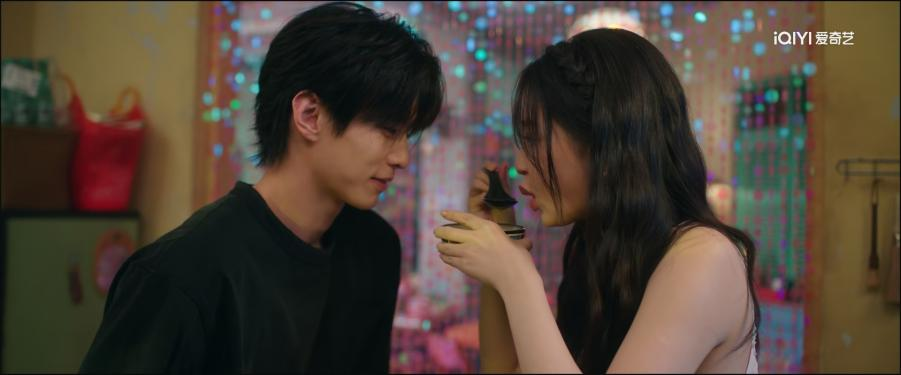
The interactions between the male and female leads in Speed And Love.
Performance: Moving Beyond Replication to Deepen Character Complexity
With prior iterations in animation and micro short-form adaptations, the characters of How Dare You!? already came with established visual and tonal expectations. For Wang Churan and Cheng Lei, this created a familiar dilemma: perform too similarly, and they risk accusations of imitation; deviate too far, and they would be criticized for betraying the source material.
Their solution was neither replication nor reinvention for its own sake, but endow characters with new layers in the long-form's extended runtime. Wang Churan's Yu Wanyin requires a dual performance: the beguiling consort in public and the emotionally exhausted modern "corporate worker" beneath the surface. In one scene, her fingertips tremble slightly while she keeps her back straight, blending panic with forced composure—this "absurdity of survival in desperation" needed the long-form's space to unfold. During the subway reunion in the finale, her makeup-free modern outfit and subtle shift in gaze from shock to relief became an acting highlight: "Without a single line of dialogue, the sight of her slightly red eyes made audiences believe she had truly lived through a millennium."
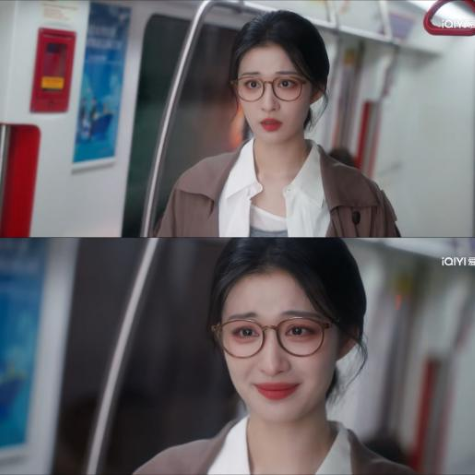
The shift in Wang Churan's eyes in the finale of How Dare You!?
Cheng Lei's Xiahou Dan operate across three distinct registers: the calculating, ominous emperor before the court; the irreverent, almost boyish young man in private; and the fragile time traveler silently bearing sixteen years of isolation. As one viewer aptly observed, "With a single upward glance, I understood his sixteen years of silence." Such density of performance cannot be achieved through the fragmented, high-conflict rhythms typical of short-form dramas.
Even in the improvised kiss scene, it was his instinctive recoil—the accidental brush of noses, the faint flush creeping up his ears—that revealed the character’s concealed core. Beneath the constructed image of a tyrant lies a restrained, almost disarmingly sincere vulnerability. The tension between persona and essence generates a contrast far more compelling than overt romantic display.
The short-form adaptation of Legend of the Martial Forest offers a counterexample: demoting the original female lead Zhu Qiqi to a background character and casting Bai Feifei as the absolute lead stripped away the unique charm of Gu Long's wuxia universe. Such indiscriminate changes, born of opportunistically leveraging a classic IP, betrayed the original and lost audiences. In How Dare You!?'s behind-the-scenes footage, Wang and Cheng often joke and interact on set, that ease translated onto the screen, allowing audiences to feel their genuine chemistry. The 117-day shooting schedule (compared to the 7–15 day norm in micro-short-form dramas) provided space for this chemistry to grow. Casting, then, is not merely a question of visual resemblance to an established version. It's about whether actors can extend the character's dimensionality— whether they can grow something new from within the audience's preexisting expectations.
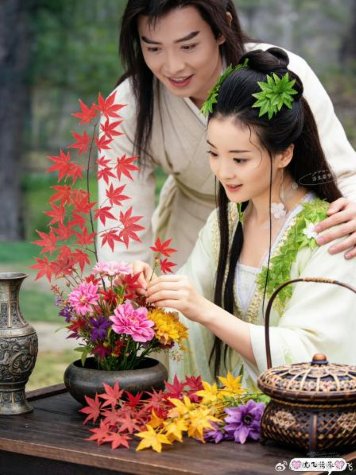
The short drama adaptation of Legend of the Martial Forest
Conclusion: From Short-to-Long Adaptation to Full-Lifecycle IP Management
By adopting a strategy of "short-form as the foundation, long-form for deep cultivation" and employing narrative reconstruction, audio-visual restraint, and layered performance work, How Dare You!? has charted a path to premium quality in short-form IP long-form adaptation. In this model, the short-form functions as a lightweight testing ground—validating core premises, character appeal, and market responsiveness—while the long-form serves as a space for deeper emotional excavation and world-building. The synergy between the two allows the IP to evolve from structural framework to fully embodied narrative experience, unlocking value across multiple creative and commercial dimensions.
It's worth noting that this "short-long synergy" model is not universally applicable. It is better suited to mature IPs with established fan bases and expandable narrative worlds. For original short-form dramas, the priority remains market validation and audience consolidation. Only after proving narrative durability and accumulating a loyal core viewership should cross-format development be pursued. (Author / Guxiang (Intern), Editor / Li Sixuan, Cheng Yingzi)


