After finishing one short drama about rebirth and revenge, the next recommendation serves up a nearly identical storyline, just with different names and settings. Domineering CEOs, the real and fake heiresses, underdog triumphs… these tropes are used repeatedly, and some fixed formulas have even become popular catchphrases: "If I could live my life over again, I would…"
It's nothing new for algorithms recommending content based on our viewing history, but with too many similar works, viewers inevitably lose the interest to follow. At the same time, for producers, overreliance on such formulaic storytelling increases the risk of copyright disputes.
For example, recently, Beijing Tao'an Law Firm, commissioned by Zhejiang Dongyang Xiaotuanyuan Culture Media, issued a statement regarding the "remake-style plagiarism" of its online short drama The Family We Build by A Twisted Path to Happiness. The statement points out that the latter work is highly similar to The Family We Build in terms of plots, characters, and dialogue, and is suspected of copyright infringement. It demands that the relevant parties immediately cease production, promotion, dissemination, and remove it from all platform within 24 hours, otherwise legal action will be pursued. The statement also calls on the industry to respect originality.
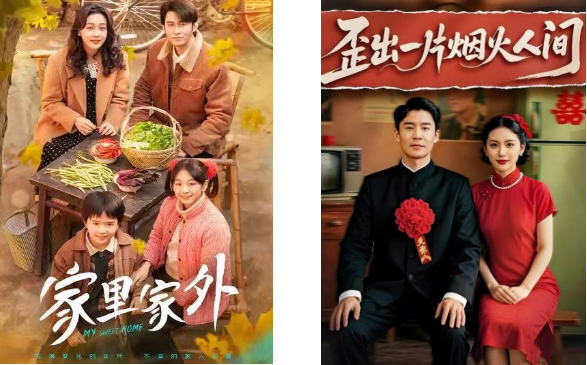
The cover poster of The Family We Build and A Twisted Path to Happiness
Why Do Short Dramas So Often Feel Repetitve?
Why do short dramas so often feel plagued by clichés? Ultimately, it's the result of multiple factors intertwined. First, some creators only approach themes at a superficial level. They only copy the "formulas" without exploring the core of the story, resulting in largely similar works.
Second, there is the speculative mindset dominating parts of the market. Whenever a meme goes viral or a theme becomes trending, production companies rushes to replicate it, hoping to seize traffic and turn a quick profit. This "fast-food" style of content creation, while seemingly in line with the current market pace, actually damages the long-term and sustainable development of the industry.
Against this backdrop, a crucial question emerges: where is the line between "drawing on" and "plagiarism" in short dramas? Legal judgments and public opinion are never one-size-fits-all. There are clear professional standards that distinguish the two. By comparing two real-life cases, the difference becomes unmistakably clear.
"Drawing on" or "Plagiarizing"? Motifs and Duplication
In 2025, the East Lake High-tech Development Zone Court in Wuhan City heard a case of plagiarism involving short dramas. Just days after a cultural media company released its original short drama A , a work titled B appeared on the Kuaishou platform with highly similar plot, characters, and dialogue. After comparison, the court determined that the two short dramas were substantially similar in terms of storyline, character settings, interpersonal relationships, and plot development. The defendant was ordered to pay damages and immediately cease distribution of the infringing work.
Another situation, however, led to a different outcome. After the "hearing one's inner voice after rebirth" trope became popular in 2024, similar short dramas sprang up. They all revolved around the theme of "rebirth and superpower comeback," but differed in specific plots. For example, some dramas were set in ancient times, where the protagonist's ability to hear their inner voice helped their family resolve crises and achieve counterattack, taking a heartwarming approach.
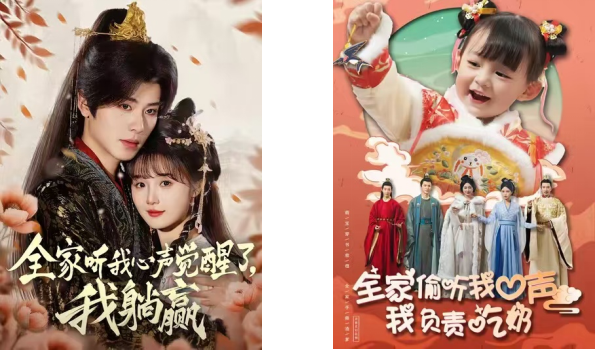
The cover poster of My Family Heard My Thoughts & Awakened, I Win Effortlessly and My Family Eavesdrops on My Thoughts, So I Just Focused on Being A Baby
In some dramas, the protagonist uses this ability to uncover the conspiracy of his classmates in a school setting, achieving a double reversal in academics and interpersonal relationships. Although these works share a similar core setting, the story direction, character personalities and emotional themes are completely different. Viewers may think, "Wow, it is interesting," but rarely accuse them of "plagiarism."
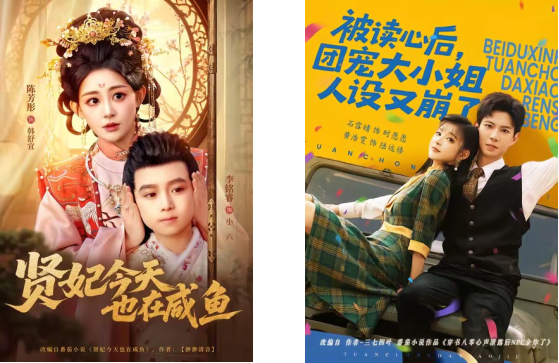
The cover posters for The Virtuous Consort Is Being a Dreamer Again Today and After Being Mind-Reading and Written, The "Everyone's Darling" Persona Collapsed Again
That is the key difference. Some elements are "public ingredients" available to everyone, but some elements are "exclusive recipes" polished by others after countless sleepless nights.
These recurring story archetypes are known as "motifs" of the story, such as rebirth, revenge, love and sacrifice, misunderstanding and reconciliation. They are part of the shared creative heritage of storytelling, traceable back to ancient Greek drama and ancient Chinese drama. Anyone can use them. As in the example above, these short dramas are created around the theme of "rebirth and superpower comeback," yet still feature original plots and distinct character portrayals. But plagiarism is different. It's directly copying something unique from someone else's work, such as specific plots, character relationships, and dialogue.
Simply put, using the same motif to tell a different story is creation. Copying another work's concrete expression is plagiarism. It's like salt, sugar, and soy sauce in cooking—anyone can use them, and everyone must. But if you copy exactly how someone seasons the dish, when they add sugar, how high the heat is, and even how they plate it, then you're not cooking—you're walking away with someone else's finished pot.
Meeting Audience Psychology: Brewing New Flavors from Familiar Formulas
Since motifs are a treasure trove everyone can utilize, short drama creators should stop just copying others' work. True craftsmanship lie in brewing new flavors from familiar formulas. So how can that be done?
It starts with understanding the audience's psychology: Compared to completely unfamiliar story types, human's brains generally prefer familiar, predictable formulas. Research by American psychology professor Jeffrey Zacks has found that when we repeatedly watch familiar themes or even revisit the same work, a mechanism in the brain called "predictive encoding" is activated. In essence, the brain feels comfortable when it can anticipate what comes next. Because plot developments are largely predictable, the cognitive load decreases significantly. Information processing becomes easier, and the experience produces a soothing, almost therapeutic effect—a kind of "mental massage."
Think about it: In an age of information overload and constant pressure, we confront uncertainty every day. Work and daily responsibilities are mentally exhausting enough. At this moment, curling up on the sofa and watching a short drama where you roughly know what's going to happen—like "The Domineering CEO Falls in Love with Me" or "Rebirth and Reversal of Fortune." This kind of certainty and familiarity brings people a rare sense of security and control, becoming an efficient emotional buffer.
Therefore, for creators, respecting the audience's psychological need for familiarity among audiences is precisely the most important starting point for creation today. This doesn't mean blindly copying, but rather reminding us: instead of racking our brains to invent a completely unfamiliar world, it's better to first skillfully employ proven story models (i.e., motifs) that make audiences feel at ease and enjoyable, and then build your own unique story on this solid foundation.
Here are a few tips:
First, combine the motifs with current social issues to make the story relatable. For example, the theme of "career comeback" used to be a common theme in many short dramas, which often focused on the old trope of the protagonist achieving success through the help of a benefactor. Now, creators can incorporate issues that genuinely concern people, such as workplace gender discrimination, elderly care and graduate employment, and recreate the details of real life to resonate with the audience.
Second, rethink how the story is told. In terms of expression, don't always just follow a linear chronological narrative. Use multiple storylines, flashbacks, interludes or even shifting perspectives to tell the story. This can add layers to the narrative, making the audience eager to know what will happen next. Short dramas are already quietly evolving: some works are adopting an "immersive" filming style, with the camera almost glued on the protagonist's eyes. You're not just watching the plot. You're living within it—your heart races, your palms sweat, all because you've become that person in the story.
Some works employ interactive narrative techniques, allowing viewers to influence the plot's direction. Others utilize dialects, such as the wildly popular The Family We Build series, where the entire series is spoken in Sichuan dialect. From domestic squabbles to late-night heart-to-heart talks, everyday phrases carry a vivid sense of lived reality. In a homogenized audiovisual landscape, this kind of "unpolished sincerity" becomes a powerful distinguishing feature.
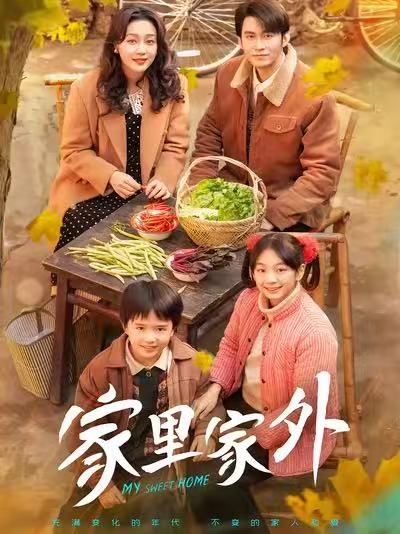
The cover poster of The Family We Build
Expand the spatial imagination genre: the stage for short dramas is no longer limited to small indoor scenes like living rooms, bedrooms, and offices, but is venturing into broader spaces. For example, the story of Escape from the British Museum sets its camera on the streets of London and inside the exhibition halls of the British Museum. The rare Chinese jade pot with a pattern of curling branches that escaped from the display case transforms into an ancient-style girl, wandering through a rainy night in a foreign land, dodging security guards while searching for her way home. With a change of scenery, the scope expands: this is not just a fantasy story, but also subtly conveys the cultural sentiment of cultural relics returning home. Visually novel, yet emotionally weighty.
Filming techniques can also be explored. Seven Lives, One Mission employs a virtual production method combining live-action filming and virtual reality, using an LED virtual studio instead of real sets to present panoramic views of buildings in a downpour, scenes of cable cars swaying precariously and rapid transitions between different scenes, allowing viewers to experience new possibilities in the visual presentation of short dramas.
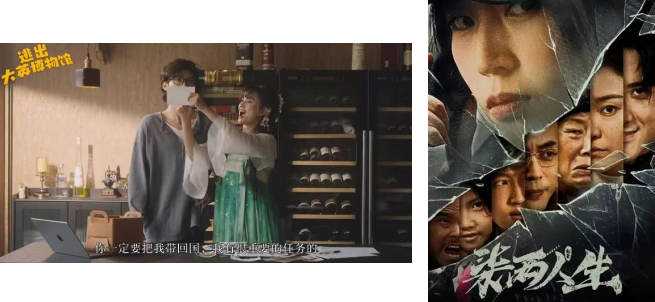
Screenshots of the Trailer for Escape from the British Museum and the cover poster for Seven Lives, One Mission
Third, experiment with motif "crossovers." Viewers and readers alike often check category tags before watching: sweet romance, suspense, time travel, rebirth—Genre functions like supermarket aisle signs: it helps people quickly locate what they enjoy. For creators, sticking to a single genre can secure a loyal base. But repetition breeds fatigue. That's where motif blending comes in. Combining two seemingly unrelated narrative frameworks can spark unexpected chemistry.
For example, the recently popular short drama I Was a Stepmother in the 80s cleverly uses "motif layering." It doesn't simply repeat the old trope of time travel and revenge. Instead, it creatively blends the popular themes of time travel and farming. This combination is refreshing for viewers accustomed to domineering CEOs and palace intrigue. It has the thrill of a time-travel story with its "cheat code" advantage, while retaining the delicate sense of life in farming stories, instantly creating a fresh flavor within the familiar formula. When rebirth meets farming, when a domineering CEO enters the world of martial arts, a new chemical reaction begins to happen.
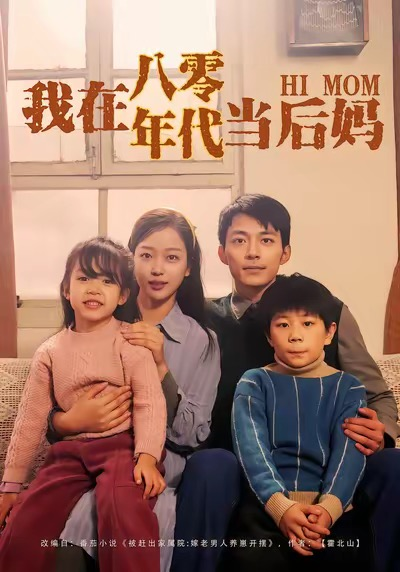
The cover poster of I Was a Stepmother in the 80s
Looking back at the development of short dramas over the past few years, you'll find that what everyone is competing on has quietly changed. In the early days, whichever was popular, had the most traffic, and captured the audience's attention won. Whether the plot was outrageous or logically sound didn't seem to matter much. As long as it was entertaining, that was enough. But things are different now. Audiences are becoming increasingly discerning. It's not that they don't like entertaining dramas, but they've started to distinguish between genuinely heartfelt content and mere cheap tricks.
Platforms are also tightening their regulations and authorities are emphasizing original content protection. Thus, the industry is gradually shifting from "who shouts the loudest" to "who tells the best story." This is actually quite normal. Any content field, after reaching a certain stage, will return to its essence: The ability to tell a story is the true currency.
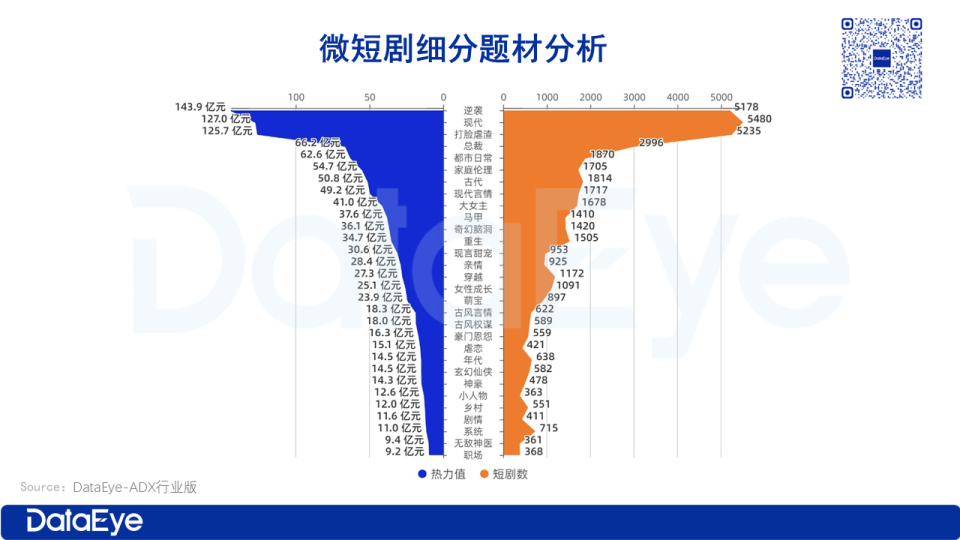
DataEye 2025 Annual Report on Short-Form Dramas: Sub-Genre Analysis of Short-Form Dramas
So, where does the future of short dramas lie? The answer may lie in the five words "returning to the story itself." From ancient myths and legends to today's short dramas, the form has been constantly changing, but people's desire for good stories has never changed. We want to be understood, touched, and taken into another world, even if only for three minutes. Excellent short drama creators should become "alchemists of stories." They know which themes are universal, such as love, loss, growth, and redemption. These are emotional codes understood by all humanity. But they also know how to graft these old formulas onto today's reality. For example, they could put the theme of "going home" onto a migrant worker whose job has been replaced by AI, or use "misunderstanding and reconciliation" to tell the story of how a mother and daughter relearn to talk face-to-face in the era of short videos.
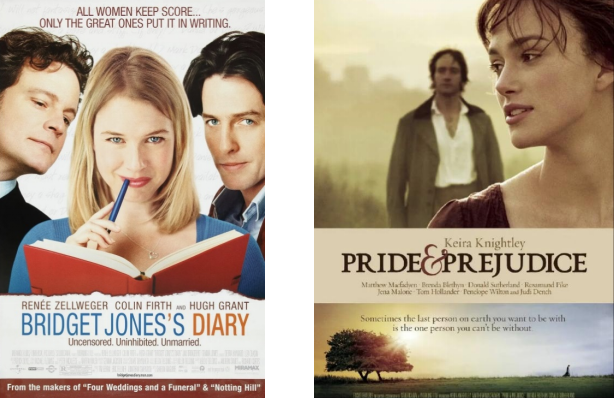
Bridget Jones's Diary draws its inspiration and central character persona from the classic literary work Pride and Prejudice
This path is not easy, but the direction is clear: respect the rules of creation, understand cultural roots, and then bravely forge your own path of expression. It's not about copying others' hit templates, but about asking yourself: What do I want to say? What can I say that no one else can?
The growth of short dramas is also a microcosm of China's entire cultural and creative industry. There have been waves of imitation, moments of controversy, and lessons learned from infringement disputes. Yet as more creators realize that true success lies not in replication but in originality—and as audiences increasingly pause for stories with depth, warmth, and thought—short dramas can move beyond the shadow of formulaic repetition. Only then can the industry step into a future that is more mature, diverse, and genuinely creative. (Author / Chen Caiming, Editor / Li Sixuan, Cheng Yingzi)


