Recently, the 2026 Spring Festival short drama Opening the Door to Welcome the God of Wealth, the Auspicious Little Treasure Arrives Home, produced by Shanhai Group, went viral even before its release, surpassing 100 million topic views across the internet. The show's "star actor" — a Booster K1 robot that won the championship at the 2025 RoboCup World Robot Soccer Competition — can not only "kneel to ask for lucky money" but also offer "adorable New Year greetings," completing a stunning transformation from a technological "prop" to a credited performer.
This cross-industry experiment is far more than a novelty gimmick. Its explosive popularity demonstrates that audiences have shown greater-than-expected acceptance of and enthusiasm for the innovative integration of "technology + content." It also signals the rapid emergence of a new content ecosystem driven by technological advancement. Behind this transformation, seven major technological trends are becoming the core engines powering innovation in the short drama industry.

Booster K1 in Opening the Door to Welcome the God of Wealth, the Auspicious Little Treasure Arrives Home
Trend 1: Interactive Humanoid Robotic — From "Special-Effect Props" to "Narrative Subjects"
Performance-oriented humanoid robots are redefining the performing arts in the AI era. Shedding their former identity as "special-effect props" or "stage devices," they are evolving into human-like "narrative subjects" capable of driving storylines. This transformation is made possible by precisely engineered joints and anthropomorphic modules that enable complex movements previously unattainable by traditional machinery. The Booster K1 robot featured in Opening the Door to Welcome the God of Wealth, the Auspicious Little Treasure Arrives Home was launched by Booster Robotics on October 21, 2025, as an entry-level humanoid robot. Standing 95 cm tall and weighing approximately 19.5 kg, it is equipped with 22 degrees of freedom across its body, finely structured hands and feet, and specially designed footwear.
In terms of hardware, the robot adopts a lightweight body design and has passed 30 hours of 500N impact testing as well as 100 hours of continuous operation verification, ensuring durability and reliability. For AI processing power, it offers configurations ranging from 48 to 200 TOPS.
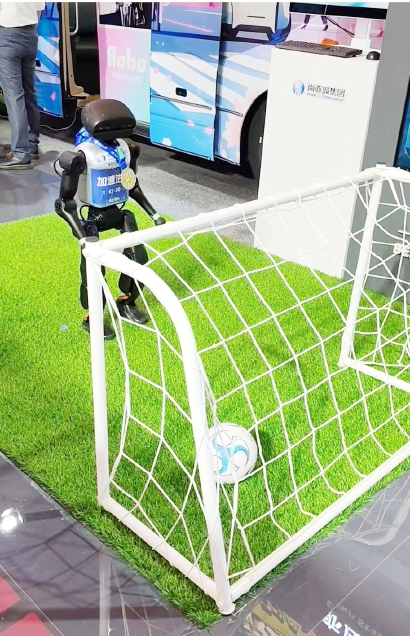
Booster K1 at the 2025 RoboCup
At the Consumer Electronics Show (CES) 2026, TORA-ONE — showcased by PaXini Technology — further demonstrated breakthroughs in performance-oriented humanoid robotics. With nearly 2,000 self-developed high-precision ITPU tactile sensor units integrated throughout its body, it achieves ultra-fine force recognition at 0.01N. It can delicately handle fragile ingredients like human fingers and possesses advanced human-machine safety interaction capabilities — dynamically adjusting posture in real time when handing over ice cream based on the angle and force of a person's grip.
Combined with a VTLA-Model (Vision-Tactile-Language-Action multimodal model)-based control system, it overcomes traditional interaction latency bottlenecks, transcending the role of an "automated tool" to become a true "narrative subject" capable of complex interaction. This signals broad application prospects in content creation, including high-difficulty action scenes or hazardous shoots in film and television production.
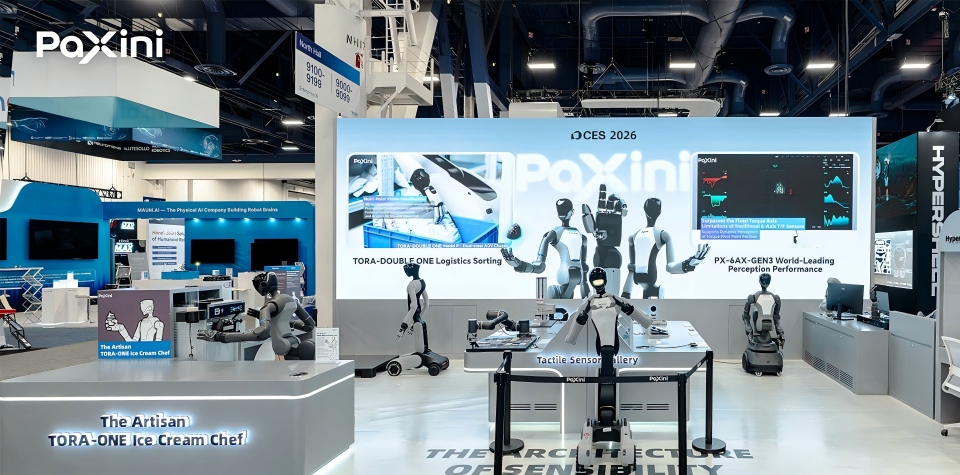
PaXini displays TORA-ONE at CES 2026 (Source: PaXini)
Trend 2: Full-Process AIGC Integration — From "Assistive Tool" to "Creative Partner"
AIGC (AI-Generated Content) has become deeply embedded in every stage of short drama production — from planning, storyboarding, dubbing, and editing to marketing and distribution — evolving from an auxiliary tool into an indispensable "creative partner," driving the industry toward industrialized, high-efficiency production.
Scriptwriting is undergoing fundamental change. AI systems now function like tireless market analysts and story architects, accurately capturing the "pulse" of audience emotions from massive datasets and rapidly generating script frameworks centered on key "thrill points" and "tear-jerker moments." This is no longer theoretical. In 2026, Shanghai Film Group announced a slate of 13 premium AIGC short dramas in one go — a powerful declaration of the scalable implementation of human-machine collaborative creation. While the most moving "soul" of a story still requires human screenwriters, AI has liberated creators from repetitive, formulaic labor, allowing them to focus on true creative elevation.

AIGC-powerd Short Drama produced by Shanghai Film Group
Visual production has also been revolutionized. From dynamic storyboarding in pre-production to intelligent editing in post-production, an automated pipeline is taking shape. Tools like Maoyan Entertainment's "shenbi" AI can quickly parse scripts and generate dynamic storyboards with camera movements. In post-production, AI acts like an editor attuned to audience psychology, automatically assembling rough cuts based on emotional arcs.
Full-chain solutions from platforms such as Baidu Smart Cloud are working to standardize these processes, compressing production cycles that once lasted months to unprecedented levels — enabling more creative ideas to achieve high-quality visual realization at lower costs.
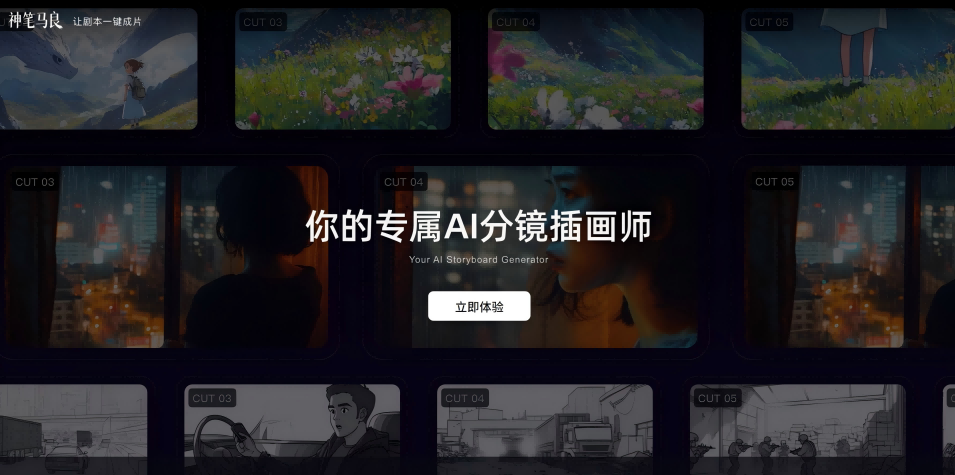
Website of Maoyan Entertainment's "shenbi" AI
Trend 3: Scalable Digital Human Actors — From "Tech Showcase" to "Industry Standard"
Digital human actors are moving beyond the "technical spectacle" phase and steadily becoming industry standards, marked by breakthroughs in both performance depth and commercial value.
Their performances are no longer driven by pre-rendered animation but by multimodal AI-powered "performance intelligence." This allows digital humans to respond in real time with lifelike expressions, singing, and dancing that increasingly convey genuine emotion. On the 2026 Spring Festival Gala stage, the digital performer "Liu Sanjie" will sing seamlessly alongside human artists — marking mainstream recognition of digital humans as performers.
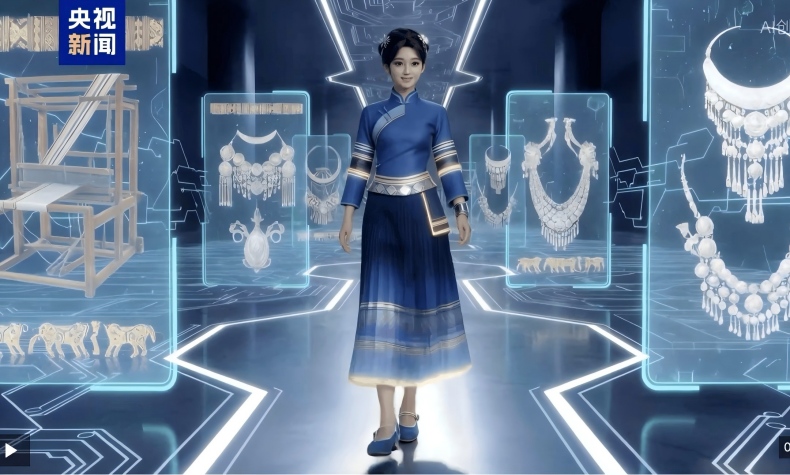
Digital Avatar "Liu Sanjie" to perform at the 2026 Spring Festival Gala
As performance barriers fall, digital humans' value as "core digital assets" becomes increasingly evident. Tireless and consistent in persona, they can simultaneously star in multiple dramas, attend brand events, and host livestream sales — maximizing IP value across dimensions.
Market data provides the clearest validation. According to DataEye Research Institute, by early 2026, AI-simulated dramas starring digital humans accounted for as much as 38% of trending content rankings — a dramatic surge compared to a year prior. This not only reflects platforms' willingness to offer high revenue-sharing incentives but also signals a future in which digital humans transition from high-cost technical investments into sustainable growth drivers, forming a stable "technology–content–commerce" value loop.
Trend 4: Cloud-Native Production Systems — From "Local Production" to "Cloud Collaboration"
Cloud-native production systems are migrating the entire workflow to the cloud, building a fully digital pipeline from concept to final cut. Their greatest advantage lies in breaking physical limitations and enabling global real-time collaboration. On unified cloud platforms, screenwriters, directors, and editors can access and edit the same project simultaneously, drastically reducing communication and file-transfer time costs.
This system is supported by high-performance GPU cloud rendering, distributed storage, and intelligent workflow management tools. For example, the fully cloud-produced Chinese animation Endless Journey of Love completed over 70% of its production tasks and 100% of rendering in the cloud, significantly improving efficiency and lowering costs.

Poster for Endless Journey of Love
Cloud-native environments also facilitate seamless integration of AI tools — from AI script analysis and automated storyboarding to intelligent editing and visual effects rendering. In global adaptation, the "cloud collaboration + AI localization" model excels: multilingual real-time voice synthesis matches lip movements, while cultural adaptation engines fine-tune plot details according to target market preferences.
Tencent Cloud's upgrade of Xuanjia Technology's one-stop AI short drama platform "Kino Vision" demonstrates this capability. Through full-stack cloud services, it achieved full-process automation from script generation to video synthesis, boosting efficiency by 90%, reducing costs by 80%, and lowering per-minute production costs to around RMB 100, with over 100,000 minutes of cumulative output.
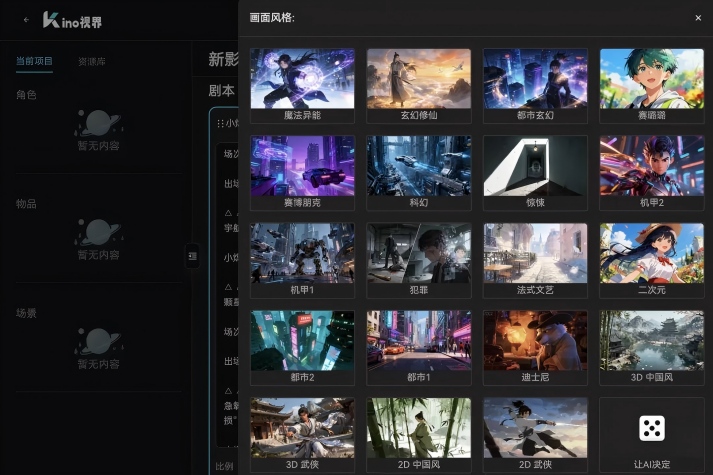
Interface of Kino Vision
Trend 5: Blockchain and Digital Assets — From "One-Time Consumption" to "Asset Ownership"
Blockchain and digital assets are transforming short dramas from one-time consumables into ownable assets by reconstructing how value is distributed and circulated. Newegg's cryptocurrency payment solutions in North America offer a foundational example of blockchain's commercial application. Since accepting Bitcoin in 2014 and expanding to support Dogecoin in 2026, Newegg has demonstrated digital assets' ability to lower cross-border payment barriers and improve transaction efficiency.
Although deeper scenarios such as on-chain IP rights confirmation or revenue-right tokenization remain under development, mature blockchain payment applications lay the groundwork for more complex digital asset ecosystems — including IP rights authentication, derivative trading, and fan economy participation.
Several domestic short drama platforms have begun piloting the fractionalization of single-episode copyrights into tradable NFT certificates. Viewers who purchase them gain not only viewing rights but also revenue-sharing participation, voting rights on plot direction, and even airdropped derivative merchandise.
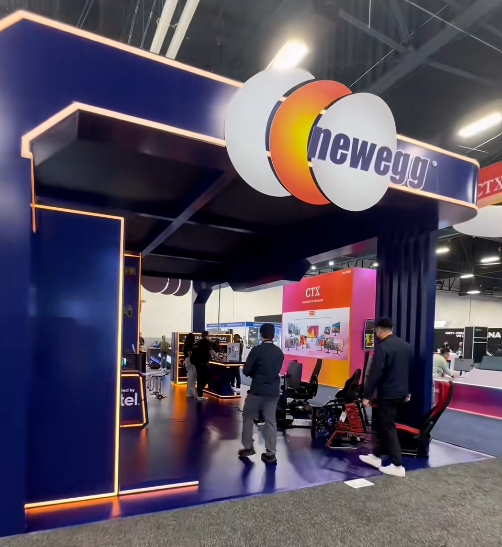
Newegg, a global leader in computer and technology products
Trend 6: XR Immersive Storytelling — From "Flat Viewing" to "Entering the Scene"
XR technologies are propelling short drama production into a virtualized, real-time era. On the production side, the widespread adoption of virtual production studios — such as LED walls for real-time background rendering — enables actors to perform in realistic virtual environments while reducing location-building costs. Game-engine-level real-time rendering allows directors to preview and adjust final visuals on set, effectively shifting post-production forward.
On the consumption side, XR transforms viewing into an interactive "scene entry." AR series extensions let viewers trigger special effects or hidden plots via smartphone cameras; VR short drama zones immerse users inside story worlds through headsets; interactive branching narratives allow viewers to determine plot directions via gestures or voice, turning linear storytelling into personalized immersive experiences.
Trend 7: Big Data-Driven Content Intelligence — From "Experience-Based Judgment" to "Precision Prediction"
The integration of big data and AI is shifting content creation from intuition-driven decisions to precision prediction based on holistic user profiling. By analyzing micro-expressions during viewing, pause and fast-forward behaviors, AI systems generate detailed emotional maps — identifying "thrill points" and "tear-jerker moments" while uncovering latent user preferences.
With deep insights, big data optimizes decision-making across the value chain. In planning, AI deconstructs massive hit dramas to identify common narrative patterns, character archetypes, and pacing structures — generating quantifiable "success formulas." In production, real-time feedback during early release stages enables "shoot-while-broadcasting" adjustments to maximize adaptability. In risk management, early-warning systems scan scripts to flag potential ethical, cultural, or policy risks before release.
Conclusion
From the dazzling debut of robot "actors" to the deep integration of AIGC, digital humans, cloud-native systems, blockchain, XR, and big data intelligence, the short drama industry is undergoing a systemic, technology-driven transformation. At its core, this revolution represents a comprehensive upgrade in content production, narrative forms, and consumption relationships. Production is shifting from experience-dependent, physically collaborative models to data-driven, cloud-coordinated, intelligent industrial systems. Storytelling is evolving from one-way linear narration into immersive experiences characterized by human-machine interaction and virtual-real convergence. Consumption is transforming from one-time viewing into long-term ecosystems encompassing asset ownership, value co-creation, and deep emotional connection.
Technology's ultimate purpose is not to replace human creativity but to liberate it from repetitive labor and give imagination wings. As robots convey emotion with precision, as AI understands the undercurrents of audience sentiment, and as the boundary between virtual and real dissolves, short drama as an art form gains unprecedented expressive depth and emotional capacity. In the future, short dramas may no longer be mere "digital snacks" for passive consumption, but rather participatory "digital theaters" — a new storytelling universe blending technological warmth with humanistic narrative.


