In February 2026, China's domestic AI video sector achieved another major breakthrough: Seedance 2.0, a new-generation video generation model developed by ByteDance's Jimeng AI, was officially rolled out at full scale. If earlier models such as Sora and PixelDance ushered AI video into a "silent film era," Seedance 2.0—powered by its proprietary audio–visual synchronized generation technology—has formally propelled the industry into a new age of "sound cinema."
After hands-on testing, Chinese video production team Yingshi Jufeng (Mediastorm) noted that Seedance 2.0 is no longer confined to single, static shots. Instead, it can understand and execute complex camera-movement instructions with stability, including challenging techniques such as pulling from close-up to wide shot and circular tracking shots. The model demonstrates strong spatial consistency between characters and backgrounds, as well as smooth visual continuity. By overcoming the long-standing limitations of traditional AI video generation—often described as a "random draw with limited controllability"—Seedance 2.0 allows creators to move beyond being mere prompt writers and truly become "directors" with control over camera language.
Overseas YouTube creator TheoreticallyMedia also gave high praise to the model's animation fluidity and visual stability in their review. Even when replicating complex camera movements from the series Severance, Seedance 2.0 was able to deliver seamless transitions, earning recognition as one of the most competitive multimodal video generation models currently available.
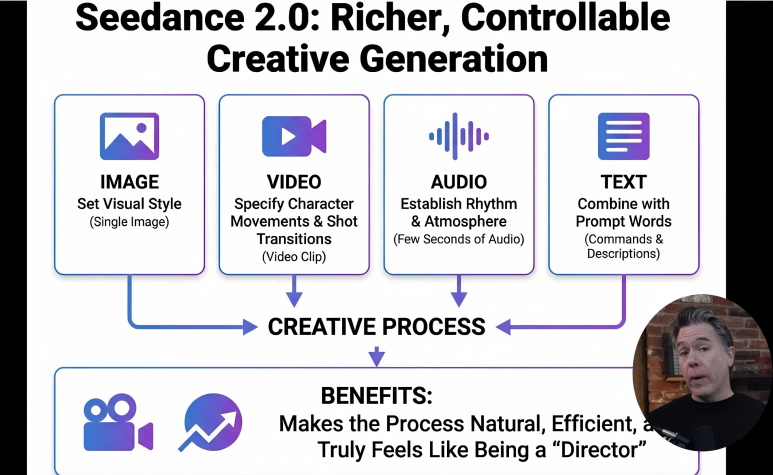
YouTube Blogger TheoreticallyMedia's Analysis of Jimeng Seedance 2.0
Meanwhile, the 76th Berlin International Film Festival will be held as scheduled from February 12 to February 22, 2026. As this visual feast prepares to unfold, public attention is not only focused on shortlisted films and major awards, but once again turns to a core issue that ignited global debate in the film and television industry at last year's 75th Berlinale—the contested boundary between artificial intelligence (AI) and cinematic art. Now that AI has effectively become a "standard configuration" in the audiovisual industry, can the practices and controversies surrounding AI at the Berlin Film Festival offer reference points and inspiration for the entertainment industry seeking to break through their current development bottlenecks?
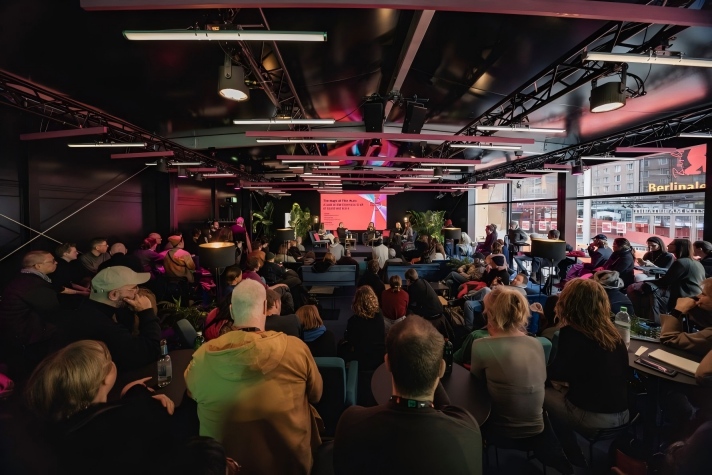
Berlin Film Festival Lecture and Special Event Promotional Image
A Berlinale Mirror: AI Controversies and Signals of Industry Transformation
Among the 22 films selected for the main competition section of the 76th Berlin International Film Festival, audiences will find both acclaimed works from Europe and North America and compelling perspectives from Asia. The competition lineup includes Josephine, directed by Beth de Araújo and starring Channing Tatum and Gemma Chan; the American film Queen at Sea, starring Juliette Binoche; Rosebush Pruning, directed by Karim Aïnouz and starring Elle Fanning and Callum Turner; as well as We Are Not Strangers, directed by Singaporean filmmaker Anthony Chen. Notably, this year's festival will present a Lifetime Achievement Award to Michelle Yeoh, making her the first Asian actress and the first performer of Chinese descent to receive this honor. The opening film will focus on the survival struggles of female journalists in Kabul, continuing the Berlinale's long-standing commitment to social reality and cultural diversity.
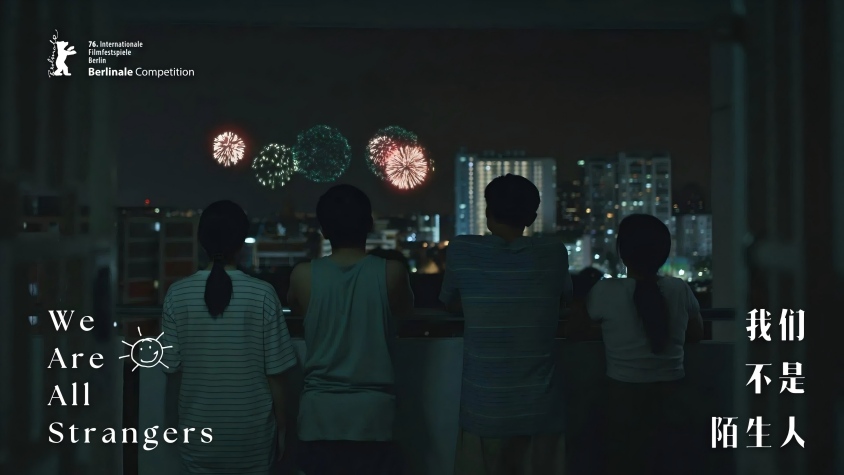
Berlinale Poster of We Are Not Strangers
Berlin has always been at the forefront of capturing the transformative changes in the film and television industry. In 2025, What's Next? by Cao Yiwen, an AI-driven feature film, premiered at the Berlinale. The film, created entirely by the director using AI from conception to post-production, brought the debate over the "Silicon Revolution" to a climax. At the same time, the AI-based lip-syncing technology in Light and the entirely AI-generated production in The Great Reset showcased the potential applications of AI in film, sparking fierce debates among supporters and detractors alike. This ongoing discussion is not only about the future of long-form videos and art-house cinema, but it also has strong relevance to the micro drama industry.

Poster for Rosebush Pruning
In terms of practical applications, AI has gradually permeated the entire film production process, becoming an essential tool for enhancing efficiency and expanding the boundaries of expression. Light, the opening film of the 2025 Berlinale, used AI to adjust the actors' lip movements to precisely match English dialogue, solving the challenges of traditional multilingual dubbing and offering new ideas for international distribution. The Great Reset generated all its settings and characters with AI, eliminating the need for actors and physical sets, drastically reducing filming costs and time, while also enabling visual narratives that would be difficult to achieve with traditional filmmaking methods. What's Next?, with its "one-man film" mode, demonstrated how AI could lower the threshold for creative production and enhance the "auteur cinema" attribute. In some ways, it extended and upgraded the "camera—pen" theory of filmmaking, which posits that cinema, like writing, is a unique language for freely expressing thoughts and emotions. Just as an author uses a pen to write, a director can now "write" with the camera, fully expressing personal will. Today, AI has become the new "pen" for filmmakers, offering a powerful assistant in the creation of films and self-expression, allowing creators to focus more on creativity and emotional communication.
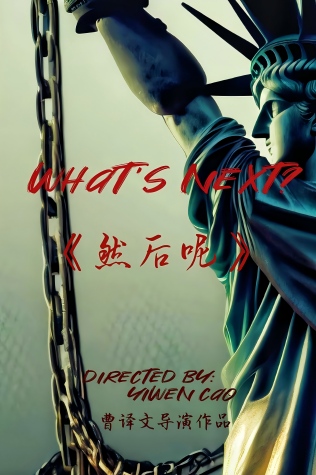
What's Next?, directed by Cao Yiwen
At the same time, the Berlinale also reflects the sharp divisions in the global film industry regarding AI, with the core issues centered around the balance between technology and art, and the protection of creators' rights. Some Hollywood stars and seasoned industry professionals have adopted a cautious stance toward AI, with some films even explicitly stating that they are "AI-free." Meanwhile, the European Parliament and industry experts have expressed concerns that generative AI could threaten creators' rights and cultural diversity, reshaping the industry's business model. How to responsibly use AI has become a pressing issue for the industry. As Ted Chiang stated in his article Why A.I Isn't Going to Make Art, the value of a work stems from the unique life experiences and emotional expressions of its creator, something that AI algorithms will never be able to replicate. Over-reliance on AI would only lead to superficial and homogenized creativity.
Berlinale Artistic Director, Tricia Tuttle, has stated that AI is merely a tool and not a universal solution. The festival prioritizes the emotional and aesthetic depth of a work, and the application of AI must adhere to the core of cinematic art, insisting on "responsible and creative use." This consensus provides rational guidance for AI practices in the film industry and offers a valuable reference for micro-drama in navigating the AI dilemma.
AI Empowering Micro Drama: Opportunity or Dilemma?
Compared with long-form video and art-house cinema, micro drama, characterized by being "short, fast-paced, lightweight, and low-cost," has a natural affinity with the strengths of AI. Applications such as AI-assisted scriptwriting, dubbing, and batch post-production have gradually become standard practices in the micro drama industry, driving large-scale expansion. At the same time, however, the sector has begun to face controversies similar to the AI debates seen at the Berlinale—along with even more pronounced developmental challenges.
The Opportunity : AI Empowering Micro Drama
AI's empowerment of micro drama runs through the entire value chain, from creation and production to distribution, closely aligning with the industry's core needs. In the process of overseas expansion, AI has become a key engine, embedded across every stage—from script planning and translation to material editing and ad placement. In China, some online literature and web drama companies in Hangzhou are already using self-developed large AI models to analyze overseas audience preferences in real time during script development and recommend local internet slang and trends. In Beijing, Hangzhou, and Changsha, multiple companies now use AI to translate scripts into dozens of languages while adapting them to local contexts. These tools can analyze an entire series within seconds and automatically generate thousands of trailer variations, reducing production costs by as much as 90%. During the creation stage, AI can also quickly generate script drafts based on keywords like theme and character design, shortening production cycles and lowering entry barriers, allowing more people with creative ideas but lacking professional experience to enter the industry. Additionally, AI-generated virtual scenes and characters allow micro dramas to enter genres like fantasy and science fiction at low costs, broadening the content range and expanding the target audience.
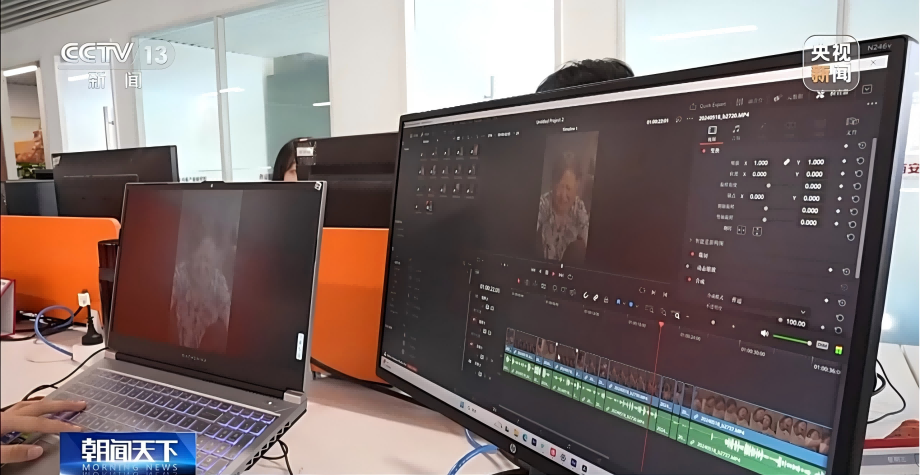
CCTV News highlights how online literature and web drama companies are empowering micro drama exports
The continuous iteration of technology has further lowered the creative threshold for micro dramas. "For truly creative and innovative professionals, this could be a new spring," said a relevant person from Shanghai Film Production. Creative ideas that were previously shelved due to high costs and technical difficulties can now be realized more quickly and efficiently with the help of AI tools.
At the policy and industry levels, supportive frameworks are also emerging to safeguard AI-enabled micro drama. The 2026 Shanghai Government Work Report explicitly calls for the cultivation and expansion of new cultural formats such as micro drama. Taking Shanghai Film Group Haopu as an example, as a core platform within Shanghai's "Sci-Tech Film Capital" AI creative ecosystem, it has established China's first film-and-television-dedicated computing power pool and high-standard virtual production studios, enabling AIGC to be applied across the entire short-form drama production pipeline. A representative case is Ling Tan, China's first AIGC quasi-live-action micro drama exceeding 100 minutes in length. Its production cycle was shortened by nearly half, overall costs were reduced by around 70%, while visual quality and narrative texture improved—achieving a rare combination of "faster, better, and cheaper."

Poster for Ling Tan, AIGC quasi-live-action micro drama
The rise of AI-powered animated micro drama has become another major growth driver for the industry. In early 2026, titles such as Zhan Xian Tai: AI Live-Action Edition went viral across major platforms. These works, which feature AI-generated quasi-human protagonists and incorporate cinematic camera movement and editing logic, are transitioning from experimental trials to the mainstream market. Produced by a 12-person team over 30 days with a computing cost of roughly 100,000 yuan, the series accumulated more than 180 million native views. Viewer comments frequently praised its "explosive visual effects" and "natural micro-expressions." Even though imperfections remained—such as occasional lip-sync issues—audiences showed a relatively high level of tolerance. Industry insiders predict that much of the incremental growth in the 2026 micro drama market will come from AI live-action animated micro drama, which targets a broader pan-audiovisual audience and holds the potential to break into markets traditionally dominated by live-action micro drama.
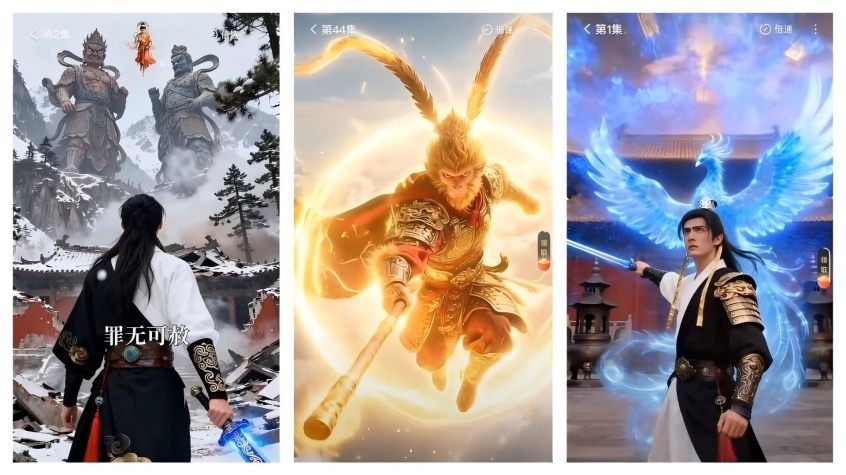
Zhan Xian Tai: AI Live-Action Edition
It is worth noting that the creative threshold for high-quality AI micro drama has not actually been lowered. Researchers from the Chinese Academy of Social Sciences point out that AI-driven creation is not merely a test of prompt-engineering skills, but an even greater test of a creator's aesthetic judgment, visual control, and narrative ability. "Without strong scripts and original ideas, even the most dazzling technology will only produce 'AI slop,'" one researcher remarked. Industry professionals share this view, emphasizing that script quality, storyboard design, and directorial vision will ultimately determine the trajectory of premium AI micro drama.
With the rise of AI live-action animated micro drama, the question of whether "AI-generated quasi-human characters will push back into the live-action market" has become a hot topic. From a market perspective, the audience base for live-action micro drama is far larger than that of niche animation markets. Once the quality of AI quasi-human characters approaches the standards of live-action micro drama, they gain the legitimacy to compete directly. Since the beginning of 2026, several AI live-action animated micro dramas—such as Apocalyptic Cold Wave: I Have a Mobile Fortress, Who's Afraid? and President Feng's Wife Wants a Divorce—have entered platform popularity charts. Among them, President Feng's Wife Wants a Divorce even topped micro drama trending lists, further fueling debates over whether AI can replace human actors. Some observers argue that future cultural and artistic production may split into two distinct paths: standardized, formulaic works completed by AI, and highly personalized, aesthetically demanding, and creativity-driven works that will continue to rely on human artists.
The Dilemma: Multiple Challenges Caused by AI Misuse
As AI becomes a routine tool in the micro drama industry, a new set of challenges has also emerged. Some creators have fallen into a "technology-first" trap, over-relying on AI while neglecting originality and quality.

Seedance 2.0, a new-generation video generation model developed by Jimeng AI
Creative homogenization has become one of the most prominent issues facing micro drama today. AI-generated scripts often rely on fixed templates and logical patterns, lacking distinctive originality. As a result, a large number of micro dramas cluster around high-stimulation genres such as sweet romance, melodramatic love, and revenge narratives, with highly similar plots and character setups. In some cases, creators make only minimal edits to AI-generated scripts before releasing them in bulk, quickly leading to audience fatigue and dragging down the industry's overall reputation. This phenomenon echoes concerns raised at the Berlinale that excessive reliance on AI could ultimately result in creative homogenization.
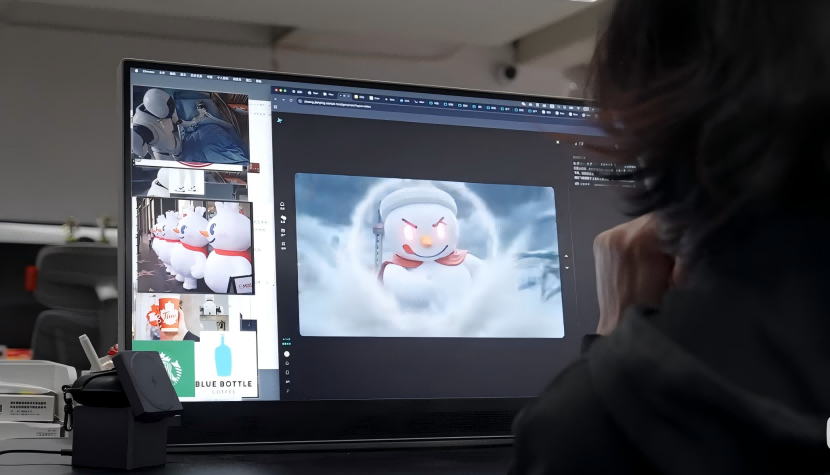
Yingshi Jufeng (Mediastorm) 's Review of Jimeng Seedance 2.0
Abuse of technology further affects the quality of works. Some creators, in pursuit of efficiency and low costs, neglect to optimize AI-generated voiceovers, visuals, and special effects, resulting in rough productions: AI voiceovers sound stiff and lack emotion, the color grading of images is imbalanced, the editing is chaotic, and virtual scenes and characters lack realism. Such works exacerbate the public's stereotype of "low-quality" micro dramas, which is detrimental to the industry's long-term development.
Copyright and ethical risks are also becoming more prominent. Currently, the copyright ownership of AI-generated content lacks clear legal and industry regulations. The Micro drama industry frequently experience copyright infringement disputes, with issues such as AI-generated visuals suspected of plagiarism, and virtual characters infringing on the rights of real actors. Furthermore, the replacement of basic creative roles by AI may increase employment pressures on scriptwriters, voice actors, and other professionals, squeezing the survival space for new creators and impacting the industry ecosystem.
How Can AI Micro Dramas Break Through?
By drawing on industry consensus from both the Berlin Film Festival and international film industries, the micro drama industry can explore three potential paths for breakthrough and promote high-quality development.
Stick to content core, let AI serve creative expression. The consensus from the Berlin Film Festival indicates that the core of film art is emotion and humanistic reflection, with AI only serving as an auxiliary tool. For micro dramas, the key to breaking through might be to escape excessive "AI dependence" and redefine AI's role—as an assistant for repetitive tasks, not a full process replacement. Creators can use AI for tasks like generating draft scripts and handling batch post-production work, freeing up more energy for creative brainstorming, plot refinement, and emotional expression. This would reduce template-based creation. At the same time, creators could follow the Berlin Film Festival's focus on reality and diversity, using AI to explore the value of real-world, local, and niche topics, creating more differentiated and thought-provoking content to alleviate the homogenization issue.

The video image generated by Jimeng AI Seedance 2.0
Explore industry standards to avoid ethical and copyright risks. In line with the European Parliament's recommendation to "establish a strict AI regulatory framework," the micro drama industry could accelerate the development of a regulatory system. Industry associations can take the lead in setting AI application standards, clarifying the copyright ownership of AI-generated content, defining AI's application boundaries, and prohibiting infringement of others' copyrights, portrait rights, and the generation of vulgar or negative content. At the same time, regulatory bodies should accelerate the improvement of laws and regulations, clarify the standards for identifying AI infringements and penalties, strengthen ethical reviews, and ensure industry supervision to protect creators' legitimate rights and guide the healthy development of the industry.
Leverage AI's advantages to build a differentiated development ecosystem. Micro dramas can draw on AI innovations showcased at the Berlin Film Festival, combining their own "lightweight and fragmented" characteristics to create differentiated advantages. In terms of distribution, they can refer to the multi-language adaptation technology used in Light, increasing their international reach by using AI to handle multi-language voiceovers and subtitles, catering to different regional audiences. They could also explore "AI + Interactivity" modes, where algorithms create personalized story branches, enhancing audience engagement.
In terms of the creative ecosystem, micro dramas can follow the Berlin Film Festival's approach of supporting new talent by establishing an "AI + New Talent Support" platform. AI could assist new creators with script optimization and audience analysis, fostering high-quality creative forces and improving the industry ecosystem.
Conclusion: Finding the Path of Micro Dramas in the Age of AI
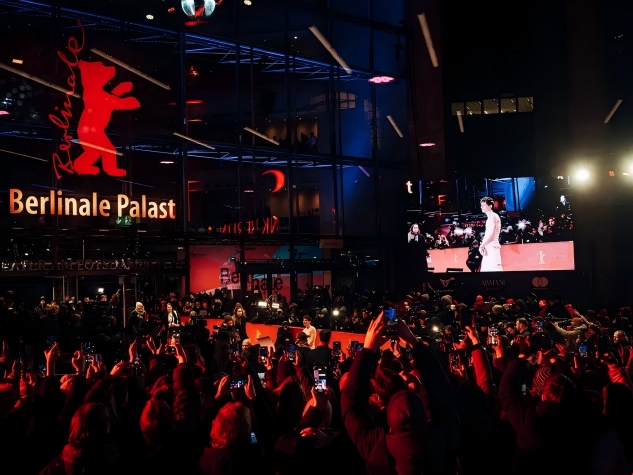
The event photo of the 75th Berlin Film Festival
In an era of integration between technology and art, the release of Seedance 2.0 and the upcoming 76th Berlin International Film Festival will witness parallel transformations and explorations within the film and television industry. Core issues such as the boundary between AI and originality, the industry monopolization driven by streaming platforms, and other critical questions must be further explored through practice. As the fastest-growing audiovisual medium, micro-drama carries the experimental nature of this era, making it all the more worthy of in-depth analysis. (Author / Li Sixuan, Editor / Cheng Yingzi/)


