Every February, when winter has yet to fully fade, global attention turns to the United States—and to an event that transcends sports itself: the Super Bowl. This annual National Football League (NFL) championship game has long since evolved beyond a sporting contest into a cultural spectacle, a commercial carnival, and a global entertainment phenomenon. Recently, the match-up for the 60th Super Bowl (Super Bowl LX) was officially confirmed. The game will take place on February 8, 2026, at 3:00 p.m. (U.S. Eastern Time) at Levi's Stadium in Santa Clara, California, where the champions of the American Football Conference (AFC) and the National Football Conference (NFC) will face off for the title. As major brands ramp up their marketing efforts, a mix of full advertisements and early teaser clips has already begun circulating across social media and broadcast platforms, steadily driving up anticipation and buzz.

Long shots before the season, the Seattle Seahawks and New England Patriots will meet in Super Bowl LX
With over 100 million television viewers, a staggering price tag of nearly USD 8 million for a single 30-second ad slot, and widespread, all-platform public discussion across social media, the Super Bowl has cultivated a unique traffic ecosystem. Its communication logic—characterized by high investment, strong attention-grabbing power, massive reach, and multi-platform coordination—happens to align closely with the current trajectory of Chinese mini series going global. As Chinese mini series enter a phase of explosive overseas expansion, they are in urgent need of mature dissemination models and powerful traffic gateways to break out of niche circles. This raises a core question: how can the industry draw lessons from the Super Bowl's traffic strategies and marketing playbook to open up new pathways for mini series overseas, overcome distribution challenges, and ultimately achieve the goal of "Chinese stories, global reach"?
Why Has the Super Bowl Become a Battleground for Global Brands?
The reason the Super Bowl has transcended the boundaries of a sports event to become a must-win marketing arena for global brands lies in its mastery of a set of highly effective and replicable communication strategies. These strategies stem not only from its enormous traffic base, but also from its sophisticated content distribution logic and well-established marketing system. This, precisely, is the core essence that Chinese mini series seeking to go global urgently need to study and adapt.
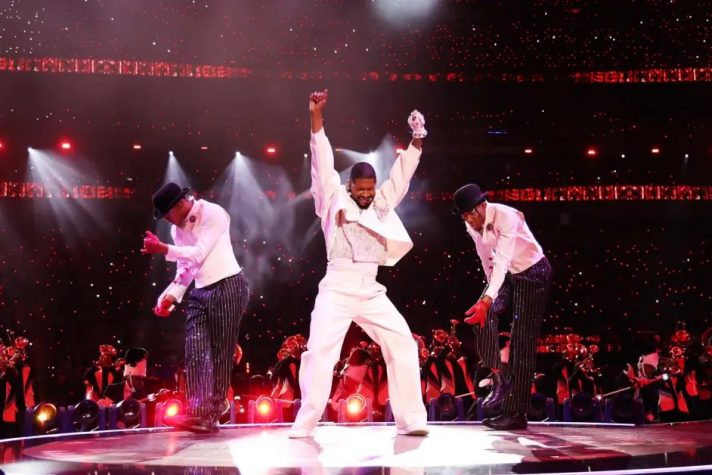
Usher performs onstage during the Apple Music Super Bowl LVIII Halftime Show
The primary communication advantage of the Super Bowl lies in its unparalleled global traffic base and audience coverage. As one of the most-watched sporting events in the world, the Super Bowl consistently maintains high viewership numbers. In 2024, the average viewership across all platforms reached 123.7 million, with the halftime show featuring Usher breaking records by attracting 129.3 million viewers, far surpassing the overall average. The audience not only consists of fervent sports fans in the U.S. but also spans sports enthusiasts, entertainment consumers, and trend followers around the world, creating a diverse and highly engaged traffic pool. In parallel, the commercial value of the Super Bowl has soared, with the cost of a 30-second ad slot for the 2026 Super Bowl approaching USD 8 million (approximately 58.45 million RMB), setting a new record from USD 7 million in 2023 and 2024. This high level of investment reflects brands' recognition of the Super Bowl's traffic value—where a single ad or segment can potentially reach hundreds of millions of global viewers, achieving the "one-time investment, global exposure" communication effect. This is exactly the core demand for breaking through the "circles" and increasing views for Chinese mini series going global.
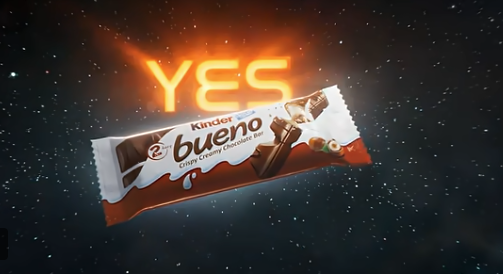
Kinder Bueno released the spot "Yes Bueno"
Beyond the traffic base, the Super Bowl's mature content distribution logic is key to its sustained influence, and this logic aligns perfectly with the content needs of Chinese mini series going global.
First, lightweight expression has become the mainstream of communication. Super Bowl ads consistently adhere to the principle of "short and concise." The 30-second, high-priced commercials and brief teaser trailers cater perfectly to the current global audience's fragmented viewing habits. During the 2026 Super Bowl, brands like Kinder Bueno and Instacart will release full commercials to get a head start, while companies like Lay's and Uber Eats will launch shorter teasers to build suspense. This "combination of long and short formats" ensures content integrity while maintaining ongoing buzz, which aligns closely with the "short duration, fast pace, strong hooks" content model of mini series.
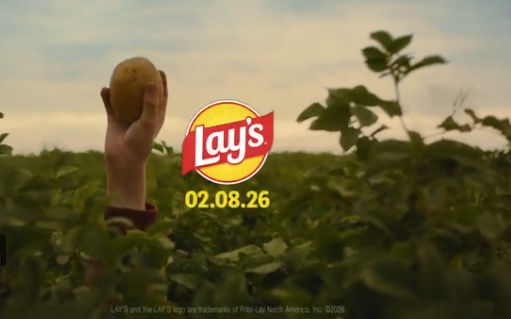
Lay's returned to the Super Bowl stage with a teaser titled "Potato Up"
Second, create strong topic-driven content to stimulate organic spread. Super Bowl ads have always been successful at generating buzz by incorporating attention-grabbing elements. Whether it's featuring top-tier celebrities (like Ben Affleck and Jennifer Aniston in the iconic "slam dunk" ad), tapping into deep emotional resonance (such as Budweiser's "American Idol" ad, which evokes nostalgia and pride among American viewers), or using quirky, creative approaches (like Skittles' decision to ditch traditional ads in favor of a live-streaming interactive event), these ads spark immediate and widespread conversation. This kind of topic-driven design has the power to quickly trigger "traffic fission," creating a viral effect that spreads across platforms. Mini series can take valuable cues from this model, creating memorable moments and leveraging provocative content to ignite discussions abroad. By focusing on emotional connections, engaging celebrities, or introducing unconventional narratives, mini series can similarly amplify global attention and foster organic conversations in overseas markets.
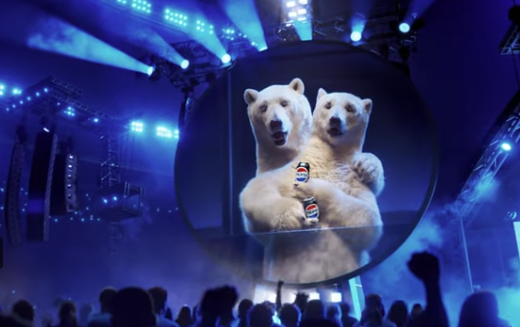
Pepsi's 2026 Super Bowl spot "The Choice"
Third, multi-platform synergy builds a communication loop. The Super Bowl has long broken away from relying solely on television broadcasts, forming a collaborative model of "broadcasting platforms + social platforms." Before the game, teasers and behind-the-scenes footage are released on social platforms to generate anticipation. During the event, simultaneous live broadcasts are carried out across TV and online platforms. After the game, recap videos, edited segments, and topic discussions continue to keep the buzz alive, realizing a full-cycle communication of "preheating—peak—review." During the Super Bowl, ads from brands like Xfinity and Budweiser are quickly spread across platforms such as YouTube and Instagram, with viewership crossing the ten million mark in a short time. This multi-platform synergy model breaks the limitations of a single communication scenario, aligning closely with the global distribution and all-scenario coverage needs of mini series going global.

OpenAI's first appearance at the Super Bowl
In addition, the marketing value of the Super Bowl is particularly insightful for Chinese mini series' overseas expansion. The "high investment, high return" logic behind Super Bowl ads is not simply about piling up traffic but is rooted in precise control over "target audience, quality content, and scene adaptability." Nike's marketing campaign "So Win" focused on female athletes and responded to societal injustice towards women. Once aired, it sparked intense discussions both domestically and internationally. OpenAI's first appearance at the Super Bowl in 2025 precisely targeted millions of ordinary viewers unfamiliar with AI, using a 60-second ad to revisit human innovation history and position AI as one of humanity's greatest innovations, quickly achieving brand awareness. This "precise targeting + content adaptation" marketing mindset is precisely what is lacking in the current internationalization strategy of Chinese mini series. It is also the key to achieving "high-quality overseas expansion."
Why Super Bowl-style Thinking is Needed for the Global Expansion of Chinese Mini Series?
In recent years, with the enhancement of China's cultural soft power and the rapid development of the digital content industry, the global expansion of Chinese mini series has entered its "golden development period." With advantages such as low cost, high productivity, and strong pacing, Chinese mini series have secured a place in the global market, becoming a new vehicle for the spread of Chinese culture. However, Chinese mini series still face numerous pain points and challenges in their global expansion, and the communication logic and marketing experience of the Super Bowl can effectively address these issues, providing a breakthrough strategy for their international success.
Looking at the current development situation, the momentum for the internationalization of Chinese mini series is strong, and there is a solid foundation for applying Super Bowl-style thinking to drive breakthroughs. Currently, the overseas distribution platforms of Chinese mini series have covered major global markets, with over 300 mini series apps, and social platforms like TikTok and Instagram have become the core distribution channels for mini series abroad. Chinese companies develop the top three mini series apps in global rankings. In 2026, the scale of China's mini series overseas expansion is expected to exceed 60-90 billion USD, representing a significant increase compared to previous years. Meanwhile, the empowerment of AI technology provides full-link support for the internationalization of mini series, greatly reducing overseas expansion costs and improving content production efficiency. National-level export policies also create a favorable external environment for the global expansion of Chinese mini series, helping to push the industry from "scale expansion" to "high-quality internationalization."
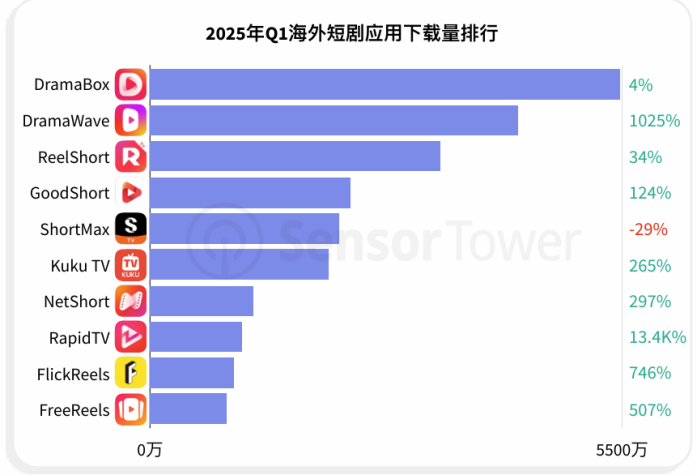
Overseas Mini Series App Download Rankings, Q1 2025
Despite strong momentum, the global expansion of Chinese mini series still faces several core pain points. These challenges stand in sharp contrast to the strengths of the Super Bowl and highlight why adopting a Super Bowl–style mindset is increasingly necessary.
First, fragmented distribution and the lack of a centralized traffic gateway. Unlike the Super Bowl's "everyone-watches-at-once" traffic pattern with explosive, concentrated attention, Chinese mini series going global largely rely on organic distribution on single platforms. They lack a Super Bowl–like focal moment that aggregates massive attention, resulting in scattered exposure and difficulty generating a "global conversation." Most mini series circulate on just one social or streaming platform, limiting audience reach and weakening traffic amplification effects.
Second, insufficient content localization and persistent cultural barriers. Super Bowl commercials resonate widely because they are deeply rooted in local culture and emotional needs—Budweiser's patriotism or Dove's advocacy of female confidence, for example, precisely align with American audience sentiment. By contrast, some Chinese mini series fail to adequately adapt to overseas cultures, languages, and aesthetic preferences. Forced insertion of Chinese elements can alienate core international audiences. At the same time, formulaic storytelling and lack of innovation make it hard for these works to stand out or build lasting competitiveness in overseas markets.
Third, limited marketing tactics and weak topic generation. The Super Bowl sustains attention through a full-cycle marketing system—celebrity endorsements, suspense-driven teasers, and multi-platform coordination—that keeps buzz alive before, during, and after the event. Many Chinese mini series, however, still depend on a "natural traffic + simple translation" model, lacking systematic marketing strategies. Teasers, challenge-based engagement, and KOL collaborations are rarely used, making it difficult to trigger organic sharing or viral spread among overseas audiences.
Fourth, weak brand recognition and insufficient IP development. The Super Bowl's long-term influence is built on years of consistent brand investment. Brands like Budweiser, Nike, and Coca-Cola have cultivated strong brand identities through repeated Super Bowl appearances. In contrast, Chinese mini series going global are often treated as one-off projects, with little emphasis on IP building. Few develop into serialized or expandable IPs capable of sustaining long-term impact, making it harder for overseas audiences to remember or recognize Chinese mini series brands and undermining sustainable growth.

Poster for Nike's marketing campaign "So Win"
It is clear that many of the core challenges facing Chinese mini series overseas can be addressed by learning from the Super Bowl's communication logic and marketing experience. Adopting a Super Bowl–style mindset does not mean simple replication; rather, it involves creatively integrating these principles with the unique strengths of mini series to achieve meaningful breakthroughs and upgrades.
Empowering the Global Expansion of Mini Series with Super Bowl Thinking
The connection between the Super Bowl and the overseas expansion of mini series is no coincidence. Both favor lightweight content formats, rely heavily on socialized distribution, and primarily target younger audiences. This natural alignment makes Super Bowl marketing strategies highly transferable.
Based on the current landscape and strengths of Chinese mini series going global, Super Bowl thinking can empower overseas expansion across four key dimensions—traffic leverage, content optimization, marketing upgrades, and IP building—to help mini series achieve precise audience breakthroughs and high-quality global development.
First, leverage traffic logic by targeting overseas "Super Bowl–like" scenarios to achieve precise audience expansion. The Super Bowl's core traffic advantage lies in its concentration and global reach. Rather than blindly following the trend and investing heavily in costly Super Bowl advertising, micro-short dramas going global can borrow the idea of "scenario binding" by locking onto overseas "Super Bowl–like" moments to capture concentrated attention.
On the one hand, this means aligning with top-tier international sports events and entertainment galas. Drawing on the Super Bowl's "sports + content" integration model, trailers and customized micro-short content can be linked with major overseas sports events (such as the Premier League, La Liga, or the FIFA World Cup USA–Canada–Mexico) and entertainment ceremonies (such as the Grammys and the Oscars). By riding the surge of attention around these events, mini series can gain strong exposure. For example, following TCL's Super Bowl sponsorship model, trailers can be placed during major international events, or customized mini series clips can be co-created with event organizers to attract sports audiences.
On the other hand, replicate the Super Bowl's "multi-platform synergy" approach. Integrate overseas short-video platforms (TikTok, Instagram Stories), streaming platforms (Netflix, Disney+), and social media platforms (Facebook, Twitter/X) to build a full-cycle communication loop of "teaser warm-up–main release– topic amplification." Before the event, release trailers, behind-the-scenes footage, and cast interviews on social platforms to create suspense and build buzz with concise, punchy clips. During the event (or when the mini series goes live), release full episodes simultaneously on streaming platforms while posting highlights and edited clips on short-video platforms to drive viewers to the main content. Afterward, sustain momentum through discussions, analyses, and secondary creations to extend reach and influence.

Concept Image for the 2026 FIFA World Cup (USA–Canada–Mexico)
Second, optimize content creation by aligning with the Super Bowl's core formula of being "short, refined, and emotionally resonant," while adapting to overseas audiences. The success of Super Bowl commercials ultimately comes down to "content first": light in form yet strong in emotional impact. Mini series going global should follow the same logic—maintaining their advantages of short duration and fast pacing while upgrading quality through localized adaptation. To begin with, refine pacing through lightweight storytelling. Borrowing from the Super Bowl ad rhythm of "hook in 3 seconds, closure in 60 seconds," mini series should continue leveraging their 1–3 minute per-episode format by opening each episode with a strong hook that immediately captures attention, while keeping plots tight, coherent, and free of drag—well suited to fragmented viewing habits overseas. For example, drawing inspiration from Xfinity's 2026 Super Bowl ad concept, an intriguing setup (like Jurassic Park has Wi-Fi) can quickly hook viewers, followed by a concise storyline that delivers the core message. Next, deepen regional adaptation. By integrating local cultures, emotional needs, and aesthetic preferences across different markets, creators can pursue innovative "Chinese IP + local production" models that avoid cultural disconnects. Inspired by Budweiser's patriotic ads that resonate with local sentiment, mini series can weave in local cultural elements, values, and emotional appeals—such as incorporating folk traditions for Southeast Asian markets, or focusing on themes like female independence and family warmth for North America. At the same time, AI-assisted translation can be used to better match local slang and conversational language, avoiding stiff translations and enhancing the overall viewing experience.
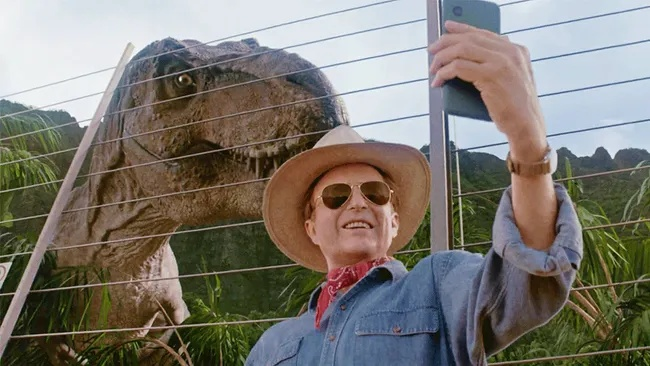
In Xfinity's first-ever Super Bowl commercial, the original Jurassic Park trio reunite in a playful reimagining of the 1993 classic
Third, upgrade marketing tactics to build a Super Bowl–style full-cycle marketing system and amplify communication power. The success of the Super Bowl is inseparable from its full-cycle marketing framework of "warm-up–breakout–review." Likewise, mini series going global should break away from single, fragmented promotion models and instead establish a systematic marketing system to enhance reach and impact.
First, the warm-up stage: suspense-driven marketing to accumulate momentum. Drawing on the teaser strategies used by brands like Lay's ahead of the 2026 Super Bowl, mini series can begin promotion one to two weeks before release by sharing trailers, plot snippets, and behind-the-scenes footage on social platforms to create suspense and anticipation. At the same time, interactive activities such as hashtag challenges, polls, and audience participation can be launched—for example, "plot prediction" or "favorite character voting"—to stimulate engagement and build initial traffic. In addition, collaborating with overseas KOLs and influencers to repost trailers or recommend the series in advance can further expand the scope of pre-release exposure by leveraging their existing fan bases.
Second, the breakout stage: concentrated effort to achieve traffic fission. On the release day, micro-short dramas can be launched in alignment with overseas high-attention moments (major sports events, holidays, celebrity birthdays), while intensifying promotion through targeted advertising on short-video and streaming platforms to reach a wider pool of potential viewers. KOLs and influencers can be mobilized for secondary creations, such as plot edits or reaction videos, guiding audiences to watch the full episodes. Related hashtag challenges can invite viewers to imitate iconic lines or actions from the drama, encouraging user-generated content and creating a "mass participation" atmosphere that mirrors the Super Bowl's nationwide discussion effect. Additionally, inspired by TCL's Super Bowl "bus tour" concept, offline interactive events can be held in select overseas cities to attract local audiences and boost visibility. Meanwhile, highlights can be re-edited and accompanied by recap analyses for continued circulation on social platforms, extending the life cycle of attention around the mini series.
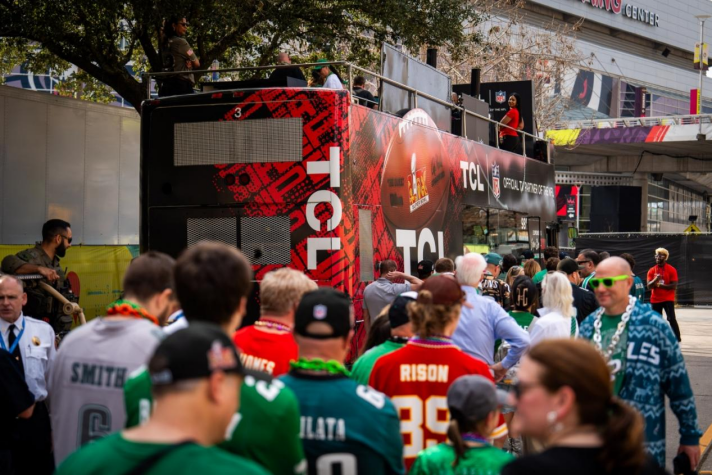
TCL Super Bowl Bus Tour
Fourth, strengthen IP development by learning from the Super Bowl's long-term brand cultivation mindset to achieve sustainable growth. The Super Bowl's enduring influence stems from brands' long-term investment and IP-driven operations. For mini series to achieve sustainable global development, IP construction must be strengthened to move beyond the limitation of "single-title exports" and toward building an IP matrix.
On the one hand, develop serialized IPs. During the creation process, creators should plan for long-term IP potential. For mini series that gain strong popularity and positive reception, sequels or spin-offs can be produced to form serialized IPs. Drawing inspiration from the Marvel IP matrix (even though Marvel did not appear in the 2026 Super Bowl, its IP operation model remains instructive), diversified storylines can be built around core characters and settings to achieve a "one hit, multiple linkages" effect. At the same time, brand-building of IPs should be emphasized through unified logos, theme songs, and visual styles to reinforce audience recognition.
On the other hand, commit to long-term cultivation of overseas markets. Following the example of brands like Budweiser and Nike, which have sponsored the Super Bowl over many years, mini series should adopt a long-term market strategy rather than short-term opportunism. By continuously delivering high-quality content, they can accumulate brand reputation. Strengthening long-term partnerships with overseas production companies, distribution platforms, and KOLs can help establish stable cooperation and enable "localized operations with long-term development." Furthermore, IP-based derivative development—such as merchandise (toys, posters, cultural and creative products)—can expand commercial value and achieve a dual breakthrough of "content export + product export."
At the same time, it is essential to remain alert to the risks of blind imitation and avoid common pitfalls in going global. Avoid blindly pursuing "high investment"—the core advantage of mini series lies in low cost and high output, so precision investment and cost-effectiveness should remain priorities, with a focus on niche markets and quality content. Cultural adaptation risks must also be mitigated: neither rigidly copying Super Bowl content models nor mechanically inserting Chinese elements will work; instead, respect for local cultures is crucial to avoid alienating audiences. Finally, do not blindly chase trending scenarios—when aligning with overseas "Super Bowl–like" moments, choices must be made rationally based on content positioning and target audiences. Only precise matching can yield optimal communication results.
In summary, drawing lessons from the Super Bowl mindset, mini series going global should adhere to a principle of "balanced development." They should absorb the Super Bowl's communication logic and marketing experience while staying grounded in their own strengths and the demands of overseas markets, forging a path of differentiation, localization, and quality. Avoiding both mechanical imitation and isolated self-reliance, innovation through learning is the key to achieving high-quality global development for mini series.
Conclusion: The Super Bowl as a "New Starting Point" for Mini Series Going Global
The momentum of Super Bowl LX in 2026 continues to resonate, once again demonstrating the event's immense traffic power and marketing value. The Super Bowl's communication code has never been about "sky-high ad prices" or "celebrity stacking," but rather about precise audience targeting, high-quality content, and scenario alignment—supported by multi-platform synergy, full-cycle marketing, and long-term cultivation. This very mindset offers Chinese mini series, now accelerating their global expansion, a key to overcoming bottlenecks and achieving broader reach.
Chinese mini series already possess strong growth momentum, mature content production capacity, and dual support from policy and technology. Empowered by Super Bowl–style thinking, they can break through communication barriers, improve content quality, and enhance brand influence—transitioning from "large-scale export" to "high-quality export." The Super Bowl is neither the endpoint nor the sole template for mini series going global. Rather than replicating its model, creators should learn from its core logic, leverage the unique strengths of Chinese culture, and align with local overseas demands to produce content that is both distinctly Chinese and globally adaptable, while building differentiated communication and marketing systems.
Looking ahead, as the heat of the 2026 Super Bowl continues and the FIFA World Cup USA–Canada–Mexico approaches, new global traffic opportunities will keep emerging. By embracing Super Bowl–style thinking in traffic, content, and marketing—combined with AI empowerment and long-term IP strategies—Chinese mini series are well positioned to transcend geographical boundaries, reach broader global audiences, and allow Chinese stories, through this lightweight format, to travel the world and resonate worldwide. (Author / Li Sixuan, Editor / Cheng Yingzi)


