On January 26, Hong Kong director Wong Jing appeared at the Central Plains Micro-Short Drama Industrial Highland Launch Ceremony and Jingdian Media's Henan Landing Initiative, announcing that his company would officially establish operations in Zhengzhou, with plans to shoot one hundred high-quality micro-short dramas this year at the Zhengzhou Airport Economy Zone. The following day, Wong Jing appeared again in Zhengzhou to preside over the launch ceremony of Ao Cheng Feng Yun (Casino Tycoon), a micro-short drama for which he serves as chief producer and head scriptwriter.
He remarked: "Having worked in film and television for decades, I have deeply felt the transformation of content dissemination in this era. Micro-short dramas are precisely a product of this trend. Choosing Henan is by no means accidental—this is one of the major birthplaces of Chinese civilization and has never lacked compelling storytelling material. Micro-short dramas are an ideal bridge for revitalizing cultural resources and connecting with younger audiences."
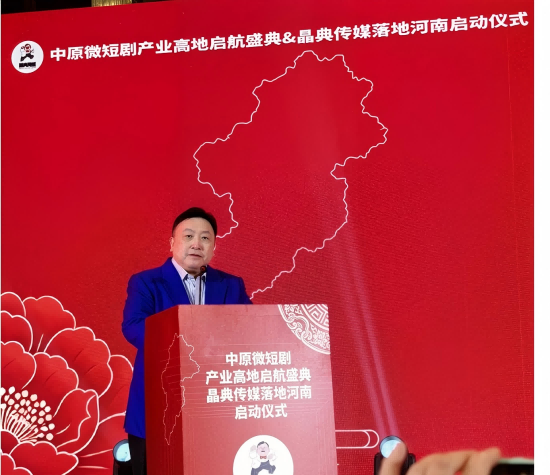
Wong Jing attends the Central Plains Micro-Short Drama Industrial Highland Launch Ceremony and the Jingdian Media Henan Launch Event
The news immediately drew industry attention. Known for his prolific output and sharp commercial instincts, this "King of Entertainment" has directed or participated in the production of hundreds of films, including Royal Tramp, Tricky Brains, Hail the Judge, and God of Gamblers. However, his true creative career began at Television Broadcasts Limited (TVB) in Hong Kong, on the variety program Enjoy Yourself Tonight, which is widely familiar to audiences. At TVB, he was a young screenwriter bent over his desk, who first made a name for himself with wildly imaginative comedy sketches. Over the past half century, from the cradle of Hong Kong television to a short-drama base in China's Central Plains, the trajectory of Wong Jing—now nearing 70—is not merely the commercial relocation of a filmmaker. It is more like a prism, refracting the profound transformations of the Chinese-language film and television landscape, as well as a frequently invoked "historical what if": had TVB, during its golden era of the 1990s, made a full-scale move north and deeply integrated into the mainland market, could its glory have been extended for another twenty years? Wong Jing's current "hundred micro-dramas plan" reads as a compensatory experiment in response to that missed opportunity.
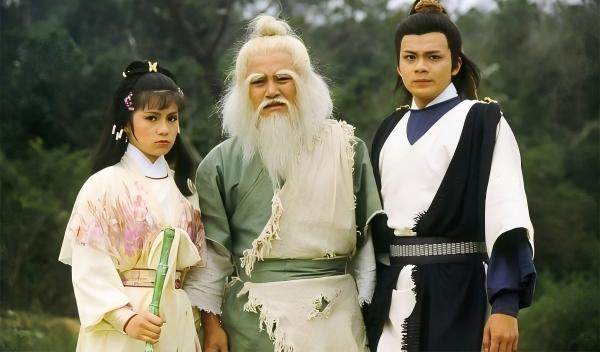
The Legend of the Condor Heroes (1983 TV Series)
TVB's "Creative Soil" and Wong Jing's Comedy Forge
At its peak, TVB was nearly synonymous with Hong Kong television itself. From The Legendary Fok (1981 TV Series) to The Legend of the Condor Heroes (1983 TV Series), these productions not only dominated local ratings and launched generations of stars, but also crossed regional boundaries to profoundly influence mainland audiences for decades.This far-reaching impact was inseparable from Hong Kong's unique industrial environment and economic drivers of the time.
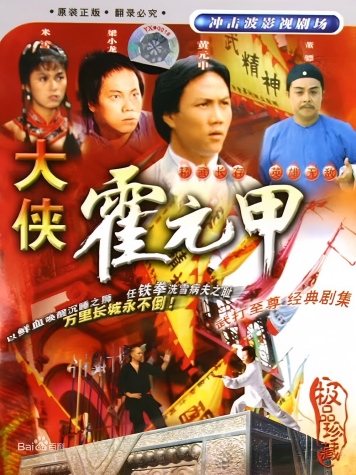
The Legendary Fok (1981 TV Series)
TVB functioned as a vibrant creative incubator, adhering to a philosophy of creation-led production and talent-first development, granting young creators ample room to experiment. Wong Jing was a quintessential product of this environment. At TVB's flagship variety show Enjoy Yourself Tonight, he wrote tirelessly, producing a large volume of short, punchy comedy sketches dense with jokes. This high-intensity training sharpened his comedic instincts and narrative rhythm, while allowing him to experience firsthand the full process of rapidly converting freewheeling imagination into mass entertainment products.
Wong Jing was far from the only beneficiary of this soil. Ann Hui, Tsui Hark, Johnnie To, Stanley Kwan, Wong Kar-wai, and many other directors who would later shape the Chinese-language film landscape all underwent their first industrial baptism at TVB. The label "the Whampoa Military Academy of Chinese-language film and television" was well deserved.
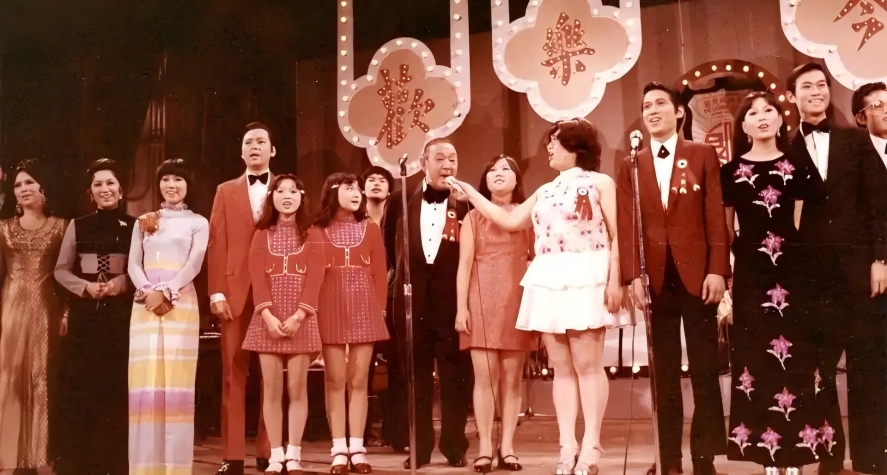
Enjoy Yourself Tonight (Source: Hong Kong Po Leung Kuk official website)
It was precisely within this creative soil that Wong Jing formed the core credo that would run through his entire career: "If audiences understand it and enjoy it, that's the ultimate truth." This pragmatic principle, forged during TVB's golden era, became the key driving force behind his later commercial success. After leaving TVB, he brought this rigorously trained market sensibility and production efficiency into the most vibrant wave of Hong Kong cinema, eventually becoming both a culmination of commercial filmmaking and a complex cultural symbol.
Wong Jing's success has multiple dimensions. He is not only a high-output "film businessman" (having participated in over 160 films), but also a shrewd operator deeply attuned to the pulse of Hong Kong's grassroots popular culture. His films—whether the God of Gamblers series that sparked a genre craze, The Romancing Star catering to urban romantic fantasies, or category-III films straddling the boundaries of eroticism and violence—are all precise projections of Hong Kong's social mentality.
In a rapidly modernizing metropolis, the urban middle and working classes sought direct sensory stimulation, immediate emotional release, and entertainment that required no cognitive burden. Wong Jing's adept use of parody, satire of the entertainment industry, and rapid imitation of popular genres were concrete strategies for translating these secular cultural demands into commercial products.
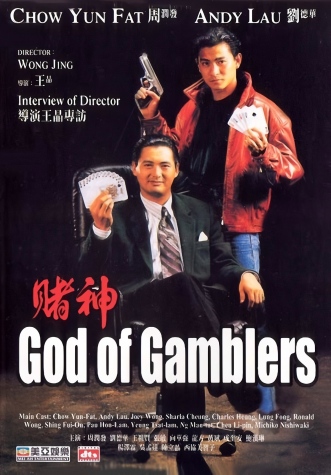
Poster for God of Gamblers
Facing the wave of short-form dramas, will Wong Jing reactivate the creative instincts he honed at TVB, reviving the improvisational vitality of Enjoy Yourself Tonight through a daily-update rhythm, and packing high-density humor and everyday warmth into three-minute episodes? His ambition is equally clear: to apply his time-tested entertainment formulas to the mainland micro-short drama industry, choosing Zhengzhou Airport Economy Zone in Henan as the production base, leveraging its cost advantages and policy support, and planning an integrated "film and television content + livestream e-commerce" model, with the goal of building a regional industry hub.
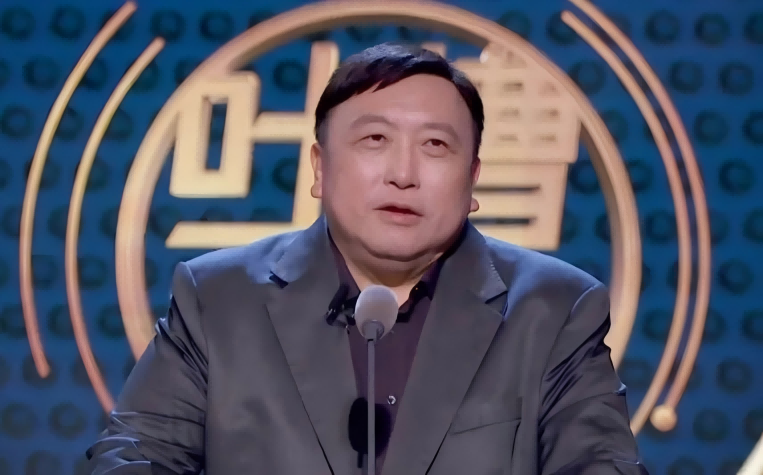
Wong Jing appears on the comedy talk show Roast! Season 3
TVB's Lost Twenty Years and the Implications for China's Micro-Short Drama Industry
Wong Jing has once remarked in an interview that had TVB aggressively entered the mainland market in the 1990s—leveraging its content strengths, production experience, and star resources—it might have extended its golden era. This observation points directly to a critical strategic window in TVB's history.
During the 1990s, as China's reform and opening deepened, economic growth and cultural consumption surged. Although TVB dramas and variety shows had already accumulated massive mainland audiences and strong brand recognition through informal channels, TVB never carried out a systematic, large-scale localization strategy. Its operational focus remained largely on Hong Kong and overseas Chinese markets. As the mainland film and television industry rapidly expanded under the combined forces of policy, capital, and internet platforms, TVB's advantages gradually eroded. Its closed production-broadcast integration system and relatively fixed genre formulas proved increasingly inadequate in the face of a broader market, fiercer competition, and more diverse audience tastes.
TVB's two decades of fluctuation and transformation offer valuable lessons for today's booming micro-short drama industry. Its decline was not sudden, but closely tied to systemic closure, talent drain, and weakened creative quality—factors that serve as cautionary references for the sector:

Poster for Forensic Heroes IV
TVB once dominated with its mature industrial system; its signature family business dramas (At the Threshold of an Era, Heart of Greed) and professional dramas (Healing Hands, Triumph in the Skies) became benchmarks of Chinese-language television. Yet when confronted with the diversified, high-quality impact of mainland productions such as Empresses in the Palace and Nirvana in Fire, TVB's overreliance on established formulas made it passive and slow in innovation.
For micro-short dramas, the warning is to beware new forms of closure created by algorithmic echo chambers and traffic formulas. An overindulgence in repetitive tropes like "the returning war god" or "underdog triumph" risks repeating the late-stage decline seen in sequels such as Beyond the Realm of Conscience 2 and Forensic Heroes IV.

Poster for Heart of Greed 3
TVB, long hailed as a "star-making academy," once cultivated icons such as Chow Yun-fat, Andy Lau, and Tony Leung. In its later years, however, top actors and producers moved north en masse, leading to fractures in its production pipeline and a thinning of creative reserves.
This highlights a key lesson for the micro-short drama industry: "fast, rough growth" is unsustainable. Without systematic training and fair returns for professional writers, directors, and other core creative talent, reliance on formulaic scripts and influencer casting will quickly lead the industry into a bottleneck, eroding its long-term foundation.
Third, excessive cost-cutting and quality slippage erode industry credibility. In pursuit of profit, TVB continually reduced production budgets in later years, resulting in crude sets and subpar visual effects. Poorly staged battle scenes in Three Kingdoms RPG or distorted sets in No Reserve were widely criticized for their "cheap" appearance, steadily eroding audience trust.
For the micro-short drama industry, "controllable costs" must never become a license for low quality. Issues such as cheap CGI, continuity errors, and logical flaws are already weakening industry credibility. By contrast, successful cases like Escaping the British Museum demonstrate that only by maintaining basic quality standards and pursuing refinement within reasonable budgets can the industry safeguard its reputation and long-term health.
From Hong Kong Nostalgia to Central Plains Mass Production, Wong Jing's "Strategic Pivot" and Industrial Grafting
As a strategist shaping his business landscape, Wong Jing is bringing decades of accumulated entertainment know-how to Henan's micro-short drama industry. This is neither simple nostalgia nor a casual experiment; it is more like a carefully calculated "Strategic Pivot" and a systematic act of industrial grafting. The core of his strategy lies in precise alignment on three levels: a high degree of congruence with business logic, pragmatic and shrewd site selection, and ambitious upgrades in industrial planning.
At the business level, the micro-short drama's demand for strong plots, fast pacing, controllable costs, and immediate traffic aligns closely with the "short, fast, and efficient" production model Wong Jing honed during Enjoy Yourself Tonight and later commercial film practice. His quantified targets—"one hundred productions per year" and "66 episodes in a ten-day cycle"—are a clear digital-age echo of TVB-style industrial efficiency. At the planning level, his vision extends beyond traditional production toward an integrated "content + livestream e-commerce" ecosystem, aiming to build a closed commercial loop of "content attraction and live-commerce monetization," while positioning himself as a bridge between Greater Bay Area and mainland industry resources, with the ambition of creating a regional industry hub.
Wong Jing's Henan experiment resembles a belated mainland localization of the TVB model, testing whether an entertainment-industry logic rooted in mass appeal, efficiency, and output can be reborn in new soil. Yet challenges remain alongside opportunity. How can innovation be sustained amid rapid mass production, avoiding aesthetic fatigue? How can content boundaries be precisely navigated within an increasingly well-established regulatory framework? And how can genuine integration be achieved between Greater Bay Area and mainland teams in creativity, management, and cultural understanding? (Author / Wen Yanqing, Editor / Cheng Yingzi)


