At the 2026 Golden Globe Awards, Chinese-born director Chloé Zhao won Best Motion Picture–Drama for Hamnet, which also received eight nominations at the 98th (Oscars) Academy Awards. She has thus become the only Asian woman in film history to be nominated twice for Best Director at the Oscars. From Nomadland's Oscar triumph to her continued breakthroughs on the global stage, Zhao's creative logic of "vulnerability-driven storytelling," shaped by her perspective as an Eastern creator, offers a highly valuable advanced model for Chinese mini series that are accelerating their overseas expansion yet struggling with cultural barriers and narrative homogenization. More importantly, it points the industry toward a clear path of premiumization and internationalization.
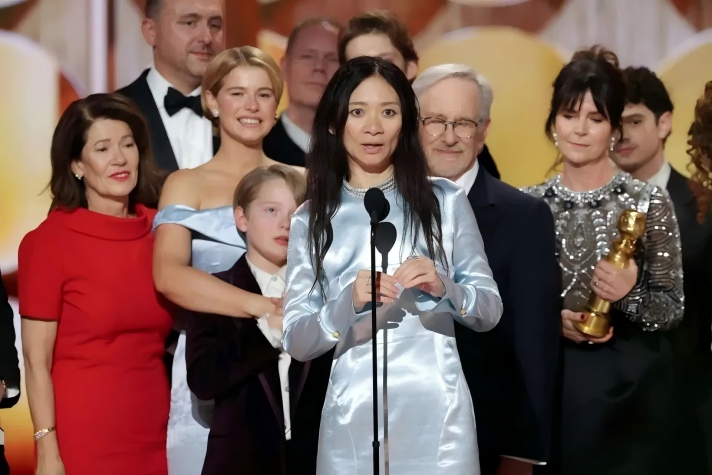
Chloé Zhao's Acceptance Speech at the Golden Globe Awards Ceremony
Chloé Zhao's Portrayal of Vulnerability: The Key to Cross-Cultural Resonance
Zhao's films never pursue grand spectacle. Instead, with the courage to "expose vulnerability," she captures the most fundamental emotional connections of humanity. Her focus consistently falls on marginalized individuals. In Nomadland, modern nomads confront loneliness and loss amid constant movement—there is no exaggerated portrayal of suffering, only a calm, honest presentation of life as it is. Hamnet takes the early death of Shakespeare's son as its entry point, centering on a mother's grief and obsession. Through restrained visual language, the film conveys regret and longing within familial bonds. This candid portrayal of vulnerability allows audiences from different cultural backgrounds to see reflections of themselves. The film is not only a tribute to Shakespeare, but also a profound meditation on motherhood. Zhao has said in interviews that she hopes the film conveys the fragility and resilience every family experiences in the face of loss. As she stated on the Golden Globe stage: "The most important thing of being an artist is learning to be vulnerable enough to allow ourselves to be seen for who we are, not who we ought to be. To give ourselves fully to the world, even the parts of ourselves that we're ashamed of, that we're afraid of, that are imperfect. So, the people that we speak to, they can also learn to see themselves and fully accept themselves."
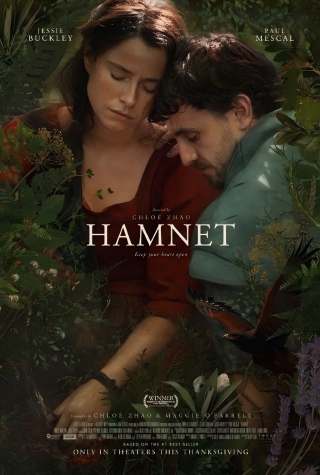
Poster for the Movie Hamnet
Zhao's body of work demonstrates the core power of vulnerability-driven storytelling: returning to the essence of creation through an equal gaze, and building bridges between cultures with real characters and delicate emotions. This is precisely the reason her films resonate with international juries—and it offers a crucial lesson for the global outreach of Chinese mini series.
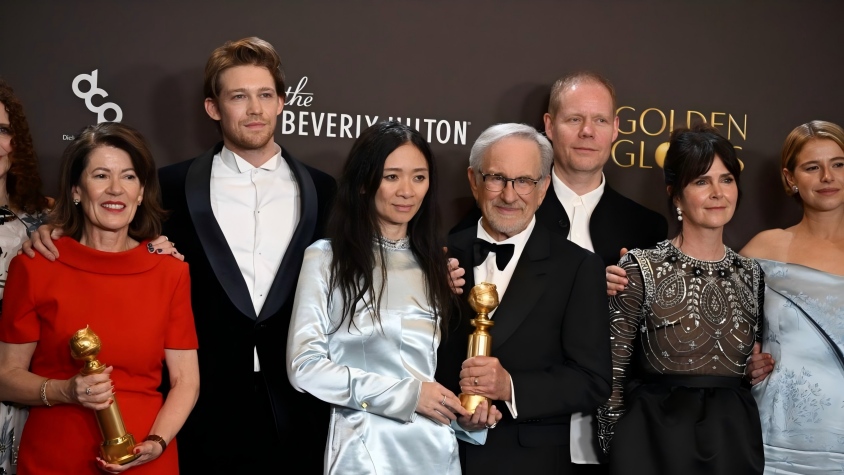
Chloé Zhao Poses with Fellow Golden Globe Winners
Emotion-Driven Storytelling: A Narrative Breakthrough for the Globalization of Chinese Mini Series
Chinese mini series have achieved impressive traffic growth in Southeast Asia and North America thanks to their strengths—high-intensity plots, fast pacing, and frequent twists. Yet beneath the surface lies a hidden concern: many productions fall into the trap of being "high on instant gratification, low on resonance." Overreliance on formulaic tropes such as revenge, sweet romance, and rags-to-riches arcs often leads to flat characters and superficial emotional expression, with little excavation of real human nature or an honest portrayal of vulnerability. Chloé Zhao's work demonstrates that the key to cross-cultural communication has never been about what is shown, but about what audiences are made to feel.
Encouragingly, some Chinese mini series are already exploring ways forward. My Sweet Home focuses on the everyday life of a blended family through the Sichuan–Chongqing dialect. With no sensational plotlines, it conveys the warmth and inclusiveness of non-biological family bonds through slice-of-life details—spousal companionship and neighborly support—eliciting broad emotional resonance. Power Girl, which surpassed 63 million in popularity within four days of release and exceeded 140 million views, centers on the resilient growth of an abducted girl. Rather than sensationalizing suffering, it highlights women's resistance and self-redemption in desperate circumstances, portraying a weed-like vitality that resonates deeply.

Chinese mini series Power Girl
For the mini series industry, Zhao's "seeing the big through the small" narrative approach offers valuable guidance—deeply binding individual stories with universal values. Intangible cultural heritage themes need not be limited to showcasing craftsmanship; they can focus on inheritors' perseverance and confusion, conveying shared concerns about cultural continuity and innovation in changing times. Cross-border entrepreneurship stories need not endlessly amplify comeback fantasies; instead, they can honestly depict cultural barriers, financial pressure, and homesickness, allowing perseverance and vulnerability to coexist. When overseas audiences empathize with these struggles, they can truly understand the resilience and challenges faced by Chinese entrepreneurs.
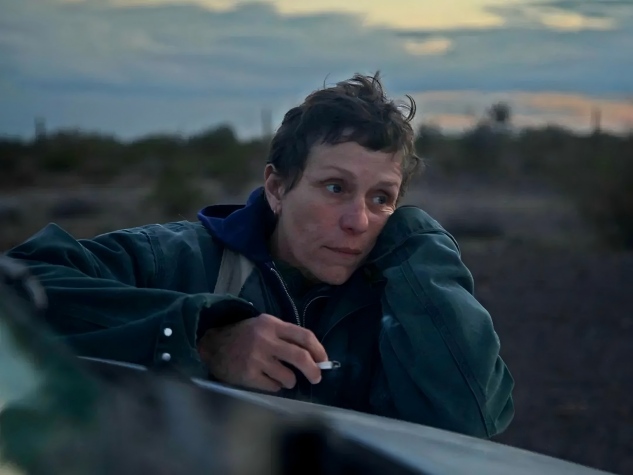
Images in the movie Nomadland
This narrative logic perfectly aligns with the current ideological environment of the global entertainment industry—where the global entertainment market is facing a dual trend of clear ideological fragmentation and overall creative conservatism. On one hand, the value gaps between different regions and groups are widening, while emerging markets in entertainment creation tend to avoid sharp value conflicts and turn to safer, more moderate storytelling approaches, leading to a fragmented landscape that makes it difficult to achieve deep cross-cultural resonance. On the other hand, due to global economic volatility and social anxiety, the entertainment industry's overall creativity has become more conservative. Creators often choose to replicate successful formulas, avoiding real-world conflicts and deep value exploration, resulting in an overflow of homogeneous content. Meanwhile, there is a growing public demand for healing, warm narratives, which has become a key breakthrough for overcoming ideological divides.
In the mini series segment, this trend is even more evident. According to CoGoLinks International's 2025 report on "Healing Mini Series Going Global," the market for healing mini series, which focus on genuine emotions and warm companionship, has seen a more than 300% increase in viewership in overseas markets. Among them, content that brands itself as "real-life documentation" has a retention rate 40% higher than deliberately crafted "feel-good" content, confirming the strong market competitiveness and cross-cultural penetration of warm and healing narratives. This means that content rooted in authentic local emotions and conveying universal warmth has a greater ability to break down cultural and cognitive barriers than works that intentionally export ideological symbols. As Zhao quoted in her Golden Globe acceptance speech, referencing Nomadland, "Compassion can break down all barriers and bring us together." This, too, is a value system. Great filmmakers have never hidden in ivory towers—their mission is to engage deeply with lived reality and tell its stories with honesty and depth.
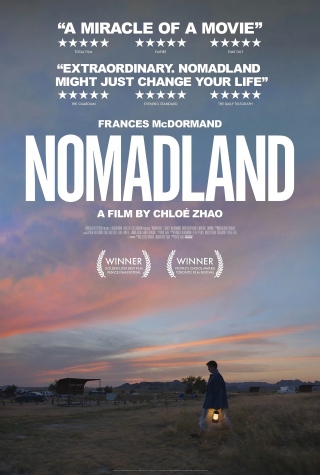
Poster for the movie Nomadland
Premiumization and Business Model Transformation: Strengthening the Local Foundations of Mini Series
From independent films to commercial blockbusters, Chloé Zhao has consistently remained true to her creative ethos, seeking a balance between artistic expression and market reception. For Chinese mini series, the inevitable path toward the international stage likewise begins with consolidating a foundation of high-quality domestic production. Since the industry's explosive growth in 2023, premiumization has become a core development direction—guided by regulators and validated by the market. By 2026, the sector is expected to reach a critical turning point, shifting from wild expansion to industrialized production.
Lu Caijian, head of the veteran Hengdian-based production company Gewu Zhizhi Culture & Media, has bluntly noted that the era of improvised, "hand-crafted" mini series teams is over. Industrial-scale production led by professional crews is becoming the norm. The industry's 80/20 rule is increasingly evident, with the survival space for mid-tier players continuing to shrink.
The push toward premiumization is bringing mini series back to the essence of storytelling. The breakout hit Yi Pin Bu Yi broke away from formulaic "feel-good" tropes, slowing its narrative pace to depict ordinary people's sense of family, country, and responsibility. The series ultimately surpassed 20 billion views, with an average user viewing time of 77 minutes—far above the industry average—demonstrating that high-quality content remains the strongest driver of audience engagement.
At the same time, structural shifts in the industry's business model are fundamentally elevating creative standards. By 2025, free-to-watch mini series accounted for 66.3% of the market, while three major platforms—Hongguo, Hema, and Fanhua—captured over 95% of monthly active user penetration. The transition from paid, pay-per-episode models to free viewing has tied commercial returns directly to completion rates and watch time. This shift is forcing the industry to move away from treating mini series as mere "ad-buy vehicles" and back toward genuine audiovisual entertainment products. As a result, competition is no longer centered on traffic acquisition efficiency, but increasingly on sustained improvements in content quality.

Chinese mini series Yi Pin Bu Yi
Of course, the push toward premiumization has also brought industry reshuffling and intensified competition. High investment does not automatically guarantee high quality, yet the pursuit of quality has undeniably driven up production costs. Looking ahead, the core of industry competition may increasingly hinge on achieving "extreme quality through extreme cost control." Many practitioners believe that market saturation or oversupply could arrive sooner than expected, making overseas expansion not just an option but a necessity for the mini series industry in its next phase.
Advancing Overseas Expansion: From Translated Exports to Customized Creation
Chloé Zhao once observed: "While the world is becoming flatter, cultural misunderstandings and barriers are also increasing… I hope to use storytelling to help people from different cultures understand and move one another." Against this backdrop, the global expansion of Chinese domestic content has become a focal point across the industry. Chinese mini series have already delivered striking results overseas: from January to August 2025, total revenue in overseas micro-series markets reached USD 1.525 billion (approximately RMB 10.84 billion), representing a year-on-year increase of 194.9%. Total downloads of overseas micro-series apps reached about 730 million, up 370.4% year on year. Among the top 20 revenue-generating overseas apps, nearly 90% have Chinese origins, underscoring the dominant position of Chinese companies in the global market.
Yet behind this rapid growth lie significant concerns. Rising production costs, the emergence of local competitors in overseas markets, and mounting challenges in cross-border copyright protection all pose risks. Most critically, the prevailing model of overseas expansion—relying primarily on translated versions of domestic series—is showing signs of fatigue. Simple, literal translation has led to growing aesthetic fatigue among international audiences, while deeper cultural barriers remain largely unresolved.
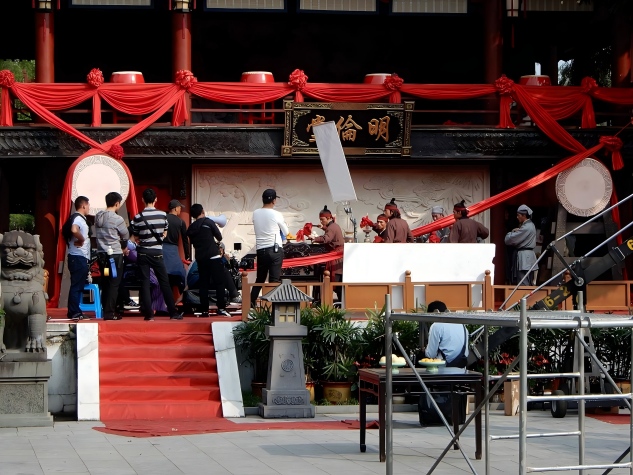
On the filming set inside China's Hengdian World Studios
In response, Zhou Fenglai, a practitioner based in Hengdian, has proposed a clear path forward: for mini series to succeed overseas, they must upgrade from "translated exports" to "customized creation." By leveraging the comprehensive strengths of Hengdian World Studios, the industry can attract overseas production teams, foster international collaboration, and combine local cultural characteristics with China's creative advantages to produce stories that resonate emotionally with global audiences. This shift—from merely exporting formats to localizing content for different markets—is seen as a core pathway for enhancing the international competitiveness and brand value of Chinese mini series.
Conclusion
Chloé Zhao's international breakthrough is, at its core, a successful example of an Eastern creator connecting with the world through humanistic warmth. The key lies in her commitment to portraying genuine humanity and delicate emotional expression, allowing Eastern stories to speak a universally understood language. For China's micro-series industry, this offers perhaps the most valuable lesson in global expansion: true advancement does not come from chasing short-term overseas traffic or viral hits, but from slowing down—like Zhao—and refining stories with care, openly embracing human vulnerability and authenticity, and grounding creation in real emotions and universal values.
When mini series truly succeed in "telling Chinese stories while conveying shared human empathy," they can shed the label of "low-quality fast content," solidify a foundation of premium domestic production, and evolve from an "overseas traffic dark horse" into an important calling card of China's cultural soft power. In doing so, they can carve out a distinctive path within the global streaming landscape—allowing the world, through the small screen, to sense China's unique cultural warmth and inner strength.(Author / Li Sixuan, Editor / Cheng Yingzi)


