With the countdown to the Milan Cortina 2026 Winter Olympics underway, Heated Rivalry, the hit drama series on HBO Max, has made waves once again. Recently, the series' lead actors, Hudson Williams and Connor Storrie, were seen in Italy as official torchbearers for the upcoming Winter Olympics, creating a striking "fiction meets reality" moment. In the series, they portray ice hockey players who once stood together on the ice at the 2014 Sochi Winter Olympics. Now, in real life, they are passing the torch for Milan-Cortina, deepening the connection between the show and the Games, and reigniting discussions about ice-sports-themed content.
Why has Heated Rivalry gone viral? What is the core narrative appeal of ice-sports stories? With the world watching the Winter Olympics, what lessons can the growing commercial genre of mini series draw from this moment to achieve thematic breakthroughs and industrial upgrades?
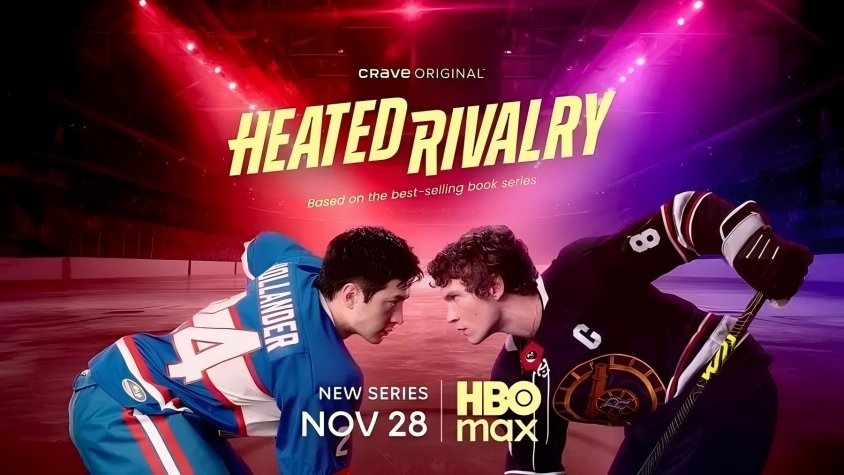
Poster for Heated Rivalry
The "Dangerous Intimacy" in the Arena That Strikes at the Heart
The team dynamics and intense competition inherent in ice sports provide a naturally charged interpersonal model for storytelling, and this is the core secret to Heated Rivalry's appeal. The two protagonists in the show, despite their stark contrasts, share a long history of tension and connection. Shane Hollander, a disciplined and introverted Canadian ice hockey player of Asian descent, contrasts sharply with Ilya Rozanov, a talented and rebellious Russian athlete. From their first encounter, they have been rivals in a high-stakes sport, always pushing each other. The series uses quick time-jump editing to clearly outline the emotional curve of their relationship over nearly a decade.
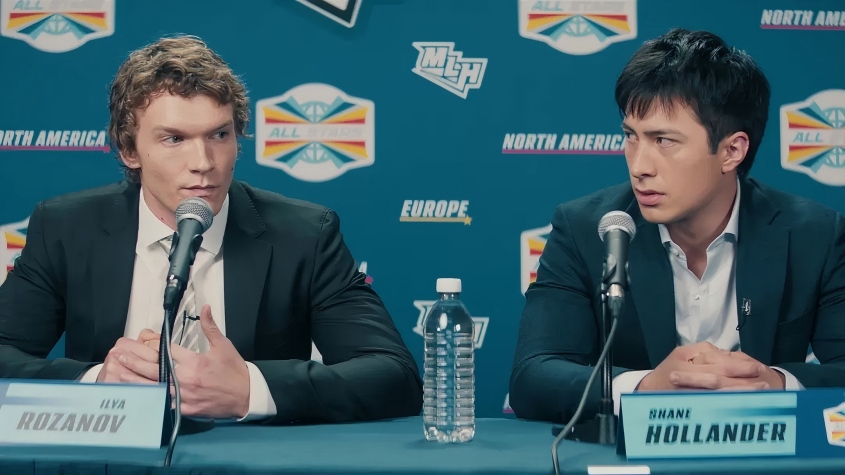
Shane Holland and Ilya Rozanov at a press conference in Heated Rivalry
Unlike traditional narratives, the core conflict between the two characters doesn't stem from their rivalry, but rather from the stereotypical masculine culture in competitive sports that often marginalizes vulnerability. They are challenging a societal environment that refuses to allow "weakness" to be seen. This setup causes their relationship to continuously oscillate between competition and attraction, harm and healing, creating ongoing suspense. Director Jacob Tierney admitted that he was deeply moved by the decade-long bond in the original work, and he intentionally stepped away from the traditional "suffering narrative" to offer a sincere and delicate portrayal. He didn't shy away from exploring niche topics such as romantic tension in complex relationships and male vulnerability, making the emotional resonance of the narrative more profound.

Shane Holland and Ilya Rozanov in conversation in Heated Rivalry
This dual tension of "cooperation within competition, and competition within cooperation" is also prominently featured in the Chinese short-track speed skating drama Surpass. Short-track speed skating combines individual competition and team collaboration, with athletes both working together as teammates, enduring injuries and pressures side by side, and competing fiercely against each other for honor. This complex interpersonal bond adds layers to the narrative and releases both the passion and tenderness of ice sports, enhancing the emotional impact of the content.
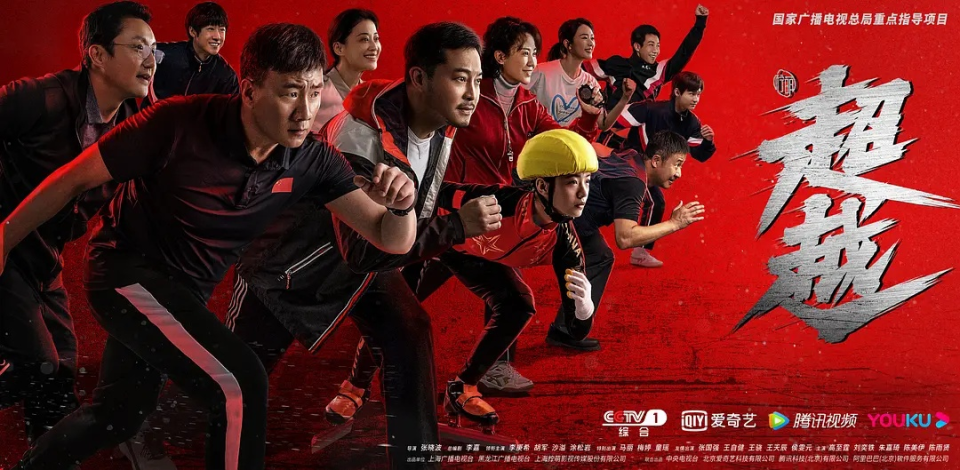
Chinese short-track speed skating drama Surpass
On the Ice, Both Arena and Emotional Battleground
The "spatial qualities" of ice and snow sports constitute a distinctive advantage that sets them apart from other sports genres. Ice rinks and snowfields are inherently defined by physical attributes such as coldness, slipperiness, and risk. These spatial constraints not only heighten visual intensity but can also be transformed into narrative tension, allowing icy settings to move beyond mere backdrops and become core narrative engines that carry emotion and propel the story forward.
Heated Rivalry fully abandons the convention of treating ice scenes as decorative spectacle, instead positioning the rink as the central narrative stage. Through immersive cinematography, the series captures the visceral tension of ice hockey: high-speed tracking shots recreate the sensation of gliding at full pace, while close-ups linger on the protagonists' charged standoff before face-off and their all-out confrontation once play begins. More importantly, the physical space of the ice is tightly bound to emotional conflict—when Shane Hollander is injured after an accidental collision with Ilya's teammate, Ilya's undisguised fear and anxiety are laid bare in full public view, exposed under the gaze of the entire arena.

Shane Holland and Ilya Rozanov competing against each other in a match in Heated Rivalry
The classic figure-skating film I, Tonya pushes this form of spatial empowerment to its extreme. The cramped training rink is not only where Tonya Harding chases her athletic dreams, but also a battleground where she negotiates power struggles with her mother, coaches, and rivals. The confined space amplifies class disparity, domestic violence, and institutional oppression; every spin and jump becomes an act of struggle against an entrenched system. Here, the tension between icy space and personal destiny is seamlessly fused—revealing not only the beauty of sport, but also the cruelty and helplessness beneath it. This fusion is precisely what gives ice-and-snow narratives their singular emotional and aesthetic power.
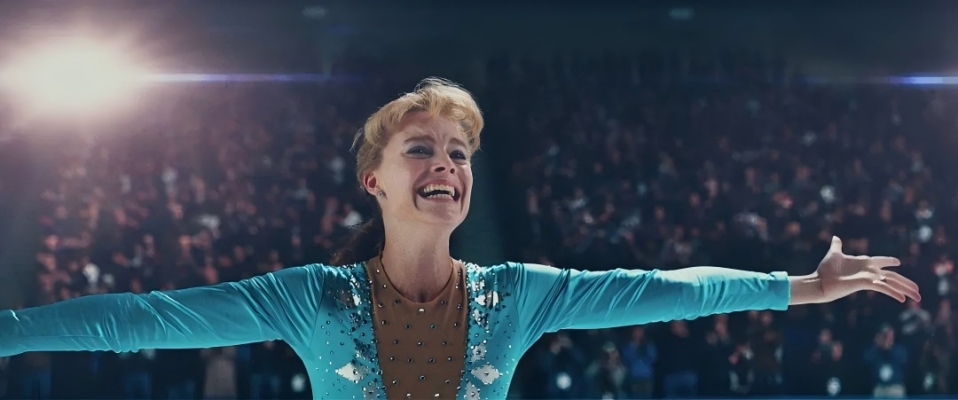
Figure-skating film I, Tonya
Local Narratives as the Foundation of Depth and Reach
Ice and snow sports have never been solely about competition. They are deeply intertwined with regional culture and collective memory, carrying distinct cultural meanings across different locales. This cultural attribute allows ice-and-snow narratives to resonate strongly with local audiences while also achieving cross-regional circulation through universally shared emotions such as perseverance and passion. Without overt moralizing, cultural depth and emotional warmth are conveyed through detail.
In Heated Rivalry, the unspoken presence of hockey culture directly taps into Canada's collective memory. Hockey in the series is portrayed not merely as a sport, but as a way of life and a shared belief system—woven into everyday conversations, family gatherings centered on game nights, and fans' decades-long loyalty to their teams. Even the Toronto Maple Leafs' long Stanley Cup drought since 1967 is treated with affectionate realism, reflecting a devotion that transcends wins and losses. Through such depictions, the series moves beyond athletic competition to become a vessel for cultural identification.

Ilya Rozanov in an ice hockey game in Heated Rivalry
In China, ice and snow sports similarly carry distinctive local significance. In December 2025, Heilongjiang Province launched the "Follow Mini Series to Exercise" initiative, with its first project, Twin Stars on Ice, entering production and focusing on short-track speed skating. Timed to align with the Milan Winter Olympics, the series establishes a two-way linkage between fictional storytelling and real-world sporting momentum. Filmed in professional ice venues in Heilongjiang, the production forms an implicit connection with the Chinese Winter Olympics training bases, allowing viewers to immerse themselves in an Olympic atmosphere through authentic depictions of competition.
Subsequent series, including Young Ice Hockey Warriors and Gliding Youth, are set to roll out, covering three core ice-and-snow disciplines. The initiative also seeks to transform sports venues and ice-and-snow destinations into "story check-in sites," building an integrated ecosystem that connects film and television, sports, and cultural tourism. By encouraging audiences to "fall in love with a sport through a single series," this model offers valuable insights for the future development of China's ice-and-snow mini series.
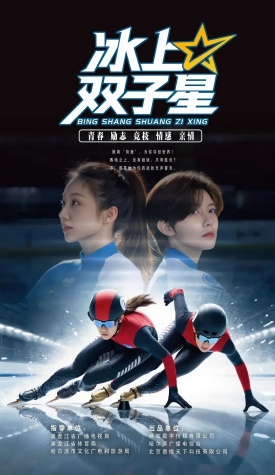
Chinese mini series Twin Stars on Ice
Pathways for Chinese Mini Series During the Milan Winter Olympics
With the Milan Cortina 2026 Winter Olympics just around the corner, China has announced its 124-member Olympic delegation, featuring well-known champions such as Eileen Gu, Su Yiming, and Xu Mengtao—once again igniting nationwide enthusiasm for ice and snow sports. Drawing on the experience of overseas productions like Heated Rivalry, China's mini series sector can leverage the Olympic window to pursue breakthroughs along several key directions.
Milan Cortina 2026 Winter Olympics
First, deepening engagement with athlete IPs and unlocking the value of real stories. Chinese Winter Olympics athletes naturally command strong public attention, and their personal journeys—marked by discipline, setbacks, and perseverance—offer rich narrative potential. Stories such as Eileen Gu balancing elite competition with academic pursuits, Su Yiming overcoming injury to realize his Olympic dream, or Xu Mengtao's two-decade pursuit of gold require little fictional embellishment. By authentically portraying training routines, inner struggles, and moments of triumph, mini series can generate powerful emotional resonance. Moreover, many of these athletes already enjoy international visibility; mini series inspired by their stories may leverage this influence to travel across borders, enhancing the global recognition of Chinese mini series.

Chinese Olympic champion Eileen Gu
Second, capturing iconic moments of real competition to align with global aesthetics. The appeal of ice and snow sports lies in their uncertainty—unscripted highlights and unexpected incidents often carry greater dramatic impact than fictional plot twists. From Yuzuru Hanyu's breathtaking Olympic performances to his blood-stained perseverance on the Shanghai ice, such moments possess strong narrative value. Chinese mini series can draw on real competitive cases, preserving the authenticity and intensity of sport while excavating the emotional layers beneath—such as classic rivalries within China's short-track speed skating team, or the suspense and reversals of relay events. By presenting both the brutality and tenderness of competition, these stories can transcend cultural barriers.

Japanese figure skating Olympic champion Yuzuru Hanyu
Third, integrating local ice-and-snow culture to build differentiated identities. Following Heated Rivalry's deep embedding in local hockey culture, Chinese mini series can similarly anchor themselves in domestic contexts. By drawing on regions rich in ice-and-snow resources, productions can weave natural landscapes, local customs, and regional lifestyles into their narratives, conveying distinctive cultural textures. At the same time, youth-focused stories—such as campus-based ice-and-snow dramas—can spotlight the next generation of athletes and echo initiatives like "winter sports on campus," aligning with public discourse while opening up new narrative perspectives and competitive differentiation.
Fourth, linking Olympic trending topics with industry resources to achieve mutual empowerment. Capitalizing on the Milan Winter Olympics' media momentum, creators can develop "Olympics-themed" mini series, including lightweight, time-sensitive companion content built around daily Olympic highlights and trending topics. Such formats can sustain audience engagement throughout the Games. Beyond content, deeper integration of "film and television + sports + cultural tourism" can transform filming locations into Olympic-themed destinations, stimulating tourism consumption. Partnerships with sports brands and ice-and-snow enterprises can further enable a virtuous cycle between content creation and commercial monetization, supporting broader industrial upgrading.
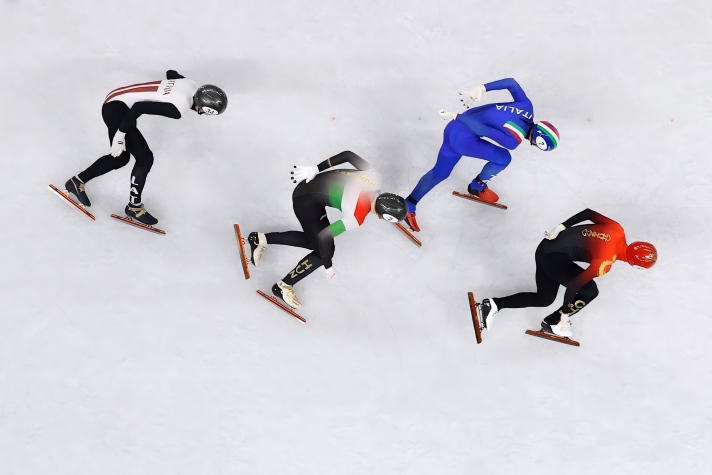
Beijing Winter Olympics Short Track Speed Skating Competition
Ultimately, the appeal of ice-and-snow narratives lies in their ability to fuse competitive intensity with human warmth, and to connect local cultural grounding with cross-regional emotional resonance. As the Milan Winter Olympics approaches and global attention converges on ice and snow sports, this moment offers a rare opportunity for Chinese mini series to break through thematic boundaries. Grounding stories in reality, embedding local culture, and activating industry linkages may not be the only path forward, but they represent a critical direction for creating ice-and-snow mini series with both emotional depth and narrative substance—helping the sector achieve higher-quality growth and allowing Chinese winter sports stories to travel further, and resonate more widely, through the lightweight yet powerful medium of mini series. (Author / Li Sixuan, Editor / Cheng Yingzi)


