In the autumn of 2025, a short drama wrapped in the familiar shell of an "elite marriage" pulled off a numbers miracle that stunned the industry. Summer Rose racked up over 3 billion views in just 17 days after its release, sustained explosive momentum throughout the National Day holiday, and was widely hailed as "breaking the curse of short dramas that rise fast and fade faster." Even after the finale, its impact lingered—carrying audiences from midsummer into deep autumn. At the 2026 Hongguo Short Drama Annual Awards, the series ultimately claimed the title of Audience Favorite Short Drama TOP 1. Behind this year-defining phenomenon lies more than polished cinematography and refined visual language. It signals a quiet evolution in content formulas—and a subtle shift in audience psychology.
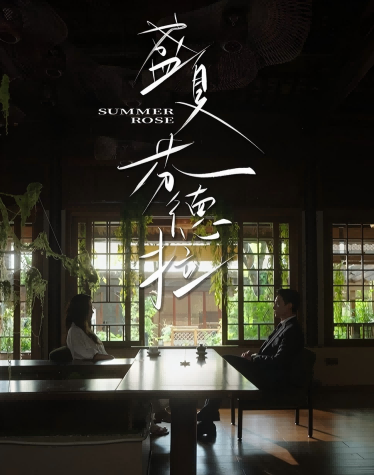
Poster of Summer Rose
Emotional Comfort Food: From "Domineering Love" to "Respect-Based Romance"
The genre staples—CEO heroes who grab necks and pull waists, and instant-gratification "face-slapping" plots—are still being mass-produced. Summer Rose, however, deliberately takes a more winding path: replacing melodramatic conflict with delicate everyday moments, and sensory stimulation with deep emotional density. In doing so, it overturns entrenched assumptions about what short dramas can be—and this is central to its success.
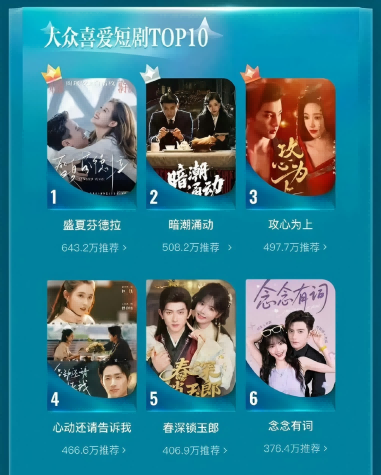
2026 Hongguo Short Drama Annual Awards, Audience Favorite Short Drama
At the heart of the drama is a reconstructed emotional logic. Male lead Zhou Sheng'an becomes the poster student of this shift. His lines are no longer greasy declarations like "Woman, you must be mine," but quiet gestures of respect embedded in the details. When Bai Qingmei, gripped by inner fear, proposes breaking off their engagement, Zhou is heartbroken—but he neither flexes his power, nor resorts to emotional coercion, nor plays the "forced love" card. Instead, he says: "If being with me makes her feel bored, then letting go—so she can be happy—is also a kind of fulfillment." To defend the other person's right to choose, even in love, is restraint at the very top tier of respect.
Bai Qingmei loves wildlife photography and dreams of the African savannah. Zhou's first instinct isn't to dismiss her with "it's dangerous" or "that's impractical," but to support her quietly—preparing professional equipment and medicine before her departure. He loves her as she flies free, not by trimming her into a "wealthy wife" template. This kind of fail-safe, background protection has been affectionately dubbed by viewers as "husband energy"—a rare sense of reliability and security in real-life relationships today.
Bai Qingmei herself also breaks away from the "sweet but naive" mold. She's a freelance photographer with ambition, carrying scars from her family of origin. In love, she both longs and hesitates. This ambivalence mirrors the emotional state of many young people today—oscillating between independence and attachment, freedom and security.
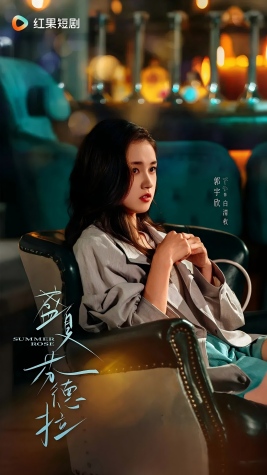
Poster of Summer Rose
Her identity as a wildlife photographer isn't just a decorative label. The drama genuinely shows her at work: studying animal behavior, checking telephoto lenses, protective gear, and other professional equipment. The first real connection between her and Zhou comes from her sharing stories of photographing cheetahs on the African plains—her eyes lighting up as she speaks.
"Bai Qingmei would be happy marrying anyone—but Zhou Sheng'an would only be happy if he married Bai Qingmei." This line, spoken by the lead actor during a celebratory livestream, instantly exploded the comment feed. It hit the core pain point of modern relationships: a good love story isn't about saving each other, but about mutual fulfillment.
This emphasis on respect and equality is not an isolated case—it's becoming a new paradigm for urban romance dramas. Take the recent hit Beijing Marriage, Heavy Addiction: although male lead Jiang Kexing also comes from an elite background, his appeal lies not in power or dominance, but in restrained devotion. His love is expressed through protection and waiting—quietly keeping photos of her from years ago, remembering her smallest preferences, and using marriage as a "legitimate excuse to stay close." His core logic is simple: "Let her be her truest self by my side." This internalized, disciplined affection echoes Zhou Sheng'an's "respectful letting go," together defining what modern audiences call "husband energy."
Similarly, in the long-form drama Shine On Me, male lead Lin Yusen's attitude of "You choose" and his declaration—"I'm pursuing you, and I hope that's a benefit to you, not a burden"—establish respect from the very starting point of courtship. This stands in stark contrast to the traditional domineering trope of "you must be mine no matter what," returning both pursuit and choice squarely to women.
Audiovisual Playfulness: Cinematic Texture in Three Minutes
Summer Rose proves that "short" should never be an excuse for roughness. On the contrary, brevity demands more concentrated artistic expression. The series also builds a distinctive atmospheric aesthetic. Viewers have noted its exceptional visual storytelling, with heavy investment in cinematography and camera language—even the music swells generously at key moments.
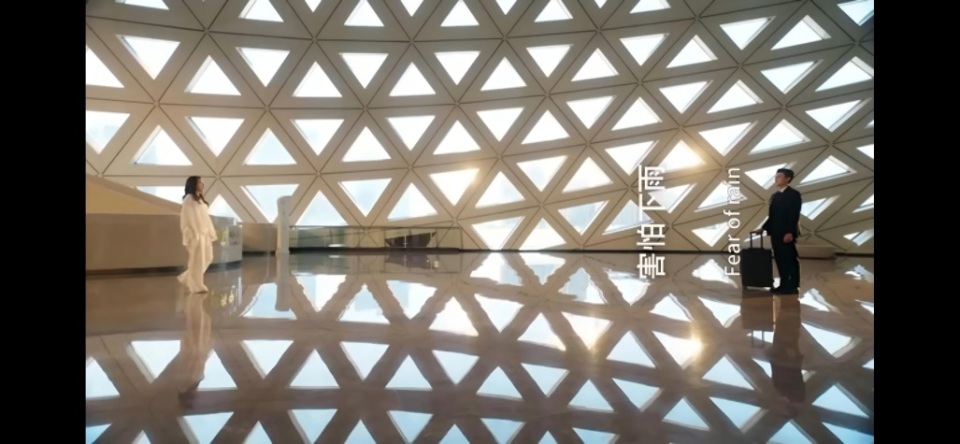
Aesthetic scene from the drama
Light and shadow tell stories. In the blind-date scene of episode one, cool indoor lighting sharply contrasts with the warm sunlight outside, instantly conveying the heroine's entrapment by family interests. In the blue tunnel, flowing light transforms vague attraction into something visibly tangible. Every carefully designed shot carries emotion. The camera language is richly aesthetic: long, lingering still frames; bold contrasts between light and darkness; artful compositions such as gazes filtered through screens, or family figures framed by monitors. There's far too much to unpack in detail.
Recurring imagery creates an emotional loop. "Summer Rose," the title, refers to a white rose symbolizing exclusivity and purity. Its journey from bud to full bloom mirrors the three stages of the protagonists' relationship. This sustained metaphor injects literary resonance and lingering depth into an otherwise fast-paced format.
The art of negative space amplifies emotion. At the end of the first episode, when Bai Qingmei learns she must immediately move into the Zhou family home, her back remains frozen in frame for a full five seconds. That silence speaks louder than any line of dialogue, allowing viewers to feel her shock and resistance. The drama repeatedly employs such moments, creating powerful "silence speaks" resonance.
Industry Upgrade: From Traffic Frenzy to Quality Race
Summer Rose showcases a higher production ceiling for the short-drama sector:
No more rushed shoots. Producer Majiu Studio adhered to a craftsman's rule—"If it needs 15 days, we won't cram it into 10"—a stark contrast to the industry's common "three days to shoot, seven days to launch" assembly-line model. Respecting creative rhythms laid a solid foundation for quality.
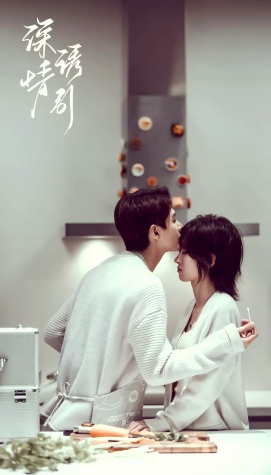
Poster of Affectionate Seduction, of which Summer Rose is a spin-off
Spin-offs IPs go premium, too. As a side story to the hit short drama Affectionate Seduction, Summer Rose didn't lazily cash in on existing traffic. Instead, it was independently developed at a higher standard, successfully feeding back into the original IP and setting a new example for short-drama universe building.
Cultural tourism integration feels organic. Locations like the blue tunnel and old teahouse became viral check-in spots, upgrading "short drama + tourism" from simple location use to emotional bonding. When audiences fall in love with a place through story, content transcends entertainment and becomes living promotion for local culture.
After the Explosion: How to Achieve Lasting Popularity
Behind the booming "sweetness economy" lies both a victory for content innovation and a reflection of shifting emotional structures in society. Summer Rose still retains traces of older short-drama logic—for instance, conflicts are sometimes resolved through the male lead's wealth and power. But its phenomenon-level success sends a clear message: modern emotional expression in short dramas must continue to evolve. As young people increasingly distance themselves from real-life intimacy due to its "high cost, low return," the "respect-based romance" offered by short dramas becomes an affordable emotional substitute.
The breakout of Summer Rose draws a clear line for the industry: competition has moved from the traffic-grabbing "wild growth era" to a "deep cultivation stage" defined by texture and quality. Viewers summed it up perfectly: "We've finally upgraded from coarse grain to fine dining." The verdict is in—audiences are tired, and good content is no longer optional, but essential. (Wen Yanqing)


