Recently, at the 2026 CES Consumer Electronics Show, Disney announced the launch of a vertical-video section on Disney+, featuring a wide range of formats including original short content, user-generated remix clips, news, and sports highlights. Designed specifically for mobile viewing and fragmented consumption, this move signals more than a tentative experiment: it marks Hollywood's mainstream streaming platforms officially shedding their marginal approach to vertical video.Disney's announcement also echoes TikTok's deepening push into the mini series space through PineDrama, together outlining a global landscape of vertical entertainment defined by a dual competition between IP empowerment and traffic-driven growth. As Disney wields its powerful IP portfolio to break into the vertical format, the global mini series industry is entering a critical transition—from a race for eyeballs to a phase of long-term value creation. This shift offers an important point of reference for China's mini series, which still face challenges in building strong, sustainable IP ecosystems.

2026 CES Consumer Electronics Show
Disney+'s Vertical Screen Strategy: IP-Centric, AI-Enhanced Module Upgrade Path
The streaming industry has entered an era of stock competition, with Disney+ facing pressures from stagnant user growth and declining subscription numbers. The shift of Generation Z towards fragmented content has further challenged traditional long-form video models. Disney's ESPN (Entertainment and Sports Programming Network) vertical screen strategy has provided crucial experience to support the implementation of Disney+'s strategy. ESPN, a multinational sports media giant jointly owned by Walt Disney Company and Hearst Communications, launched its vertical screen video entry "Verts" in August 2025, focusing on lightweight mobile presentations of sports content such as key event highlights, athlete behind-the-scenes footage, and sports knowledge education. This move significantly increased the app's daily active users and user retention, proving the value of vertical screen formats in vertical content fields.Building on the success of ESPN's "Verts," Disney+'s vertical screen strategy combines top-tier global IP reserves, extending from vertical sports content to all categories of entertainment. The primary goal is to activate the long-tail value of existing IPs, reshape the perception of "viewing tools," and create a "daily must-visit" companion-like mobile gateway.

Disney+ Promotional Image
As a century-old entertainment giant, Disney started in 1923 as an animation studio and, through its "horizontal expansion, vertical value extraction" IP ecosystem strategy, has built an entertainment empire worth over $200 billion. Its core advantage lies in its multi-dimensional IP layout: horizontally, it creates and acquires IPs through in-house production and acquisitions, including Disney Animation, Pixar, Marvel, Lucasfilm, 20th Century Fox, etc., covering genres from classic fairy tales to CG animation, superheroes, sci-fi blockbusters, and art films, effectively reaching diverse audiences. Vertically, it maximizes the commercial value of individual IPs, creating a full-loop monetization cycle from "film content" to "merchandising" to "theme parks," continually unlocking IP value. This mature IP operating system is the backbone of Disney+'s vertical screen content matrix.

Disney+ Official Website
AI technology has become a crucial lever for Disney to activate IP interactivity and is a key pillar for its module upgrade. In December 2025, Disney signed a three-year licensing and investment agreement with OpenAI, investing $1 billion in equity to deepen its technological partnership.On the content production side, Disney's in-house AI video generation platform allows for full-process production of vertical screen content based on its IPs. The platform integrates copyright protection and compliance checking features, balancing efficiency and risk control. Additionally, Disney has licensed over 200 classic IPs to OpenAI Sora, enabling the rapid generation of diversified vertical screen content and significantly enhancing creative output and efficiency.On the user experience front, the interactive content developed by Sora allows users to move from passive viewing to active participation. By offering story branch choices and character background exploration, it strengthens user immersion. The platform also opens up a UGC (user-generated content) ecosystem, enabling fans to create personalized IP short videos. High-quality content generated by users is integrated into the official sections, fostering community engagement and stickiness.
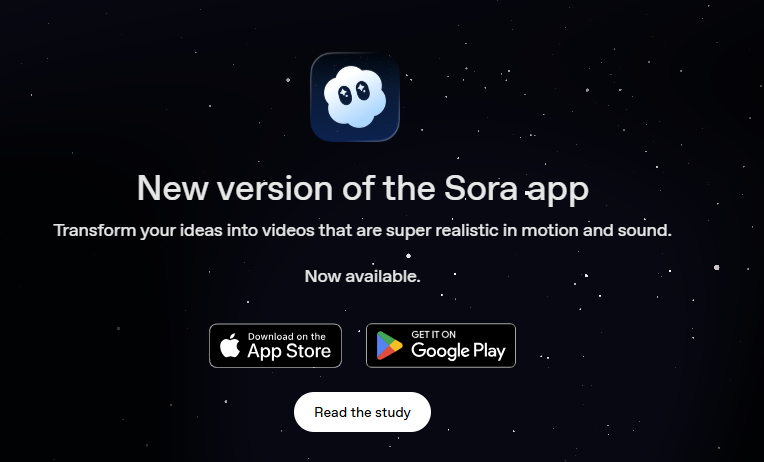
Sora App Developed by OpenAI
Hollywood's Vertical Video Wave: Industry Reshaping and Model Competition
Divergent Paths of Disney+ and TikTok
Disney+ and TikTok's vertical-video strategies represent two fundamentally different industry paths. Disney+ is driven by IP as its core engine, building strong content barriers through its mature IP management system. Its commercial logic centers on subscription revenue, IP-based advertising, and full-chain monetization of derivatives—using vertical formats to unlock incremental IP value.By contrast, TikTok (via PineDrama) follows a traffic-driven model. Leveraging its massive user base and fragmented distribution capabilities, it captures user attention through entertainment-focused mini series, monetizing scale via advertising revenue sharing and a mini program ecosystem, with an emphasis on rapid content iteration and conversion efficiency.Though distinct in approach, both paths ultimately converge in accelerating the global vertical-video entertainment sector toward greater standardization and scale.

Disney+ Introduction Page
Hollywood Enters the Scene: Capital Experimentation and Structural Reshaping
Disney's entry into the vertical video space is not an isolated case; Hollywood’s embrace of vertical mini series IP has already become a new trend, with several major players adopting differentiated strategies. In October 2025, Fox Entertainment announced an equity investment in the Ukrainian vertical video platform Holywater, which operates the vertical mini series platform My Drama, the digital publishing platform My Passion, and the AI-generated content platform My Muse, collectively boasting over 55 million users.Under the agreement, Fox will produce over 200 vertical mini series for My Drama within two years, with some projects already in production in Atlanta. The aim is to leverage Holywater's AI technology, combined with Fox's own production and IP resources, to drive growth through "digital narrative innovation." Fox Entertainment CEO Rob Wade stated that digital narrative innovation is reshaping the future of the entertainment industry, and investing in vertical video will help build a modern studio. Holywater co-founder Bohdan Nesvit believes that this marks the mainstream emergence of vertical drama, which can carry a variety of content types, rather than being limited to melodramatic storytelling.
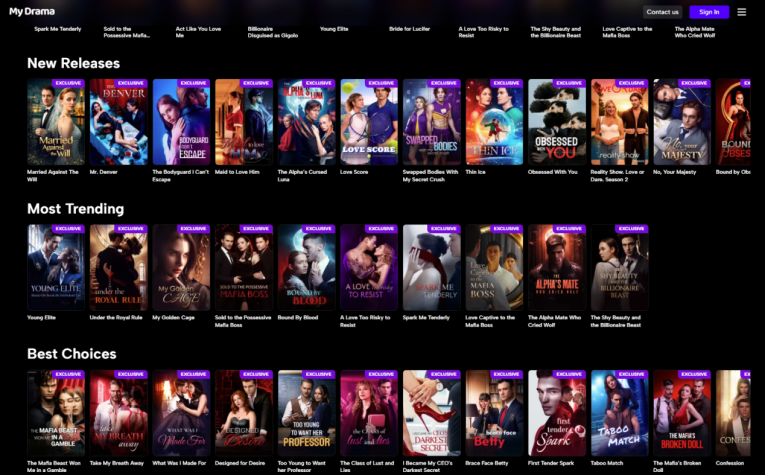
Mini Series Released on My Drama Official Website
At the same time, Cineverse (formerly known as Digital Media Rights) partnered with venture capital firms to create a joint brand, MicroCo, focusing on the production of high-quality mini series and AI-native content. Cineverse's strategic leader, Eric Opekka, views this as the starting point of a "shadow Hollywood" and predicts that the industry's annual revenue could reach between $8–14 billion in the future. He emphasized that the goal is not to become just another short video app, but rather to focus on platform infrastructure and foundational roles in brand building.These moves clearly demonstrate two major trends in overseas mini series: first, the exploratory entry of capital and large companies, and second, the structural reshaping of production and distribution models. This shift moves away from high-budget, long-cycle models toward scaled, fast production driven by algorithms at its core.
Hollywood's Constraints and Challenges: Historical Lessons, Employment Pressures, and Institutional Barriers
Hollywood's collective move into vertical-format mini series is rooted in a convergence of internal challenges. As traditional film and television productions migrate to Georgia, Canada, and parts of Europe, soundstage vacancy rates in Southern California have surged and shooting demand has dropped sharply, pushing unemployment among local industry workers toward 40%. Against this backdrop, many professionals long dependent on feature films and long-form series have been forced to pivot to smaller-scale, short-cycle vertical mini series. These projects have effectively become a "buffer zone" during periods of peak unemployment, offering a relatively stable source of income. Media analyst Robert Steiner has likened vertical mini series to "soap operas designed for the TikTok era," noting their increasingly visible impact on reshaping Hollywood's labor market.

Hollywood Sign
At the same time, union regulations and infrastructural gaps present significant constraints. Formal Hollywood productions must comply with collective agreements set by SAG-AFTRA and the Writers Guild of America (WGA), ensuring protections around pay, working hours, and labor rights. Most vertical mini series, however, currently operate outside union frameworks, often characterized by lower pay, intense production schedules, and limited labor protections. This not only restricts participation by major studios, but also raises concerns that future full unionization could drive up costs and squeeze profit margins. Meanwhile, the absence of standardized databases, authoritative ratings systems, advertising measurement metrics, and unified distribution channels remains a structural weakness—yet these very gaps also represent strategic opportunities for companies seeking to enter and shape the emerging vertical-content ecosystem.
The Overseas Transfer and Localized Adaptation of China's Mini Series Model
Behind Hollywood's surge of interest in vertical-format mini series lies the continued success of China's mini series model in North America. This model has provided overseas markets with a relatively mature and replicable pathway, with many international mini series platforms sharing overlapping backgrounds with Chinese capital and production teams. The proven effectiveness of the Chinese model has encouraged more overseas players to follow suit. Traditional studios such as Lionsgate and Hallmark are actively assessing entry opportunities, experimenting with the localization of Chinese mini series narrative formulas and exploring high-frequency content models better suited to U.S. audiences. As Forbes notes, this wave of mini series could help revive Hollywood's downturn—but only if content, distribution, and monetization mechanisms are effectively localized.

DramaBox Official Website
China's Mini Series IP Path: Practical Exploration, Bottleneck Breakthroughs, and Ecosystem Evolution
Industry Landscape: IP Weaknesses and Overseas Expansion Bottlenecks Beneath Scale Advantages
China's mini series sector has already established a clear advantage in scale. By 2025, its user base had grown to 696 million, with the proportion of young users aged 18–30 continuing to rise, alongside increasing demand for emotional connection to IP. Yet structural shortcomings remain evident. Much of the top-performing content still relies on adaptations of formulaic "power fantasy" web fiction, with limited accumulation of original IP. Many creators operate with a short-term mindset—prioritizing rapid monetization over long-term IP cultivation—making it difficult to build franchises with emotional resonance and sustained value. Although culture- and tourism-themed or intangible cultural heritage–based mini series have made initial breakthroughs, they often suffer from homogenization and superficial storytelling, with overall levels of refinement still falling short.
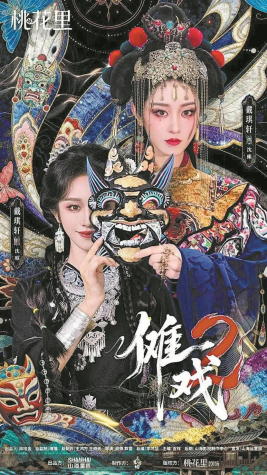
Chinese Intangible Cultural Heritage Mini Series Nuo Opera 2
On the overseas front, Chinese mini series have taken a dominant position in global markets through translation platforms like ReelShort and DramaBox. However, they have struggled with value growth due to the lack of distinctive IP recognition. Disney's vertical IP strategy provides a crucial reference point. On one hand, there is a need to deeply explore local cultural resources, uncover the unique value of intangible heritage, traditional mythology, and regional cultural tourism, adopting a "premium + differentiation" strategy. The success of One Dream, Pillow of the Stars—a mini series blending "intangible cultural heritage + slow storytelling"—offers a proven model for creating culturally recognizable content. On the other hand, it is essential to strengthen technological empowerment and industry integration. By leveraging AI tools to enhance production efficiency, China’s mini series can develop a full-chain monetization model combining "mini series + cultural tourism + derivatives." Additionally, through opportunities like DramaBox's partnership with Disney's Accelerator, exploring co-development of IP between China and foreign markets could boost the added value and impact of overseas content.

Chinese Mini Series One Dream, Pillow of the Stars
Ecosystem Evolution: A Balance of Trends and Challenges
The vertical entertainment ecosystem is evolving in the direction of deeper integration between IP, AI, and industry convergence. Multiple changes are reshaping the sector's landscape. The deepening of IP-driven content is likely to become the industry standard, with the secondary development of classic IP in vertical formats continuing to grow. Small and medium-sized platforms may focus on vertical areas like cultural tourism and intangible heritage to carve out differentiation. The application of AI tools, like Sora, will significantly reduce barriers to IP content creation, and interactive content is poised to become the core direction of the next-generation entertainment format. Additionally, industry convergence is set to continue, with the boundaries between long-form and short-form video increasingly blurred. The "vertical IP mini series + offline experiences + derivatives" full-chain model will become a central competitive advantage, with cultural tourism mini series likely to become a key benchmark for integrated development.Behind the opportunities, the industry faces multiple challenges. Disney must be cautious of the risk of IP dilution caused by fragmented content and ensure the core essence of its classic IPs is maintained. Chinese mini series, on the other hand, need to overcome their shortfalls in IP operations and abandon the inertia of focusing heavily on "traffic and views" at the expense of content quality. Additionally, challenges such as the ownership of AI-generated content intellectual property and the copyright boundaries of user-generated content (UGC) will become global key constraints on the development of the vertical entertainment industry.
Disney+ mobile app
Conclusion: Empowering IP and Embarking on a New Journey in Vertical Entertainment
In the wave of Hollywood's vertical entertainment era, Disney's IP-centered vertical module upgrade has not only become an industry benchmark but also provides a reference model for IP operations—moving from long-term strategy to full-chain monetization, from technological empowerment to ecosystem construction. These lessons are particularly valuable for Chinese mini series, which are struggling with traffic bottlenecks. However, imitation should not mean blind replication. Disney's success stems from a century-long accumulation of IP, industrialized operational systems, and global resource integration. In contrast, the core strength of Chinese mini series lies in their efficient production processes and deep roots in local culture. The exploration of cultural tourism IP has already demonstrated the importance of localized adaptation.
Moving forward, Chinese mini series could deepen its roots into their native cultural soil, learn from Disney's IP operation, technological empowerment, and full-chain monetization experience, and abandon short-term thinking. By shifting the industry focus from "content output" to "IP cultivation," it will be possible to create culturally distinct, globally influential local IPs. As the Chinese and global industries collaborate more deeply on IP operations, technological applications, and industry convergence, vertical entertainment is expected to break through the boundaries of format and scene. This shift will enable a transformation from traffic-based competition to a deep focus on value, propelling the sector into the golden age of "Vertical Hollywood" and writing a new chapter in global entertainment.


