"Are you ready?" "Alright, 3, 2, 1, action..."
At the dawn of the day, the hustle and bustle of crews and the director's commands blend together at the Zhengzhou Dazhi Film and Television Base, China. In nearly 50 indoor sets—ranging from luxury villas, hospital emergency rooms, to subway stations—seven or eight different crews are filming simultaneously. The booking for popular scenes is already scheduled two weeks in advance. This "one studio hard to book" scene is a vivid reflection of the explosive growth of Zhengzhou's mini series industry.
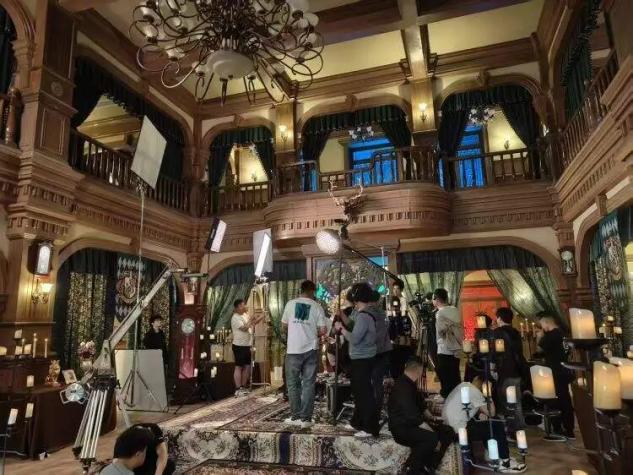
Zhengzhou Dazhi Film and Television Base
As one of the top three cities in China for mini series production and broadcasting for two consecutive years, Zhengzhou accounts for about 40% of the country's industry capacity. In the first 10 months of 2025 alone, over 4,900 mini series were released, with more than 800 related companies gathered in the city and over 40,000 industry professionals. Together with Xi'an and Hengdian, Zhengzhou is now one of the "three major hubs for mini series" in China. Under the guidance of the Implementation Plan for Building Zhengzhou into a "Mini Series Creation Hub" (2025–2027) , this Central China city is aiming for a market scale of 10 billion yuan by 2027. However, behind the traffic frenzy, Zhengzhou is facing a critical breakthrough from "scale production" to "quality creation".
Industry Boom: Three Key Advantages Power Central China's "Mini Series Hub"
Zhengzhou's rapid rise in the mini series sector is no coincidence. A powerful combination of cost advantages, policy support, and ecosystem clustering has formed the core engine of the industry's high-speed growth. The city has given rise to China's nationally recognized mini series platforms and production companies such as Tianqiao Mini Series, Xinyueyi, and Sansheng Wanwu. Moreover, several blockbuster titles with revenues exceeding RMB 10 million—including Hua Long, Fake God of War, and Urban Supreme Divine Doctor—have all seen deep involvement from Zhengzhou-based teams, enabling the city to achieve a form of "overtaking on the curve" within China's film and television industry.

The hit mini series produced by Tianqiao Mini Series
Cost and Location Advantages Lay the Industry's Foundation
Compared to first-tier cities such as Beijing, Shanghai, Guangzhou, and Shenzhen, Zhengzhou stands out for its cost advantages. The production cost for a 100-episode mini series can be controlled between 300,000 to 800,000 RMB, which is 30% to 40% lower than in first-tier cities. This reduces the investment return cycle to 3 to 6 months, significantly lowering the industry's entry barriers and operational risks. At the same time, Zhengzhou, as a transportation hub in the heart of China, enables quick resource allocation across regions for film crews. Additionally, a large number of teams from the advertising and wedding industries have made cross-industry transitions, bringing mature short-video production experience and providing abundant talent reserves. The establishment of 15 specialized shooting bases, such as the Jumei Film Base and the Xinzheng Muma Film Base, has enabled a one-stop service where "lighting crews are ready within ten minutes, and 100 sets of costumes can be allocated within an hour," attracting many outside industry professionals like director Tian Hao from Chongqing to settle in Central China.
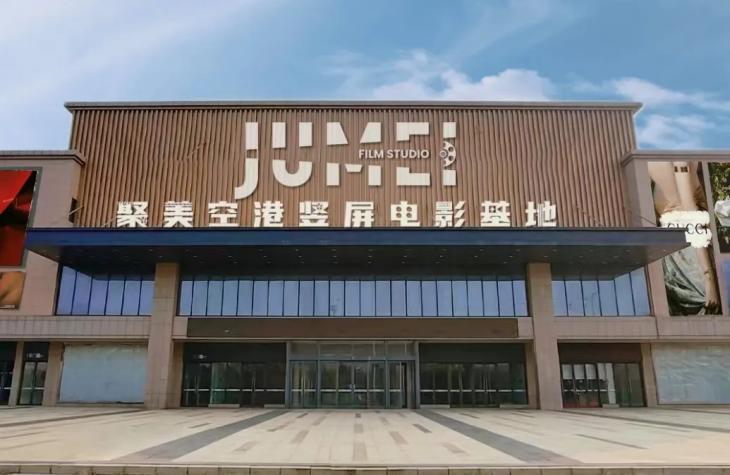
Jumei Film Studio
Policy Support Across the Board Fuels Industry Growth
Since October 2024, Zhengzhou has rolled out a series of intensive support policies covering the entire value chain—from script incubation and location shooting to premium-content incentives and talent development—forming a closed-loop policy framework characterized by "provincial–municipal coordination with district-level implementation." Policy documents such as the Implementation Plan for Building Zhengzhou into a "Mini Series Creation Hub" (2025–2027) and Opinions on Accelerating the High-Quality Development of the Mini Series Industry in Zhengzhou explicitly propose a "mini series+" initiative, promoting deep integration between the industry and cultural tourism, intangible cultural heritage, and Yellow River culture.
The policies also set out clear targets: building one to two full value-chain production bases, cultivating more than 10 leading enterprises, and producing 50 premium works that showcase Zhengzhou's city brand. To date, Zhengzhou-based platforms "Xindong Mini Series" and "Fanying" have received official approval from China's National Radio and Television Administration. The city ranks second nationwide in the 2025 China Mini Series Industry Comprehensive Strength Cities list and tops the chart in dissemination capacity. Five productions, including Golden Lion: Cute Baby Battles the World, won the 2025 provincial "South of the Yellow River · Premium Mini Series" awards, while Meeting Shaolin: Kung Fu in Action was shortlisted for the NRTA's 2024 recommended works list—signaling the early emergence of a premium-oriented development trajectory.
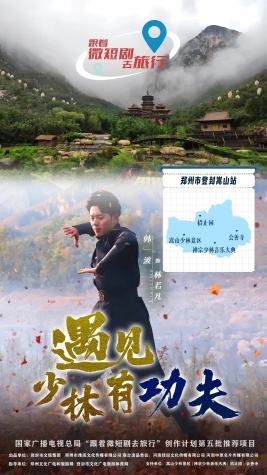
Mini Series Meeting Shaolin: Kung Fu in Action
Industry Clusters Take Shape, Driving Scale Efficiency
Zhengzhou's mini series industry has transitioned from fragmented production to a full-scale, value-chain layout. Leading enterprises like Xinyueyi Cultural Media have built a comprehensive closed-loop model, covering "IP development, script creation, filming and production, and platform distribution." With an average of 20 productions per month, the production cycle per project has been reduced to 28 days. Tianqiao E-Commerce, which has transformed from an online literature subscription platform into a mini series giant with an annual output value exceeding 1 billion yuan, operates the "Xindong Mini Series" platform, which has over 2 million users. The convergence of more than 820 companies and 40,000 professionals has cultivated an ecosystem where "film crews are everywhere, and new content is released daily," continuously strengthening the industry's production capacity.
Behind the Boom: Three Major Growth Challenges
Behind its rapid expansion, Zhengzhou's mini series industry is increasingly revealing structural weaknesses. Limited original creativity, talent shortages, and intensifying regional competition have become key obstacles preventing the city from evolving from a "mini series factory" into a true "creative capital."
Content Homogenization and a Shortage of Original Creativity
At present, Zhengzhou's mini series remain heavily trapped in formula-driven "instant gratification" narratives. Themes such as wealthy-family feuds, underdog revenge arcs, rebirth fantasies, and miracle-working doctors dominate the market, with plots engineered around a "mandatory twist every 15 seconds" traffic logic. The scarcity of original scripts has become a major industry pain point.
Zhang Yongqiang, Secretary-General of the Henan Higher Education Film and Television Education Association, notes that Zhengzhou's mini series sector shows clear weaknesses in originality and post-production. Compared with Xi'an's differentiated path of "mini-series + cultural tourism," or Hangzhou's capital-driven model supported by a 200 million yuan industry fund, Zhengzhou still lacks core content that combines cultural distinctiveness with market competitiveness.
Although cultural tourism–themed works such as Meet Shaolin: Kung Fu in Action and Songshan Under Heaven have begun to gain attention, the tendency to prioritize output over quality has yet to be fundamentally reversed. Beneath the traffic boom lies a growing risk of audience "gratification fatigue," threatening the industry's long-term sustainability.
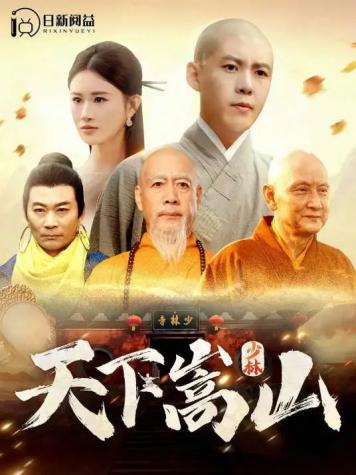
Mini Series Songshan Under Heaven
Talent Shortage Hinders Quality Improvement
The speed of industry expansion in Zhengzhou contrasts sharply with the availability of skilled talent. About 70% of those working in Zhengzhou's mini series industry are under 30, full of energy but lacking professional training. High-end talents, particularly in post-production and experienced screenwriting, are in severe shortage. This directly results in some works suffering from crude costumes, set designs, and limited visual storytelling, failing to meet the growing demand for quality upgrades in the market. Although universities like Technology & Media University of Henan Kaifeng have implemented "industry mentors in schools + real projects in the classroom" models, the talent development cycle is much slower than the rapid pace of industry growth, making it a key constraint on quality improvement.
Fierce Regional Competition Erodes Zhengzhou's Edge
As mini series have become a new track for cultural tourism and digital economy nationwide, regional competition has heated up. Hangzhou uses capital to fuel industrial upgrades, Beijing relies on leading platforms to attract high-quality IPs and talents, and Xi'an capitalizes on its historical heritage to create a "mini series + intangible cultural heritage" niche. In contrast, Zhengzhou has yet to establish a centralized, high-standard mini series production hub. With resources scattered, this has led to price wars and unhealthy competition, gradually undermining its cost and production capacity advantages. The urgent challenge now is to develop differentiated competitive barriers.
From Viral Buzz to Real Value: The Path Forward
Facing growing pains, Zhengzhou's mini series industry needs a breakthrough path that shifts from "quantity accumulation" to "quality leap," with culture as the core, ecosystem as the foundation, and overseas expansion as the extension.
Leverage Cultural IP to Create Distinctive Premium Content
Zhang Yongqiang emphasizes that the essence of becoming a "Mini Series Creation Capital" lies in creativity, and the key is to strengthen original content production. Zhang Hongyan, assistant researcher at the Henan Academy of Social Sciences, also suggests that Zhengzhou should start from top-level planning, improve the IP development system, and crack down on intellectual property infringement to solidify the foundation for premium creation.
Zhengzhou's core competitiveness lies in its rich Central Plains cultural heritage. Unique IPs such as the "Central Land of China," the "Hometown of the Yellow Emperor," and "Shaolin Kung Fu" provide distinct advantages that set the city apart from others. Going forward, Zhengzhou needs to deepen the "mini series +" integration model. Through script solicitation initiatives such as "Millennial Cultural Legacy · Stories of Zhengzhou" Mini Series Script Contest, creators should be encouraged to explore local themes, enabling a shift from "fast-hit entertainment" to culturally rich storytelling, achieving a win-win outcome for both traffic and long-term value.
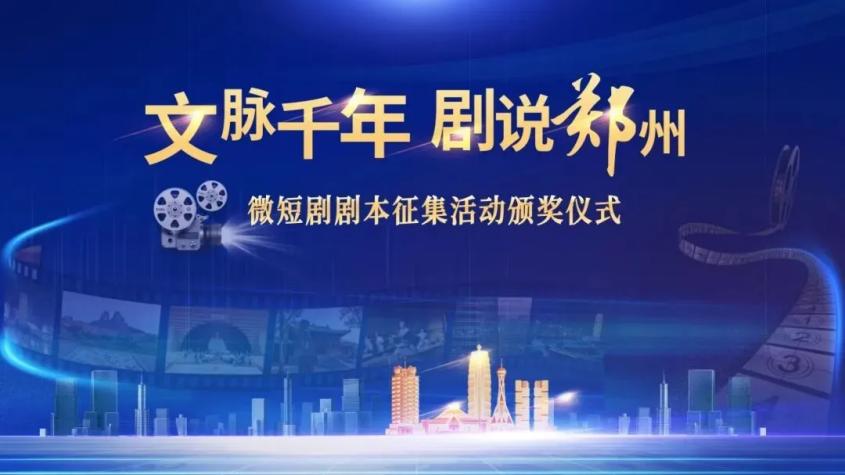
"Millennial Cultural Legacy · Stories of Zhengzhou" Mini Series Script Contest
Building an Integrated Ecosystem with Tech-Driven Growth
To break through the dilemma of scattered resources and cutthroat competition, the key lies in creating a high-standard, full-industry chain headquarters base. Zhengzhou can learn from the "Hengdian model," where a state-owned city investment platform leads, with participation from top enterprises, to co-create an industrial park integrating script incubation, filming production, post-production special effects, and talent training. This will facilitate resource integration and elevate capabilities. At the same time, accelerating the integration of technology and industry is essential. Leveraging AIGC technology can shorten script creation cycles, and utilizing VR for immersive filming environments—such as how Xinyueyi applies AI in post-production to reduce costs by 40%—can enhance both efficiency and quality through technological empowerment.
Going Global: Expanding Overseas Distribution
As domestic market competition intensifies, going overseas has become a new growth frontier. Experts suggest that Zhengzhou should formulate a systematic overseas strategy, deepen partnerships with mainstream international media and social platforms, and focus on expanding into Southeast Asia, Europe, and the U.S. markets. By exploring global multicultural themes, Zhengzhou can utilize "See Intangible Cultural Heritage through Mini Series" and "Traveling through Henan with Mini Series" as unique cultural IPs. Telling Henan's story through international narratives will help elevate Zhengzhou's mini series industry from simply outputting production capacity to cultural export, making its mark on the global stage.
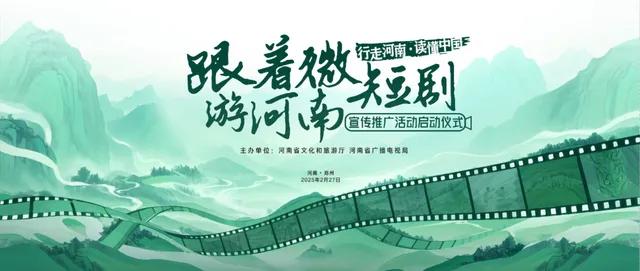
"Traveling through Henan with Mini Series" Promotional Campaign
Building a Strong Talent Pipeline to Support Growth
Talent is the core engine driving industrial upgrading. Zhengzhou needs to build a collaborative "school–city–enterprise" training mechanism: universities should introduce specialized tracks in mini series screenwriting and post-production, bringing real company projects into the classroom; the government should introduce targeted policies to attract high-end talent back from first-tier cities such as Beijing, Shanghai, Guangzhou, and Shenzhen; enterprises should strengthen internal training and promotion pathways to retain young talent. Only by forming a full-chain talent ecosystem—training, recruiting, and retention—can Zhengzhou's ambition to become a "City of Creation" be firmly supported.
Conclusion: Building a "City of Creation" Through Long-Term Commitment
From the "one studio hard to book" production boom to the pursuit of a 10-billion-yuan market, Zhengzhou's rise in mini series production is a vivid example of the integration between the digital economy and cultural industries. However, the title of "City of Creation" is never earned through scale alone; it is forged through high-quality content, core technology, and cultural value.
Going forward, Zhengzhou's breakthrough will ultimately be a battle of long-term vision. Only by abandoning the mindset of "quick profits" and committing to carefully crafted content, escaping the trap of homogenization by deeply exploring cultural roots, and breaking free from regional limitations to look at the global market—only then can this Central China "vertical-screen city" truly transition from "running fast" to "going far." In doing so, Zhengzhou's mini series will not only dominate trending charts but also resonate deeply with audiences, becoming a shining cultural emblem of the Central China.


