When Stephen Chow names a mini series studio after his iconic number "9527," when 74-year-old Liu Xiaoqing plays a "beloved bride at fifty" in a mini series, and when seasoned actors such as Liu Dan, Ni Hongjie, and Wallace Huo explore new performance boundaries through vertical-screen storytelling, a format once dismissed as "low-brow" and "downmarket" is undergoing a star-studded transformation.
According to industry data, China's mini series market reached 50.5 billion yuan in 2024. In 2025, total industry output is projected to approach 90 billion yuan—nearly doubling year on year. The large-scale entry of well-established actors is not only challenging long-held public perceptions of mini series but is also quietly reshaping the industry's ecosystem. Is this convergence between mainstream actors and mini series merely a fleeting traffic-driven craze, or an inevitable stage in the evolution of the screen industry?
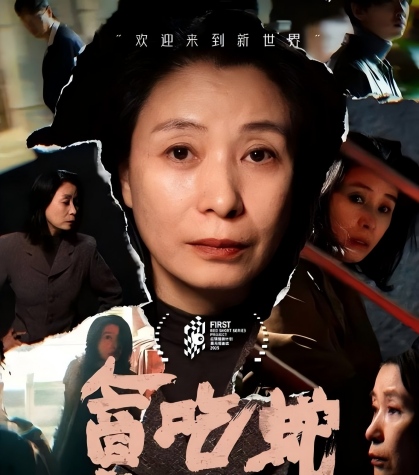
Actor Liu Dan stars in the mini series Here to Stay
Mainstream Actors Reshape the Mini Series Landscape
The mini series sector is no longer the exclusive domain of grassroots performers. It has evolved into a competitive arena bringing together mainstream veteran actors, mid-career professionals, and younger stars, each entering with distinct advantages and motivations—collectively reshaping a more diverse and dynamic industry landscape.
Veteran actors have made particularly strategic moves. National icon Liu Xiaoqing starred consecutively in Meng Bao Zhu Gong: Wu Shi Sui Hun Chong and Tian Jiang Fu Xing, targeting the growing middle-aged and elderly mini series audience and tapping into the "silver economy." China's National first-class actor Han Tongsheng collaborated with Li Jiaqi on the female-centric emotional mini series Blow Up!, bringing decades of performance experience into the short-form format. Wu Gang, widely known for his role as "Secretary Dakang" in In the Name of People, appeared in his first anti-corruption mini series Chang Lu Chu Xin, which premiered on the Hongguo platform on January 10, 2026. The series surpassed 23,000 pre-launch reservations and was dubbed the "New Year's mini series hit" by netizens. Seventy-one-year-old Zhu Shimao has even humorously referred to himself as a "silver-haired mini series star," exemplifying how senior actors are embracing new production models.

Actor Wu Gang stars in the mini series Chang Lu Chu Xin
Mid-career actors have driven the push toward premium content. Liu Dan, widely recognized for her role as "Aunt Guo" in Reset, chose Here to Stay as her mini series debut, portraying Su Lan, a woman forced into an underground smuggling network, with restrained yet deeply layered emotional expression. Ni Hongjie starred in Couple's Spring Festival while also serving as supervising producer, actively shaping content direction. Her other mini series Xiao Mei Man explores the growth of a thrice-married single mother, expanding the depth of female narratives. Meanwhile, Rosefinch, starring Wan Qian and Qin Junjie, reportedly carried an investment of 40 million yuan, underscoring mid-career actors' commitment to elevating production standards.

Wan Qian and Qin Junjie co-star in the mini series Rosefinch
The participation of younger actors has helped mini series connect with younger audiences. Zhang Tian'ai starred as the female lead "Moonlight" in Da Hua · Da Hua Xi You, a mini series produced by Stephen Chow, leveraging both a classic IP and personal popularity. Da Guo Nian De, starring Xu Mengjie and Li Chuan, surpassed one billion views the day after its release. Other projects, including Shu Chang's Jin Xiu Zhuan, and Bo Yi starring Wallace Huo, Bosco Wong, and Kan Qingzi, have also helped mini series break audience boundaries through strong cast appeal and improved quality.
Actors' involvement now extends well beyond leading roles. Gao Yalin has served as both producer and chief supervisor on multiple mini series projects, while Huang Xiaoming personally produced the paid vertical-screen mini series Yi Jie. Stephen Chow has entered an exclusive partnership with Douyin to launch the "9527 Mini Series Theatre," integrating personal IP with platform resources to enable scaled production of premium mini series. This shift from on-screen participation to behind-the-scenes leadership reflects mainstream actors' deepening commitment to the sector.
Why Actors Are Turning to Mini Series?
The embrace of mini series by mainstream actors is driven by a convergence of market forces, industry trends, and individual career considerations.
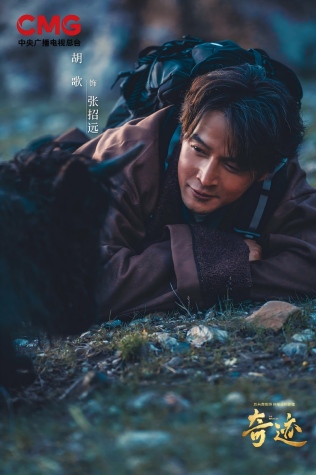
Actor Hu Ge stars mini series The Miracle
Commercial appeal is a key factor. Unlike traditional television dramas, which often require months of production, mini series typically film within 10–15 days while offering highly competitive remuneration. Reports suggest that top-tier actors can earn hundreds of thousands of yuan per day, while non-headliners still command tens of thousands. This "short cycle, high return" model significantly improves time efficiency, especially for veteran actors facing fewer long-form opportunities.
Audience reach is another attraction. Mini series appeal not only to younger users in lower-tier markets but also to middle-aged and elderly viewers with strong willingness to pay. According to the 2025 Silver Economy Consumer Insight Report, family- and relationship-themed mini series are particularly popular among older audiences. Titles such as Shan Hun Lao Ban Shi Hao Men have exceeded 500 million views and over 2.5 billion online discussions, highlighting the scale of this demand. Liu Xiaoqing's focus on middle-aged romance reflects a precise reading of this market.
Equally important is the industry's shift from rapid, unregulated growth toward premiumization, and the maturation of China's domestic film and television production infrastructure, which has provided core support for mainstream actors entering the field. The mini series market, once criticized for its "low-quality" and "melodramatic" content, had been plagued by issues of homogenization and vulgarity. However, with the introduction of formal registration systems for key online mini series by China's National Radio and Television Administration, regulatory oversight has increased, and policy direction has become clearer. More importantly, after years of development, the Chinese film and television industry has built a mature industrial production system, with standardized processes covering everything from script refinement and filming to marketing and distribution. Mainstream actors' professional abilities and influence in the industry can now be directly applied to mini series, enhancing their role from simply adding "traffic" to providing "professional empowerment." Their expertise in role management, on-set coordination, and adherence to production standards makes them well-suited to meet the industry's premiumization needs.
Platform and capital support further reinforce this alignment. Douyin, Tencent, and Migu have expanded investment in mini series, while major production companies such as Huace Film & TV, Linmon Media, and Daylight Entertainment have established dedicated short-form divisions. CCTV-1's prime-time mini series The Miracle, featuring Hu Ge, Song Jia, Lei Jiayin, Yan Ni, and Bai Yu, achieved over 100 million views within three days, demonstrating how professional acting and mini series formats can successfully converge.

Actor Bai Yu stars mini series The Miracle
For actors themselves, the traffic value and promotional demand of mini series are significant driving forces for their involvement. Actors with a certain level of fame naturally bring their own traffic and national recognition. Their participation in mini series can quickly attract attention, assist in spreading the IP, and help it break through audience barriers. Zhang Tian'ai's role as "Moonlight" in Da Hua · Da Hua Xi You leveraged the combined effect of her popularity and the classic IP, causing the mini series to generate buzz even before its release. Li Ruotong's Wu Hou Mei Gui, drawing on her iconic "Little Dragon Girl" character, successfully brought the female growth narrative to new audiences, taking it from Douyin to satellite television. For actors, this traffic synergy is not just a one-way transfer; it further solidifies their personal brand through the widespread exposure of mini series, reaching new audiences that traditional television has not been able to engage, and expanding their commercial value.
At the same time, the format poses new challenges: actors must convey complex emotions rapidly within tight narrative structures, maintaining coherence and impact under accelerated pacing.
Industry Impact: Content Upgrading and Ecosystem Reshaping
The influx of mainstream actors is having a profound impact on the mini series industry. From content production to market expansion and industry ecosystem reconstruction, mini series are moving away from being a "fringe activity" and evolving toward a more mature and professional direction.
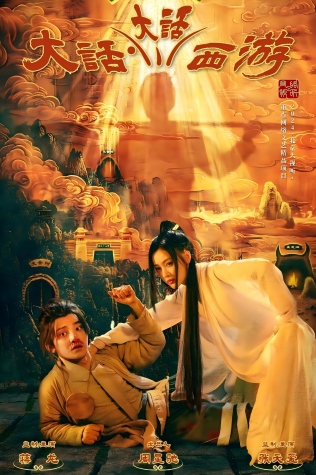
Zhang Tian'ai stars in the mini series Da Hua · Da Hua Xi You, produced by Stephen Chow
The most direct impact has been the elevation of content quality in mini series, pushing for a comprehensive improvement in production standards. The professional skills of mainstream actors are particularly evident in the depth of character portrayal. Liu Dan's portrayal of Su Lan in Here to Stay is a prime example. Her subtle emotions, conveyed through slight changes in her gaze and body language, communicate the character's inner struggle and resilience. This "expressionless performance" breaks away from the exaggerated acting styles common in mini series and sets a new benchmark for the industry. The higher expectations from actors regarding the script have also led to improved writing, with the formulaic "slap in the face" and "instant gratification" plotlines becoming less frequent. More works like Here to Stay and The Miracle, which offer greater depth and breadth, are emerging. Production values have also improved, as seen in Rosefinch with its 40 million yuan investment and The Miracle, where the "Niu Niu" segment was filmed at altitudes of over 4,000 meters. Additionally, the use of cinematic aerial shots in the "Hong Shu Liu Nian" segment demonstrates the industry's move away from its "low-budget" image towards a higher standard of production.
For the acting profession, the rise of mini series has reconfigured the industry ecosystem and career pathways. On one hand, mini series offer actors more diverse career options and channels for value realization. For veteran actors facing fewer film and TV offers, mini series provide an efficient platform for monetization and exposure; for mid-career actors, participating in premium mini series can enhance their industry influence and voice; for emerging actors, mini series have become an important springboard for gaining experience and quickly breaking out.
At a deeper level, this trend is driving a restructuring of the mini series industry ecosystem. The involvement of mainstream actors has attracted high-quality resources from the traditional film and television industry, with professional writers, directors, cinematographers and other talent increasingly entering the mini series field. The "Red Mirror Mini Series Plan," launched by the FIRST Film Festival in cooperation with Xiaohongshu, attracted 1,183 applications. The winning project Here to Stay was produced by a professional team, exemplifying the results of this resource integration. At the same time, talent and resource channels between long-form and short-form drama are gradually becoming interconnected, and mini series are no longer a marginal niche but an important component of the film and television industry.
Persistent Challenges Beneath the Spotlight
Despite the positive changes brought by the involvement of mainstream actors, the path to advancement for mini series still faces significant challenges. Issues such as performance adaptation, discrepancies in market expectations, and lingering industry irregularities all require collective efforts from all stakeholders to resolve.
The most prominent challenge lies in adapting mainstream actors to the narrative pace of mini series. With episodes typically lasting only 3–15 minutes, mini series demand tight storytelling and a brisk rhythm—an approach that differs sharply from the performance tempo of traditional film and television. For directors like Stephen Chow, who are known for long-form cinematic storytelling, the question of how to convey his signature humor within such a short format becomes an even greater test. Moreover, the performance style of traditional screen actors must be adjusted to the "lightweight" tone of mini series; if the adaptation is not precise, audiences may experience a sense of dissonance.

Wallace Huo stars in the mini series Bo Yi
Balancing market expectations with production quality is another challenge that cannot be ignored. The participation of mainstream actors inevitably raises audience anticipation, and if a project fails to meet those expectations, it can quickly trigger a backlash. Some earlier star-led mini series have already been criticized for rough scripts and low production values. At the same time, the cost of premium production has increased, placing pressure on profitability. How to ensure artistic quality while achieving commercial returns—and how to balance paid and free distribution models—remains a key question for the industry.
Moreover, the lingering disorder in the industry continues to cast a shadow over the development of mini series. Although mainstream actors have spurred the emergence of higher-quality productions, the market still contains a large number of works that rely on "instant gratification" and melodramatic tropes. Problems of homogenization and low-quality production have not been fully resolved. Premium acting talent remains concentrated in top-tier projects, while mid- and low-budget mini series still face talent shortages and rough production standards. This uneven development within the industry could affect the overall pace of the mini series sector's growth.
Conclusion
The entry of mainstream actors into mini series is not only an inevitable outcome of the film and television industry's evolution, but also a mutually driven innovation that reshapes the sector. For actors, mini series provide a new stage to reach incremental audiences; for the mini series industry, the participation of mainstream talent injects professional expertise and drives a shift toward premium content.
Although challenges remain—such as adapting acting styles to the format and maintaining ecological balance—mini series are poised to shed their "tacky" reputation as policies become more standardized, capital investment becomes more rational, and creators continue to pursue craftsmanship. As the saying goes, "stardom does not question the traveler"—the future of mini series will require not only the boost of traffic, but also the nurturing of true artistry. Only then can this format secure a solid place in the broader landscape of film and television.


