Today's Highlights:
1. Mini Series Are No Longer "Low-Brow": In 2025, They Truly Became Better to Watch
2. From Fast Food to a Full Meal: How Far Do Mini Series Still Have to Go?
3. Shanghai Rolls Out New Policies to Boost Mini Series Development
4. Han Men (From Humble Beginnings): How Time-Travel Short Dramas Balance Real-World Logic and Idealized Glow
5. Jin Han and Jiang Yiyan's Ni Shi Zhui Xiong (Return to the Past: The Killer Hunt) Begins Filming in Datong
Mini Series Are No Longer "Low-Brow": In 2025, They Truly Became Better to Watch

Looking back at 2025, a wave of "super hits" with view counts exceeding 80 million emerged from the small vertical screens of mobile phones. Beyond prominently themed productions, popular mini series spanned a wide range of genres, including family drama, urban life, fantasy, historical stories, intangible cultural heritage, time travel, and female growth narratives. Within this increasingly expansive landscape, four clear trends gradually took shape: a move toward premium content, the breaking of character stereotypes, greater cultural depth, and more refined audience segmentation.
In 2025, several critically acclaimed titles raised the ceiling for quality in the mini series sector. Sheng Xia Fen De La (Summer Rose) surpassed 3 billion views by October 8, departing from the overused "humiliating-the-CEO" trope and instead redefining mini series storytelling through high-intensity emotional expression. Serialized productions such as the four-part Yun Miao saga have begun to build their own "IP universes," effectively extending content lifecycles while strengthening user loyalty.
Traditional culture has also been more deeply embedded into storytelling. Cultural empowerment is emerging as a key strategy for differentiation. For example, Nuo Xi (Nuo Opera), centered on China's national intangible cultural heritage form of Nuo opera, tells the story of a cultural preservation battle and has even been translated into 12 languages for international distribution.
Meanwhile, the mini series industry ecosystem matured significantly over the year, undergoing a critical shift from traffic-driven to quality-driven development. Production companies such as Tinghuadao (Heard Island), Baichuan Zhongwen, and Star Link Infinite began promoting "cinematic-level visuals," "professionally trained actors," and "on-location shooting." While the overall audience base for mini series continues to broaden, resonance within specific audience segments has become increasingly precise.
Family audiences favor the everyday warmth of Jia Li Jia Wai 1 (My Sweet Home 1); Gen Z viewers are drawn to the clear-headed independence of Zhen Qian Jin; history enthusiasts immerse themselves in the strategic mind games of Mao Xing Lang Ya; and fantasy fans are captivated by the Chinese supernatural aesthetics of Yun Miao. Platforms and producers are leveraging targeted promotion—such as mobilizing lead actors' fan bases and linking storylines to social issues—to activate vertical traffic streams.
As the mini series boom sweeps across the screen industry, many long-form drama actors have begun "descending" into this sector in search of a second career spring. At 74, Liu Xiaoqing generated buzz even before release with her first mini series Meng Bao Zhu Gong: Wu Shi Sui Hun Chong. Veteran actors such as Ni Hongjie, Li Ruotong, and Yang Rong have also joined the field, either returning to the public eye or treating mini series as a fresh starting point. With their short production cycles, low costs, and rapid dissemination, mini series are providing traditional film and television professionals with new opportunities for transformation.
From Fast Food to a Full Meal: How Far Do Mini Series Still Have to Go?
The defining keyword for the development of mini series in 2025 is "premiumization." Yet despite increasingly polished production values, many viewers still associate miniseries with their early, rough-phase formulas—stories of "the useless son-in-law's comeback" or "the domineering CEO getting humiliated." If mini series hope to attract more educated, aesthetically demanding, and media-literate "upward-floating audiences," and truly become a mainstream content form, they must confront a core dilemma: beautifully produced works with hollow storytelling.
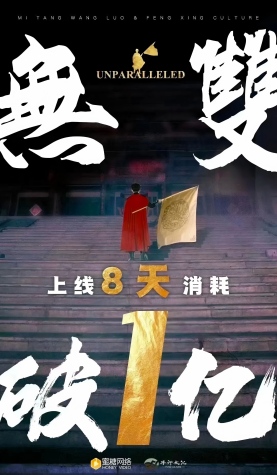
Within the industry, mini series are often divided into three stages. Version 1.0 is "rough fast food," 2.0 is "refined fast food," and 3.0 aspires to be a "well-crafted product." This classification appears to suggest linear progress, but it masks a key misconception: refinement does not equal maturity, and upgrading does not necessarily mean evolution. In the 1.0 era, Wu Shuang (Unparalleled) relied on emotional triggers—"war god + slap-in-the-face reversals"—to harvest traffic, but its problematic values soon attracted regulatory scrutiny. During the 2025 Spring Festival season, Hao Yi Ge Guai Guai Nv (Save Myself) showed clear improvements in visual quality and character setup, helping push the business model from C-end pay-per-view to B-end advertising plus platform subsidies. Yet it still fell back on melodramatic tropes like amnesia and falling off cliffs, resulting in a strong opening followed by a rapid decline.
The real turning point came with Sheng Xia Fen De La (Summer Rose), released in September 2025 and widely regarded as the benchmark of the 3.0 era. Rejecting the iron rule of "high-frequency plot twists," the series reconstructs character relationships through restrained pacing, emotional blank space, and film-level texture. Rather than chasing instant thrills, it draws a broad audience through emotional depth grounded in understanding and restraint, pushing mini series toward genuine mainstream acceptance.
As the industry shifts, four major trends have become increasingly clear: from formulaic templates to end-to-end originality; from instant gratification to restrained emotional expression; from functional, tool-like characters to fully realized, breathing individuals; and from floating luxury fantasies to a grounded sense of real life. Today, mini series boast nearly 700 million users and a market size exceeding 600 billion yuan, making them the primary screen-based entertainment choice for many. Yet the industry remains caught in an anxiety loop—waving the banner of premiumization while still relying on emotional shortcuts.
The roots of this dilemma are twofold. First, innovation is costly and tolerance for failure is low; platform algorithms solidify creative molds. "Three-dimensional characters" become slogans, while label-based archetypes continue to dominate. Second, the worldview of many mini series is a stitched-together illusion of reality, dissolving social structures through coincidence and convenience, and lacking the depth expected of serious storytelling.
The future of mini series does not lie in the number of blockbuster hits or in marketing rhetoric. It lies in respect for storytelling itself—in creating works that make audiences feel, "This is basically my life on screen." Only then can mini series shed their fast-food identity and become a true "full meal"—a medium capable of holding emotion, reflecting reality, and provoking thought.
Shanghai Rolls Out New Policies to Boost Mini Series Development

Recently, in order to promote higher-quality and more efficient development of the service sector and stimulate and expand consumption through coordinated efforts, deepen reform, opening-up, and innovation in the service industry, and strengthen supply-side support, Shanghai released the Measures of Shanghai Municipality on Promoting the Quality and Efficiency of the Service Sector and Coordinated Development of Consumption Expansion and Revitalization. The measures aim to spur high-quality development of the service sector through high-quality supply, stimulate high-quality consumer demand, and further optimize supply, boost consumption, stabilize growth, and improve people's livelihoods.
The measures explicitly support the creation of high-quality mini series content. They encourage the organization of mini series creator competitions to attract more production teams to Shanghai for creation and production, and provide incentive-based support for outstanding mini series projects. Support is also given to the development of AI-powered mini series, including the establishment of AI mini series clusters and public service platforms, as well as improvements to the operational mechanisms of micro short drama production service alliances.
At the same time, the measures promote stronger linkage and integration among culture, tourism, commerce, sports, and exhibitions. Initiatives include the release of an annual schedule of major events, the establishment of ticket-based linked consumption mechanisms, and encouragement of collaboration among festivals, exhibitions, sports events, cultural institutions, performances, tourism routes, and businesses in distinctive commercial districts. These efforts aim to jointly create new "IP +" consumption models, develop linked consumption scenario codes, and introduce multi-venue passes and joint ticket products. The measures also support market-driven coordination mechanisms among business entities across culture, tourism, commerce, sports, and exhibitions, and encourage professional platforms to participate in coordinated promotion and communication.
In addition, the new policies provide multi-dimensional safeguards, including financial support, talent recruitment and cultivation, and the renovation of spatial facilities. By attracting internationally oriented creative and operational talent and optimizing approval services for filming location renovations, Shanghai seeks to foster a sound ecosystem for the high-quality development of the mini series industry.
Han Men (From Humble Beginnings): How Time-Travel Short Dramas Balance Real-World Logic and Idealized Glow

The short drama Han Men opens with an identity switch across time and space, centering its narrative on the question of how knowledge can become the key to breaking through adversity. The protagonist transforms from a modern-day scholar into a "prodigal son" in ancient times, confronting not only external survival crises but also a profound inner inquiry into the value of knowledge and self-identity.
Through the protagonist's growth trajectory, the drama offers an in-depth exploration of the power knowledge can unleash in desperate circumstances, and how this power guides an individual's spiritual leap from self-salvation to saving others. What makes Han Men particularly compelling is its nuanced portrayal of the protagonist's character development shaped by knowledge. Initially distant and focused on self-preservation, he gradually grows into a figure of empathy and responsibility. In this process, knowledge functions not merely as a tool, but as a catalyst.
As the protagonist expands the application of knowledge from the individual to the collective, and shifts his motivation from self-interest to altruism, he completes a reconstruction of identity—from an outsider to a member of a shared community. With a plain yet forceful narrative style, Han Men demonstrates the positive role of knowledge in individual awakening and community building. However, there remains room for improvement in terms of character depth, the complexity of social context, and the diversity of value expression. How to strike a balance between idealized storytelling and realistic resonance may be a direction worth exploring for future works in this genre.
Jin Han and Jiang Yiyan's Ni Shi Zhui Xiong (Return to the Past: The Killer Hunt) Begins Filming in Datong
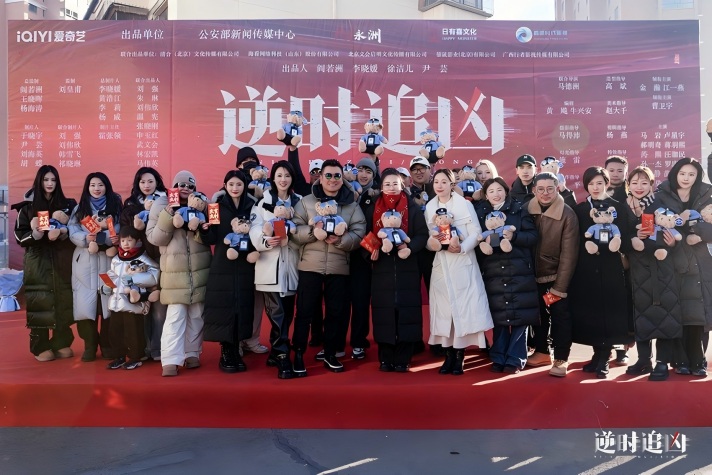
On January 11, the 24-episode high-concept, dual-timeline suspense crime mini series Ni Shi Zhui Xiong (Return to the Past: The Killer Hunt) officially began filming in Datong, Shanxi Province. The series is a spin-off of the Ministry of Public Security News Media Center's Thousands Episode Plan focusing on police-themed productions. Its script has earned strong industry recognition, previously winning first place among pitching projects at a television conference themed "Challenges and New Opportunities for Television and Online Audiovisual Arts in the New Era," thanks to its innovative cross-temporal premise, tight narrative structure, and profound grounding in real-life issues.
As a tribute to the exemplary spirit of the public security police, the series pursues a strong sense of suspense while embedding the rich cultural foundations of China's public security system into its details. Through audiovisual storytelling, the drama reflects on the proud history of the police force and, via its cross-time pursuit narrative, depicts the intergenerational transmission of duty and mission among two generations of police officers.
Jin Han plays Liu Xinjian, a grassroots police officer in 1995. His portrayal highlights the down-to-earth, action-oriented nature of frontline officers, as well as their steadfast sense of responsibility during the era of nationwide anti-crime crackdowns. Despite limited investigative tools, Liu remains determined to safeguard the peace of a small city with unwavering sincerity. Jiang Yiyan stars as Ye Miao, a pivotal character who weaves together multiple narrative threads. Her commitment to protecting women and uncovering the truth underscores the character's independence and intelligence, delivering a striking and breakthrough performance.
As a premium production with a budget exceeding ten million yuan, the series is overseen by Chief Producer Yan Ruozhou, who stated that the creative team will refine every detail with craftsmanship, striving to create a high-quality police drama that balances strong watchability with depth of thought. The goal is to allow audiences to experience the thrill of suspense while gaining a deeper understanding of the police officers' enduring commitment to "protecting the lights of countless homes."


