Against the backdrop of intensifying competition in the global short-form drama market, Stardust TV—an overseas platform under Shanhai Group—officially launched on June 30, 2024. Within roughly one year, the platform surpassed 30 million downloads, reached over 10 million monthly active users, and entered the top ranks of overseas short-drama app revenue charts. Notably, its business model has shown a clear shift from reliance on traffic acquisition toward the construction of systematic production capabilities.
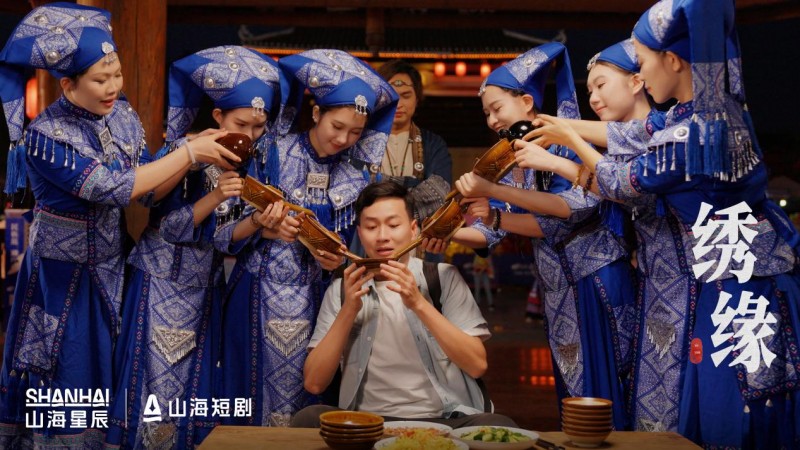
Themed on Guangxi March 3rd Festival, Xiu Yuan (The Bond of Embroidery) is produced by Shanhai Group
This transformation has been realized through three interrelated stages:
Overseas Transplantation of an Established Business Model
Stardust TV's early growth primarily relied on business processes already established by its parent company, Shanhai Group, in the domestic market. After launch, the platform directly leveraged hundreds of copyrighted titles held by the parent company, translating and distributing content that had already been validated in China—such as Duan Qin Hou, Ge Ge Men Ku Zhe Qiu Yuan Liang (After Cutting Ties, My Brothers Begged for Forgiveness)—to the U.S. market. This approach helped the platform open up the market while achieving scaled content supply.
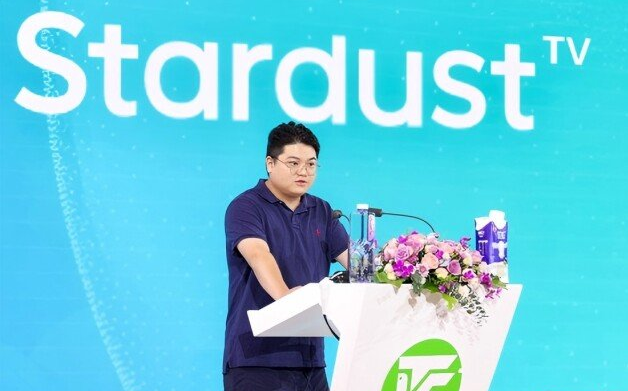
Niu Zhaohui, Co-founder of Shanhai Group and Head of the Stardust TV Project
On the operational side, Stardust TV continued a data-driven growth strategy. Following the launch of strategic advertising campaigns in September 2024, monthly downloads rose significantly. Its advertising system is capable of producing hundreds of creative assets daily and adjusting placements based on performance data.

Mini series Hello, Chengdu!, co-produced by Chengdu Intelligent Media City Cultural Industry Development Co., Ltd., a company under Chengdu Media Group, and Guangxi Shanhai Group
Technical Support for Localized Production Capabilities
For sustained development, content transplantation alone proved insufficient. Stardust TV has therefore enhanced localized production efficiency through technological applications, particularly in multilingual content processing.
The platform collaborates with technology companies such as Microsoft and Google to establish a workflow combining AI translation with human review. By June 2025, all translation work had been fully handled by in-house teams, with an average monthly throughput of over 1,000 episodes. The entire process—from translation to release—can be completed in under two hours per title, making localized content production more controllable.
At the same time, the platform is exploring applications such as AI dubbing. Currently, approximately half of the dramas used in advertising placements feature voice dubbing, and these titles perform relatively better in terms of user retention and payment conversion. By building a digital content management system, the platform has developed its own solutions for managing production workflows.
Attempts to Expand the Business Model
After establishing core operational capabilities, Stardust TV has begun experimenting with business model expansion. Beyond content translation, the platform has developed original titles tailored to specific markets—such as Mafia's Tender Torture—demonstrating an improvement in localized production capabilities.
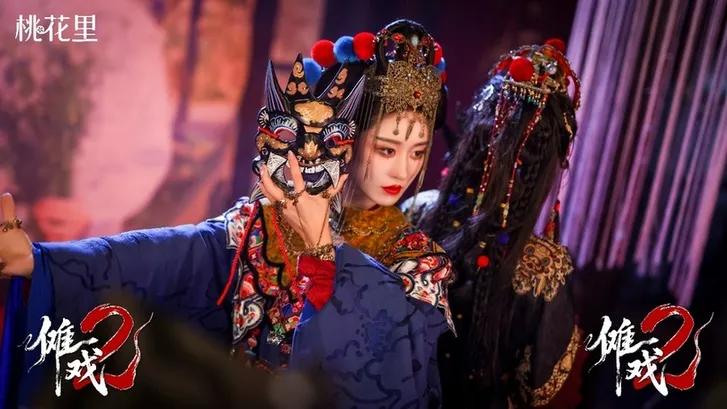
Nuo Xi 2 (Nuo Opera 2), a new work produced by Shanhai Group under the Taohuali Theater brand
The platform's announced "Hundred Ships, Thousand Sails Initiative" plans to invest funds to collaborate with overseas production teams, with the goal of increasing the output frequency of localized content. This initiative reflects Stardust TV's ambition to transform its accumulated experience in content production, distribution, and monetization into a collaborative model that can work with external teams.
Conclusion
Overall, Stardust TV's development trajectory exhibits a phased pattern: beginning with the overseas application of a domestic business model, then improving localized operational efficiency through technological adoption, and finally moving toward the role of an industry collaboration platform. This path—from direct operations to systematic capability building—offers a case study for understanding how Chinese digital content companies expand internationally. Its long-term growth will still need to address challenges such as cultural differences across markets, local competition, and the need for sustained innovation.


